
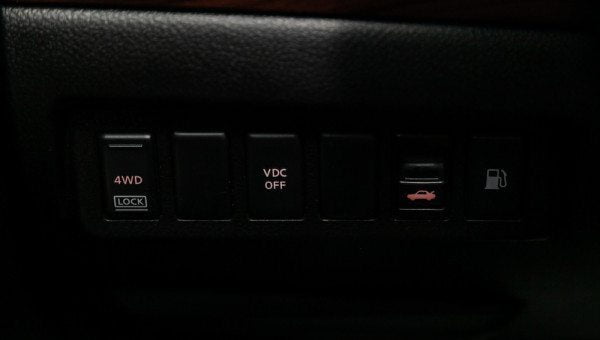

This light automatically turns on as soon as the vehicle detects that you are driving in slippery weather conditions.
The VDC works to reduce engine power and simultaneously brake the wheels that have lost control. In most cars, the slip indicator on the dashboard lights up to indicate that you are approaching a slippery road. If the VDC indicator malfunctions, the VSC OFF light will illuminate.
Common Causes of the VDC Light
Traction control will not work properly forever. When this happens, the light will stay on all the time. Here are the main reasons for a faulty VDC indicator:
1. Faulty Wheel Sensors
Sensors are attached to each of the car’s wheels. The function of the sensors is to detect any misalignment of the wheel angles and send this information to the onboard computer. When you accelerate, the sensors detect the speed of each wheel. If one of the wheels slips and spins faster than the others, the ABS for those wheels is activated.
This also reduces the car’s power, giving you better control over the vehicle. If the wheel sensors are faulty, no oversteer or understeer is detected, meaning the lights will continue to turn on or off. Wheel sensors often accumulate dirt, making them ineffective. You can address this by taking your car to a mechanic who will clean the sensors and at the same time ensure that the wiring is in good condition.
2. Poor Roads
While the main function of the VDC is to help you maintain the car’s stability when driving on slippery roads, the light will malfunction in extreme road conditions. In some cases, there are those who drive their car on extremely bumpy or snowy roads. The traction light will stay on and will be of no use to you. However, as soon as you start driving on open roads, the anti-slip system returns to normal.
3. Faulty Steering Angle Sensors
Each of the wheels with traction control has steering angle sensors. These sensors detect the angle of the wheel when driving on poor roads. Since the sensors are located on the steering column, malfunctions can occur. As a result, the traction control light will illuminate even if you are driving on smooth roads. A mechanic can closely inspect the sensors and clean them. They can also check the wiring.
4. Onboard Computer Programming Issues
The wheel sensors are in constant communication with the onboard computer. The computer detects wheel slip and sends signals to the ABS or the engine to cut power. Like with other computers, the car’s ECU can develop errors. These errors cause the VDC light to turn on when it is not necessary. You can solve this problem by reprogramming the computer. However, reprogramming is a serious matter and you should contact the car manufacturer or a certified mechanic.
5. Faulty Steering Rack
A good steering wheel helps you control the car when driving on slippery roads. The rack is located on the steering wheel and uses hydraulic fluid to turn the wheel. If the rack does not work as expected, you will have issues steering the car even when the VDC light is on.
VDC Lighting Function
Vehicle Dynamic Control (VDC) works in conjunction with the ABS to provide traction to the vehicle. Most of the time, the driver experiences some form of vibration on the brake pedal when VDC is engaged. This should not be a cause for concern as it indicates that the system is working properly.
Confusion about VDC arises when drivers become overconfident about their driving ability and rely solely on traction control. Note that oversteering at high speeds can lead to serious accidents. Using VDC does not eliminate the need to be cautious when driving on the road. When making modifications to your car, do not replace the struts, shock absorbers, stabilizer bars, or springs as they will interfere with the car’s VDC system. The VDC system will also be affected if you switch to non-standard brake discs and pads.
In some cases, the VDC is activated and deactivated when driving on bumpy roads. This should not be concerning. The wheel sensors attached to the wheels can react to bumpy roads.
How Does VDC Work?
Modern cars are equipped with traction control systems that prevent understeer and oversteer on slippery roads. The moment VDC is activated, the brakes on one or more wheels are applied and the vehicle begins to skid. This is followed by a reduction in engine power. One or two of the spark plugs in the combustion chambers are suppressed. Additionally, the fuel in one or more cylinders may be reduced. As a result, the engine power is reduced while the driver gains power on the steering wheel. In turbocharged vehicles, the traction control will reduce the boost pressure by actuating the boost pressure control solenoid.
VDC is designed to give the driver more control over their car during a skid. This is achieved by making the car more stable when driving on snowy roads. The car’s wheels are equipped with sensors that detect when one of the wheels is spinning faster than the others. This is done in cooperation with the ABS and the onboard computer.
Conclusion
VDC is an essential component of the vehicle’s traction control system. The system uses information transmitted by wheel sensors at each wheel. Whenever you drive on slippery roads and start to lose traction, VDC is activated. VDC works in conjunction with the ABS to lock the wheels that are spinning faster than the others.
The wheel sensors also transmit information to the onboard computer, which then reduces the engine power. Once VDC is activated, you will find that you have more control over the vehicle than before. The VDC light can sometimes become faulty and will continue to illuminate even when you are driving on slippery roads. You should check the wheel sensors and ensure they are not dirty.