
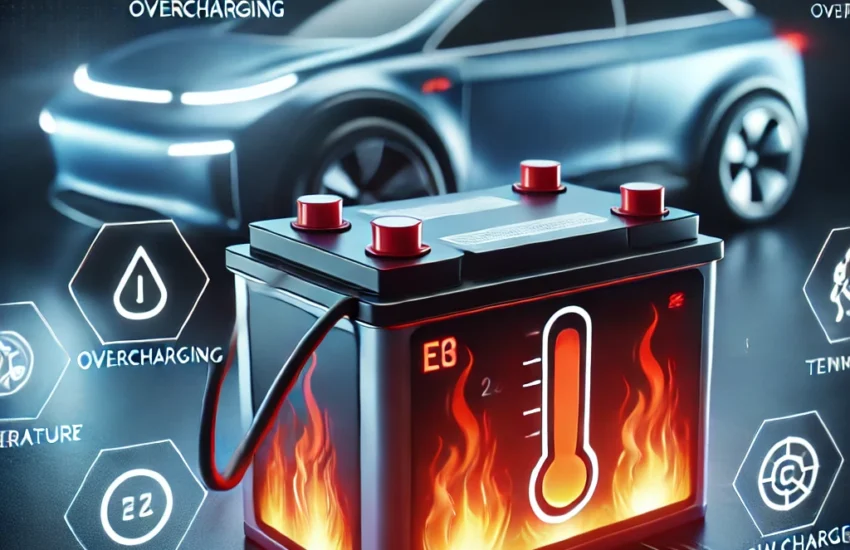
The high-voltage battery, the heart of your electric vehicle, accounts for up to 40% of its total cost. To ensure optimal performance and extend the life of your lithium-ion battery, it is crucial to avoid certain mistakes. Here are the 5 common errors to avoid to preserve the integrity of the EV battery, its range, and its performance.
1. Systematically charging the battery to 100%
Problem:
Frequent full charging or deep discharging accelerates the degradation of the lithium-ion cells in the electric vehicle battery.
Consequences:
- Reduction in range (up to 20% after 8 years depending on the model).
- Loss of capacity and rapid degradation of the EV battery.
Solution:
- Limit daily charging to 80-90% (except for long trips).
- Use the “Scheduled Charging” function to balance the cells and avoid overcharging.
2. Neglecting the impact of extreme temperatures
Problem:
Extreme temperatures, whether cold (below -10°C) or heat (above 40°C), can seriously affect the performance of your EV battery.
Consequences:
- Decreased performance in cold weather.
- Risk of overheating and premature aging of the lithium-ion battery in case of excessive heat.
Solution:
- Park your vehicle in the shade or in a garage during summer to avoid heat.
- Preheat the high-voltage battery in winter via your vehicle’s app (if this feature is available).
3. Using only fast charging stations
Problem:
Fast charging stations (350 kW DC Fast Chargers) generate intense heat that can stress the electric vehicle battery.
Consequences:
- Increased degradation rate of the lithium-ion battery.
- Example: 10% less capacity after 100,000 km with intensive use of fast charging.
Solution:
- Reserve fast charging for occasional trips or long journeys.
- Prefer AC chargers (Wallbox) for daily use, which are less stressful for the EV battery.
4. Ignoring software updates
Problem:
Manufacturers regularly update the management of the EV battery (BMS) via “over-the-air” software updates.
Consequences:
- Less efficient thermal management.
- Unoptimized range and decreased performance of the high-voltage battery.
Solution:
- Enable automatic updates to ensure your vehicle operates with the latest version.
- Manually check for new versions if necessary.
5. Leaving the battery unused at a critical charge level
Problem:
Storing an electric vehicle with an empty battery (<10%) or full (>90%) for weeks can cause irreversible damage to the cells of the lithium-ion battery.
Consequences:
- Irreversible deep discharge that can damage the cells of the EV battery.
- Costly replacement of the high-voltage battery (several thousand euros).
Solution:
- Keep the EV battery between 40% and 60% for long-term storage.
- If you do not use it for more than a month, plug the vehicle into a power outlet so the BMS automatically maintains the optimal charge without overcharging.
⚠️ Bonus: Long-term storage advice
Some brands like Tesla and Nissan recommend keeping the vehicle plugged in continuously during long-term storage, even without needing to charge. This allows the BMS to regulate the temperature and balance the cells more effectively.
Concrete example: Going on a trip for 3 months? Plug your EV into a household outlet or a Wallbox, set the maximum charge to 50-60% via the app, and let the system handle the rest.
Conclusion: Preserve the lifespan of your EV battery
By avoiding these mistakes, you maximize the lifespan of your electric vehicle’s high-voltage battery, ensuring optimal operation and increased range for over 10 years or 200,000 km. For additional advice, consult a certified specialist and always refer to your electric vehicle‘s manufacturer manual.