
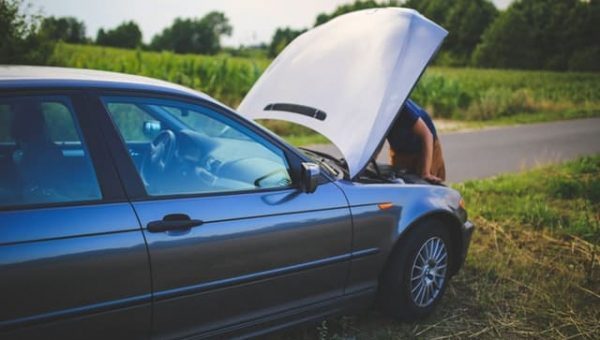

Is your car not starting and making clicking sounds? Then this article is for you. I just had this problem with my car too and I finally created a routine on how to troubleshoot the car if this happens. Follow us and we will show you step by step what you need to do if this occurs.
When you hear clicking sounds while trying to start your car, there is no clear answer to the problem. There can be several different components that may be damaged or improperly configured.
To start the engine, you need a push from the flywheel, which is controlled by the starter. All these components are powered by the battery, which is why it’s the first part we will check, but again, when the car won’t start and begins clicking, there could be different outcomes or ways to solve the issue.
Car Won’t Start and Makes a Clicking Sound: How to Fix
It is most likely the battery or the starter when you hear clicking when trying to start the engine. There is a series of components involved when you start the engine, and if just one of these components fails, you won’t be able to start the engine.
Step 1. Check the Battery
The most common problem when the clicking issue occurs is the battery. As I mentioned earlier, the battery is the most important component when trying to start a car because it powers the starter and the flywheel.
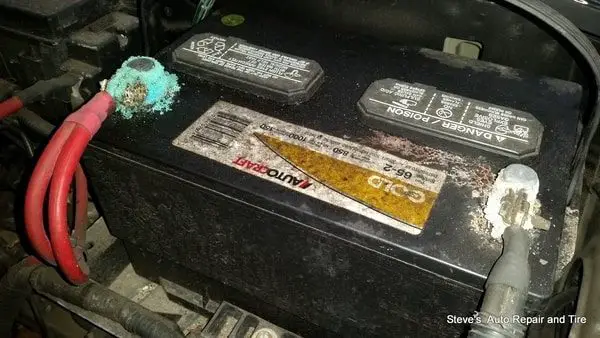
Check for corrosion or acid buildup around the battery poles and clean if present.
If you don’t know what this looks like, look at the image above; the corrosion is the blue texture you can see on the left pole. If you have something similar on your battery, it could be a reason why your car won’t start; the only thing you need to do here is clean it, which is quite simple.
Use baking soda mixed with 32 ounces of hot water, mix it, and pour it over the connectors. I also like to use a toothbrush afterward to remove all the corrosion. Make sure to wear gloves and glasses when doing this. You don’t want baking soda in your eyes or on your hands, nor do you want battery acid. When you’re done cleaning, use WD-40 to prevent rust or corrosion in the future.
Check the Connectors – You should also check if the battery terminals are loose/the wires going to the poles. If these are loose, you need to tighten them. This is a very common solution, so don’t skip this step. Here is a picture of the two bolts to tighten.
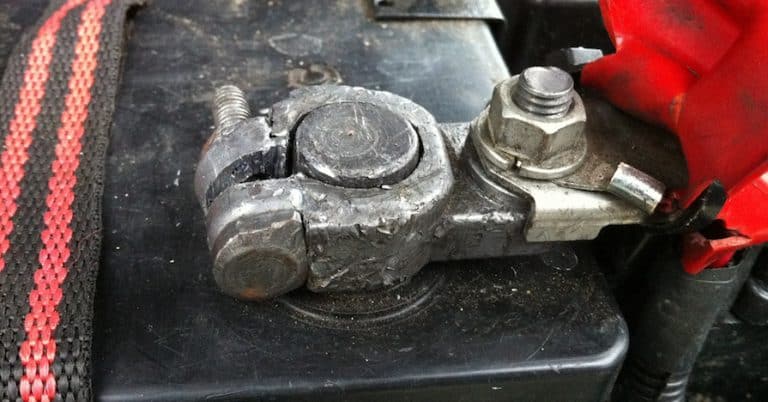 Battery connectors, tighten them. Common problem when your car makes clicking sounds.
If none of these previous steps solved your problem, don’t panic, there is always a solution. Here are a few more points to check.
Check if the Battery is Dead or Damaged
If corrosion or tightening the bolts didn’t work, your battery might be dead or not functioning properly.
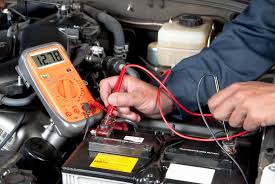
What you need to do to check if this is the case is use a multimeter to check the battery levels. If you don’t have one, you can simply buy one here or go to your local store.

When you have your multimeter ready, turn the dial to 20 volts or at least something above 15 volts. Then simply place the red reading cable on the positive pole of your battery and the black cable on the negative pole of your battery. When you do this, a number should appear on your multimeter; this number should be around 12.6 volts.
If the number is far from 12.6, your battery is faulty and needs to be replaced; if it’s around 12.6, we can proceed with further testing. Just because the battery has the correct voltage doesn’t mean it’s working as it should. That’s why we need to do a few more tests to solve the problem you’re experiencing.
Another issue could be that there aren’t enough cold cranking amps (CCA) in the battery. This is a measure that shows the voltage the battery can provide, and you need voltage to start the car.
So, what we do to test this is keep the cables you just placed in the same position, but this time, you want to start the car while you or someone else watches the multimeter. When starting the car, the multimeter reading should not drop below 10 volts. If it does, it indicates your battery is faulty; if it drops below 5 volts, it means your battery is completely dead and needs to be replaced.
2. Check the Starter
If your battery still isn’t working, we need to check the starter. For most people, the battery will be the problem, and the previous steps should solve your issue. So make sure to check those points first. Additionally, you can check if the clutch is working and if your car is in park. Try the simplest solutions first.
The starter is positioned under the car and is difficult to access as an everyday driver, which is why I have a trick for you that you can use to check the starter without even touching it. Just follow along and don’t overcomplicate things, and you should be done in no time! This will be the last step we take; if it doesn’t give us an answer, you’ll need to go to a mechanic to have it checked.
Okay, the first thing to do before testing the starter is to put your car in neutral; this is very important.
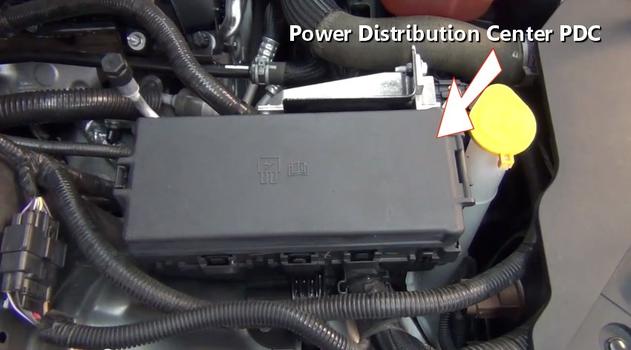
Now go to this box; inside you will find fuses and relays. Open the top cover, and you should see a diagram showing all the relays and fuses on the inside of the top cover.
Try to find where it says starter relay on the cover and locate it in the power distribution center.
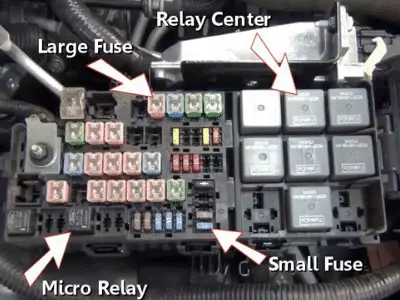 Locate the relay center.
Don’t be confused by everything you see here; the only thing you need to find is the starter relay. I’ll put an image below so you can see what you need to look for.
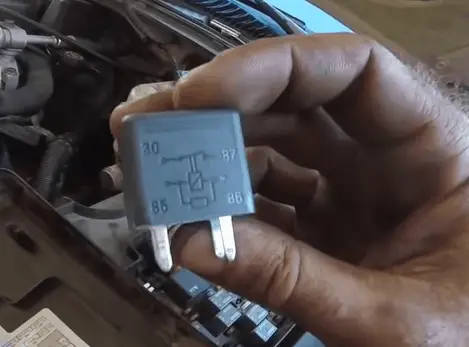
So this is the starter relay.
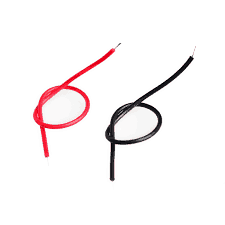
Now, when you have removed the starter relay, you should get yourself a jumper wire, like this one. You’ll only need one. In the previous image, you can see a diagram showing the number of each pin on the starter relay.
Locate pins 30 and 87; they are usually diagonal from each other. Now look at the power distribution center and find the holes where pins 30 and 87 were, and plug the jumper wire into these two holes; your car should now start. If it doesn’t, you know your starter isn’t working, so what you can do is use a hammer and tap on the starter; don’t ruin it, but just give it a few taps; this can solve the problem in some cases. If that doesn’t work and you’re not an experienced mechanic, I would advise seeking help.
Conclusion
I hope this article helped you solve your problem; if so, please leave a comment about your issue so others can see it. If it didn’t, let me know as well. I’m always looking to improve my content to help more people; sharing your experience will help others in your situation. Thank you for reading.