
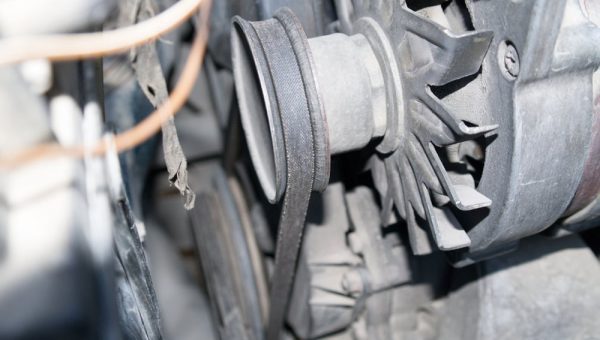

Whether you have owned a car for a few years or decades, you have probably heard of a loose alternator belt.
But how do you know when it’s time to tighten or replace it? Is it even possible on all car models?
In this article, we will talk about the symptoms of a loose or faulty alternator belt, its location, and the replacement cost.
Symptoms of a Loose or Bad Alternator Belt
The alternator belt powers not only the alternator but also many other parts in the engine compartment. Therefore, many things can also fail when it becomes loose. Here are the 6 most common symptoms of a bad alternator belt:
1. Battery/Alternator Warning Light
Since the alternator or serpentine belt powers the alternator, it will, of course, cause the alternator to struggle when the belt is loose. There is a battery warning light on your dashboard in most car models, which lights up if there is a problem with the charging system.
When the alternator belt is loose, the alternator does not spin at its optimal speed, which can cause the charging voltage to drop and, consequently, the warning light appears.
2. Squealing Noise When Cold

You have probably heard that many older car models emit a very high-pitched noise during a cold start, which will slowly disappear as the engine warms up.
This is mainly due to a loose alternator belt, which becomes more slippery and wet when it’s cold and creates a high-pitched noise when it slips on the alternator.
If you hear a high-pitched noise when you start the car for a few seconds, it is definitely time to check the alternator belt. You may also experience a constant high-pitched noise if the belt is still loose.
3. Heavy or Jiggery Steering
As I mentioned earlier, the alternator or serpentine belt powers the alternator and other things like the power steering pump. Some car models have a separate belt for the alternator and the power steering pump, but they usually use the same one.
This means that when the alternator belt can also prevent the power steering pump from working properly, you will recognize this as jiggery or constant heavy steering.
4. Flickering or Dimming Lights

When the alternator charges the car battery, it charges it with about 14.5 volts. When the car battery is inactive, it usually has about 12-12.5 volts. When the alternator is not working properly due to a slipping or loose alternator belt, the voltage will also cause spikes and drops.
You will recognize these voltage changes mainly by looking at the headlights or other electronic components. You may see the light become dimmer or brighter, and you may also see a pulsing light in some cases.
5. Sudden Stall
If you have driven very far with a loose or slipping alternator belt, it can become so bad that the electronic components will consume more power than the alternator can produce.
This will cause the car to stall completely, and you will find yourself stuck on the side of the road because there is no chance you can restart it when the car battery is completely drained.
6. Dead Battery

If the alternator belt is a bit loose, it can
If it becomes bad enough, the car battery may even be completely dead the next time you try to start your car.
Just Tighten It or Replace It?
To determine whether you need to replace or tighten the alternator belt, you need to look at the belt. If it has cracks or looks very dry, it is definitely time to replace the alternator belt.
When buying a new belt, you must make sure and compare it with the old belt to ensure you have the same length, as many car models can have many different belt lengths depending on utilities such as power steering, air conditioning, etc.
When tightening the new alternator belt, you must ensure not to tighten it too much. This will result in a much shorter lifespan, and it can even damage the bearings in parts like the alternator or power steering pump.
Most newer car models also use an automatic belt tensioner, so it is quite rare for the belt to come loose. However, it can happen, and if you have a loose belt on a car with an automatic belt tensioner, you must make sure to replace the tensioner while you are replacing the alternator belt.
Alternator Belt Location
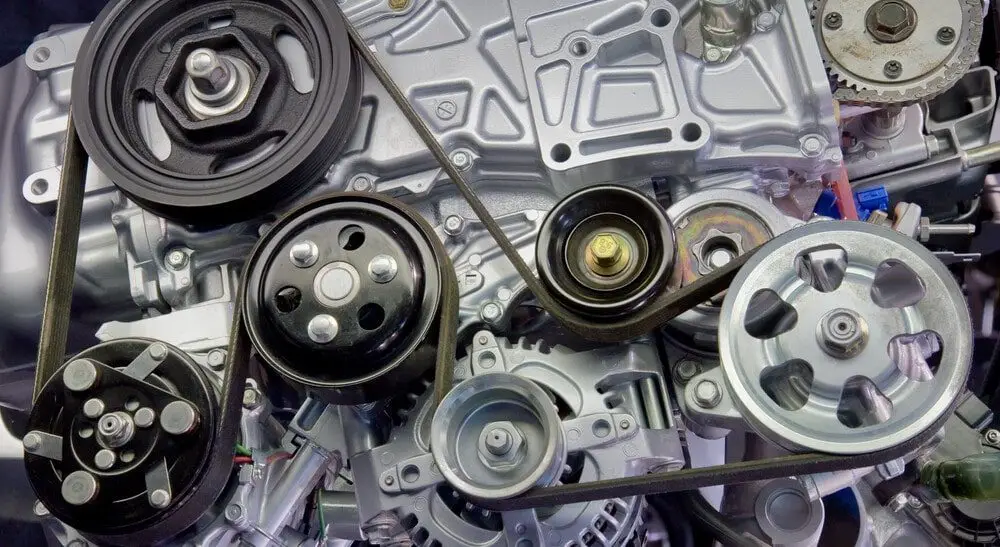
The alternator belt is located at the front of the engine. This is not the same as the front of the car because the engine can be installed on the side in many car models.
However, finding the alternator belt is quite easy in most car models; look for a belt around different wheels, and you will probably find it.
In some car models, the belt may be located quite low in the engine compartment and close to the car body, making it difficult to see from above. In this case, you may need to lift the car and check from underneath.
Alternator Belt Replacement Cost
An alternator belt costs $20-100, and labor costs $30-200 to replace it. You can expect a total cost of $50 to $300 for replacing an alternator belt.
The alternator belt is often quite cheap, so if you know how to replace and tighten it yourself, you can certainly save money.
As I mentioned earlier, most modern car models use an automatic belt tensioner, and if you have a loose belt on any of these car models, you need to replace the tensioner. These tensioners are often a bit more expensive, and you can expect to pay $30 – $150 for a new one.
The alternator can be installed very close to the car body, making it very difficult to access. In some car models, you even have to lift or lower the engine to reach it properly.