
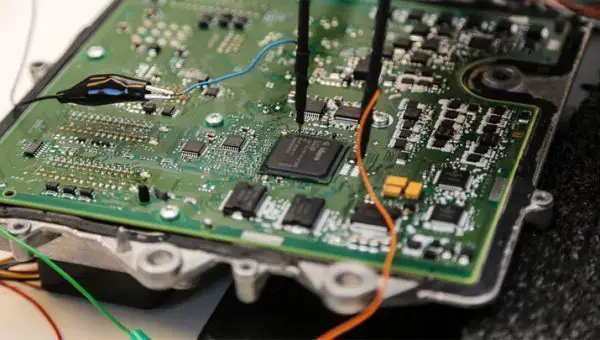

The Engine Control Unit (ECU), also called the Engine Control Module (ECM), is an electronic module that controls the engine’s function. This is done through a series of electronic components and sensors that calculate data to the engine.
Based on what this data indicates, the engine will perform a specific function. If your vehicle has a bad engine control unit, it can cause all sorts of problems with the engine’s operation. As a result, this will harm your ability to drive your vehicle safely and efficiently on the road.
Fortunately, there are certain symptoms you can look for early to detect if your engine control unit is deteriorating.
#1 – Check Engine Light
The easiest symptom to recognize is when the “Check Engine” warning light illuminates on the dashboard. Of course, there are many possible reasons why this light comes on.
But in cases where the engine control unit detects problems with its electronic components, circuits, and/or sensors, it will immediately cause the Check Engine light to illuminate.
Sometimes, the engine control unit will also do this by mistake. To determine if the engine control unit is truly experiencing problems, you need to look for the specific trouble codes on your vehicle’s computer.
These codes will identify the root of the problem. Consult your manufacturer, the owner’s manual, or various online resources to learn more about trouble codes.
#2 – Engine Misfires or Stalls
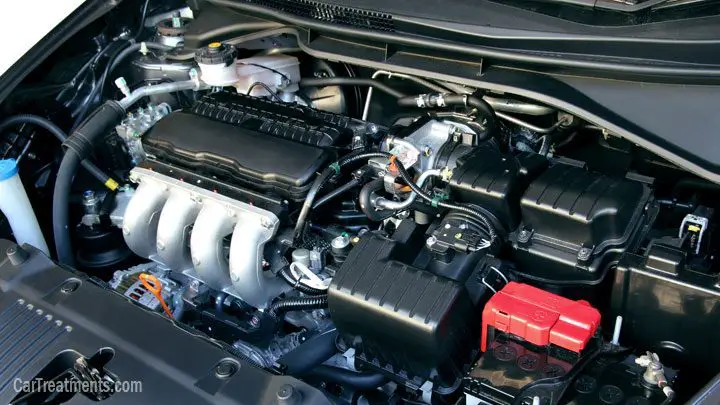
Another symptom that can follow a warning light coming on is an engine that misfires or perhaps even stalls. There also won’t really be any consistency with these issues. The pattern of engine misfires and stalls will be random, making it difficult to identify the specific engine problem.
Often, this is because the engine control module is failing and providing the engine with false information. If the problem worsens, the engine’s performance will deteriorate during operation.
#3 – Bad Gas Mileage
Since a good air-fuel ratio is necessary for a vehicle to run optimally, a bad ECM will not understand how much fuel to send to the combustion chamber. This means that too much fuel is often sent to burn in the combustion process.
The result is that your vehicle will then run rich and consume more fuel than necessary. Not only will you have to budget more for gasoline each month, but you won’t be doing the atmosphere any favors.
#4 – Poor Engine Performance

Alternatively, a faulty ECM can also result in insufficient fuel supply to the combustion chamber. This means that when you press the accelerator, your car simply doesn’t accelerate like it used to.
It might even shake and vibrate a bit, especially when trying to go up hills, when there is a lot of extra weight in the car, or when towing something. You may also experience rough idling due to not having enough fuel for the conditions.
#5 – Car Won’t Start
The worst symptom is when your car doesn’t start at all. It might be difficult to start initially, but then it will never start again. This happens after a complete failure of the engine control unit, and it doesn’t work at all.
Once this happens, the engine has no computer system to control and guide its own functionalities. Although you might still be able to crank the engine, it won’t start because the computer isn’t providing it with the important information it needs to do its job.
Again, there could be other reasons why your engine won’t start too. The only real way to know if this symptom is related to a failing engine control unit is to have it inspected by a certified automotive technician.
ECU Replacement Cost
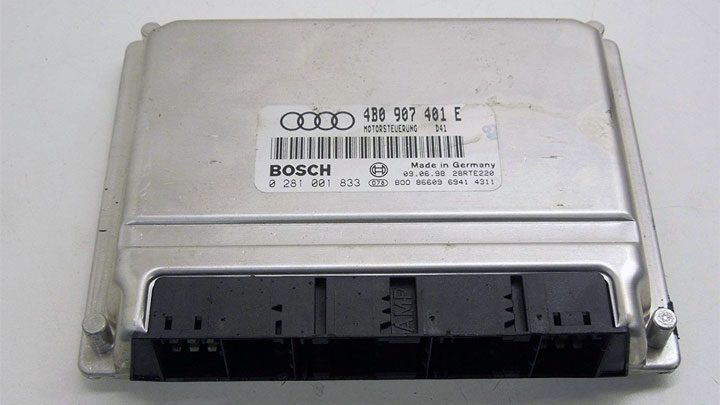
If it’s discovered that you truly have a bad engine control module, you will have no choice but to buy a replacement unit or possibly have it repaired. The cost of replacing the engine control unit will depend heavily on the make and model of your vehicle.
The more complex and technologically advanced a vehicle is, the more you will likely pay. ECUs for luxury vehicle brands will cost much more than those for a typical economy car. It’s similar to buying a high-end MacBook Pro from Apple compared to an economy computer from Walmart.
On average, you can expect the parts cost to be between $400 and $1,400, while labor costs are about $100 to $200 for reprogramming and installation. You might be able to save money on a refurbished ECU, but this usually carries a bit of risk.
The average owner of an economy car will end up spending close to $1,000 for a replacement job. Under certain circumstances, an existing warranty on the vehicle might cover these costs if the engine control unit fails prematurely.
Sometimes, you might have a problem with the engine control unit that can simply be repaired. This will certainly save you the huge expense of buying a completely new unit.
However, in most cases, the unit will need to be replaced. The only real time a repair job will be feasible is if there is simply a configuration issue with the computer.