
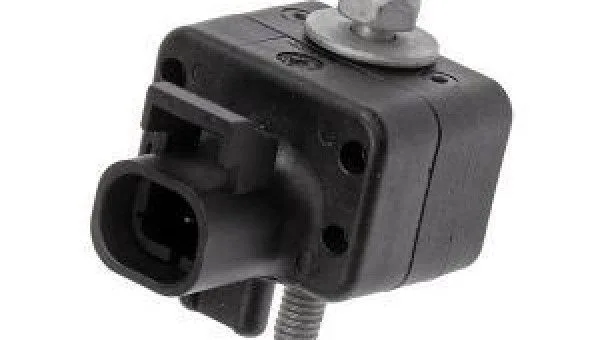
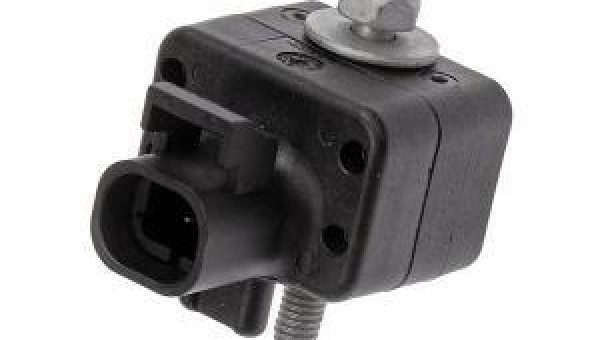
Airbags are one of the most important safety features in your car, and you should always ensure they are in perfect working condition.
Research suggests that frontal airbags have saved over 40,000 lives since their introduction in the 1970s. In the event of an accident or collision, frontal airbags play a major role in protecting the driver from head injuries and even injuries to other parts of the body.
However, many drivers have complained that the airbag light in their car starts flashing for no reason and is often ignored. This exposes the driver to serious risk in case the car experiences a collision and the airbags do not deploy.
In this article, we will discuss some common symptoms you might face when the airbag sensor becomes faulty and starts malfunctioning.
Signs of a Bad Airbag Sensor
As soon as the driver turns the key and starts the car, the airbag control module tests the airbag sensor circuit and identifies whether it is functioning correctly. You will also see the airbag warning light illuminate on the dashboard every time you start the car, indicating that the sensor is working properly.
However, if the light stays on after starting the car, it means a problem exists.
1. Airbag Light
The most common symptom you will see is that your airbag light flashes or stays on on your dashboard. This means the airbag function is disabled.
Sometimes the airbag warning light flashes in a specific pattern; for example, if the light flashes twice, then stops, then flashes three times continuously, it indicates code “23”. You can refer to your vehicle’s manual and learn more about this particular code.
2. Checking with a Diagnostic Tool
The best way to check the airbag sensors is to use a diagnostic tool. Take your car to a professional who will use the tool to find out exactly what is causing the problem. Make sure not to use a multimeter when testing airbags, or you might end up deploying them.
3. Depleted Airbag Backup Battery
If your vehicle’s battery has recently been drained, it is likely that the airbag backup battery is also depleted, causing the light on the dashboard to flash. The problem will easily go away if you fully recharge the car battery. However, you will still need to clear the software error code with the diagnostic tool.
4. Faulty Airbag Clock Springs
The airbag clock spring maintains consistency between the airbag and the electrical wiring by continuously winding against the steering wheel. The circuit bands can start to wear out over time and may cause an error code in the airbag system. In turn, this will make the airbag light flash on the dashboard. The clock spring problem is difficult to diagnose at home, so you should take your car to an automotive specialist who will use a diagnostic tool to determine the root cause. If the problem is found with the clock spring, it should be replaced.
5. Damaged Airbag Module
The airbag module tends to get damaged over time. It is located under the driver’s seat or the front passenger seat. If the airbag module is exposed to water or even slight moisture, it begins to corrode and leads to a short circuit. When the module is short-circuited, a DTC code is generated, causing the airbag light on the dashboard to flash.
| Problem | Symptoms | Causes | Solutions |
|---|---|---|---|
| Bad Airbag Sensor | Airbag light turns on | Faulty airbag sensor
Faulty wiring Faulty airbag control unit (rare) |
Replace the airbag sensor
Repair faulty wiring Replace the airbag control unit Read the airbag control unit fault codes |
Understanding Airbag Sensors
Airbag sensors are also called crash sensors, and depending on the model and brand of your vehicle, they are located throughout the car. These sensors detect a collision and cause the airbags to deploy.
These sensors are usually located at the front to detect a frontal collision and on the sides to detect a side impact. In modern cars, there are multiple sensors depending on the number of airbags offered.
What is an Airbag Sensor?
The sensor is essentially a detection device that can read the rapid deceleration of the vehicle and generates a signal in response. Its basic function is to electronically communicate information with the electronic control unit and all equipment related to the airbag system.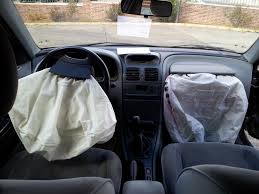 The intensity of the collision is also noted and is used to determine whether or not the airbag should deploy.
These sensors can be classified into two main types. The first is the mass sensor. This is usually deployed at the front of the vehicle to measure a significant impact. It typically contains two sensors, one of which is inside the engine while the other is installed in the passenger seat area.
The sensor is capable of distinguishing dangerous collisions from non-dangerous collisions and generates information to calculate exactly when the airbag should deploy.
Its basic principle is to detect the deceleration of a moving vehicle as well as its intensity. The second type of sensor is called a roller sensor. This sensor usually consists of a helical spring component that is connected to a certain weight. Once the vehicle hits an object and an impact is generated, the weight is pushed in the opposite direction and the helical spring undergoes tension. This tension and movement in the helical spring are able to record the intensity and consequently generate an electrical signal to the circuit.
Where is the Airbag Sensor Located?
The location of the airbag sensor is highly variable and depends a lot on the vehicle’s design. The best way to find the location of the airbag sensor in your vehicle is to refer to the maintenance manual provided by your manufacturer. Usually, it is located behind the front fascia, which is the front bumper. It can also be located near the condenser.
Some designs would have an airbag sensor inside the engine, while in others it can be anywhere in the area where the passenger seat is present. For some vehicles, airbag sensors may be located throughout the vehicle. They are also commonly found behind the front fender at the front of the vehicle.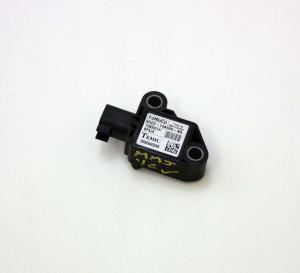
How to Reset the Airbag Sensor
In most cases, you need to use an OBD2 scanner to reset the ABS control module fault codes. Often, the vehicle’s onboard computer does strange things, and you may see random lights flashing on the dashboard.
If you notice the airbag light flashing, the first step should be to reset the sensor, and this can be easily done in 2 steps:
Disconnect the Car Battery
Open your car’s hood and locate the battery. On the battery, you will see a positive terminal and a negative terminal. Using a socket wrench, unscrew the nut on the negative terminal and completely remove the cable clamp.
Reconnect the Battery
Once the clamp is removed, wait at least five seconds, then reconnect the negative terminal. This simple process resets all the sensors in your car, and you will most likely see that the airbag light has stopped flashing.
Replacing a Bad Airbag Sensor
Replacing a faulty airbag sensor can be a very tricky task, which is why you should practice a bit after learning a few things before starting. Additionally, it is highly recommended to follow the manufacturer’s maintenance manual on this before starting to understand how your vehicle’s design will allow you to replace it. Here are some steps to consider when replacing a bad airbag sensor.
- Locate the bad airbag sensor by referring to the maintenance manual
- Keep the engine off
- Gather everything you would need for a replacement.
- Completely disconnect the battery to prevent accidental airbag deployment
- After disconnecting the battery or any other power source, wait at least 3 minutes before starting, and preferably a bit longer.
- If you really need to test the sensor, use only a digital multimeter. The current output should be less than 10 mA for a proper airbag sensor in most cases. Refer to the maintenance manual in case it is different.
- Disconnect the connectors and electrical connections
- Disconnect the 4P connectors from the driver-side and passenger-side sensors to replace the front impact sensors.
- Locate the SRS component
- Carefully remove the old sensor
- Replace it with a new one
- Reconnect the connectors to the original ports.
How to Diagnose a Faulty or Defective Airbag Sensor
Diagnosing an airbag sensor would require you to consider certain things. First, you will be alerted by the airbag control module when you start your car. If the airbag sensor circuits are not accurate and in order, you will receive an indication on your dashboard with the airbag warning light on.
This is a useful indication of a problem with your system. The light may flash instead of just being on, which could be a code you can refer to in the user manual provided by your manufacturer. The light may flash once, twice, or several times. It may also pause between flashes.
These signals will help you understand what the exact problem is and where. Unlike other sensors, it is generally not recommended to check the airbag sensor with a multimeter probe. The multimeter can induce the circuit, and the airbags may deploy unnecessarily, which could cost you up to $3000 or more.
Other obvious signs of a faulty or defective airbag sensor are the airbag not deploying during a severe collision. For some vehicles, you will need to replace the sensor along with other components after a collision, while for others, you do not need to replace it. Any repair to the airbag system should be performed by an expert.
Replacing the Airbag Sensor Yourself
If you enjoy repairing your car yourself, you can easily replace a faulty airbag sensor at home. However, some important precautions must be taken, such as disabling the airbag system. To do this, disconnect the car battery and leave the headlights on to drain any remaining battery power.
Once the power is completely cut off, wait about 15 minutes because airbag sensors are designed to deploy even when the car loses power. Once you are sure the airbags will not deploy, disconnect the sensor and install a new one. The sensor location varies from car to car, so you will need to consult the car manual to find the location of a particular sensor. You may also need to remove the front fender and side door panels.
You must reset the fault code with an OBD2 scanner after replacing the airbag sensor.