
Symptoms of a Bad PCM
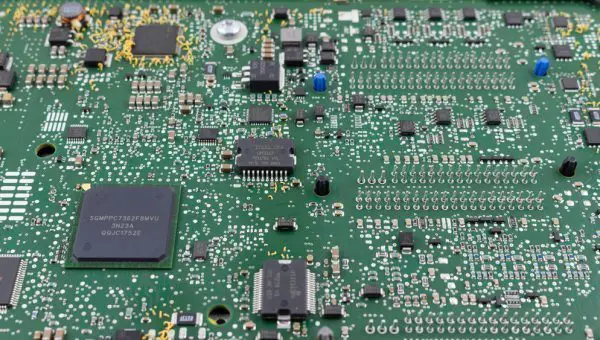
Like it or not, your vehicle is packed to the brim with computers. While these computers are a dream come true when everything is working as intended, they can quickly turn into a nightmare when circuits start failing.
Fortunately for everyone, these computers rarely fail. Because when they do, they’re expensive to replace. One of these magical computers is the powertrain control module, and as the name implies, it controls everything in the powertrain.
In this comprehensive guide, we’ll detail everything you need to know about your PCM and what you need to do if it starts acting up.
While it’s not common for a PCM to break, it does happen from time to time.
The most common symptoms of a bad PCM are the check engine light, performance issues, poor fuel economy, bad shifting, and higher emissions.
Before jumping straight to the PCM, however, rule out any other potential causes. With that caveat noted, we’ve highlighted the six most common symptoms of a faulty PCM below.
1. A Check Engine Light
Check Engine light on dashboard
The first sign that your PCM is having issues will likely be a check engine light. The light could be for anything related to the powertrain. Just keep in mind that the problem is more likely with the sensor, wiring, or just about anything else.
If your vehicle has a check engine light, rule out every other possible cause before jumping to the PCM. Check the trouble codes with an OBD2 scanner
2. Poor Performance
Your PCM controls performance, so it makes sense that if it’s not responding correctly, that performance will suffer. The more flawed your PCM is, the more likely you are to experience multiple issues leading to poor performance.
However, if only one part of your PCM isn’t working correctly, you might only have poor performance under certain conditions, like idling or acceleration.
Related: 8 Causes Why Your Car Won’t Accelerate
3. Starting Problems
Hard starting
If your PCM problems get bad enough, you might not be able to start your vehicle. At the very least, it might be hard to start, especially in colder conditions.
If your vehicle is having starting problems and it’s related to the PCM, that’s a pretty serious issue you need to look into before you total your engine.
4. Increased Emissions
When everything is working correctly, your PCM minimizes your vehicle’s emissions by optimizing performance. When it’s not working as it should, performance suffers and you’ll likely see an increase in emissions. However, unless you’re submitting your vehicle for an emissions test, you probably won’t notice anything different.
5. Poor Fuel Economy
Poor fuel consumption
If everything isn’t working correctly, it’s no surprise that your fuel economy will suffer. For example, you’ll need to give it more gas if your turbo isn’t generating enough boost because the PCM isn’t telling it to.
There are tons of examples like this, but with a faulty PCM, you’ll likely be wasting fuel.
6. Shifting Problems
If your vehicle is having trouble shifting to different gears, the PCM could be the problem. Your PCM controls everything both your engine and transmission are doing. So, if you’re having issues with your powertrain, you might be able to trace it back to the PCM.
If your vehicle is experiencing shifting problems, that’s a serious condition you need to address immediately. Otherwise, your vehicle will behave erratically, which can quickly lead to an accident.
PCM Function
The PCM is the brain of your engine’s power unit. It controls various features, including ignition timing, fuel distribution, emissions, turbo boost pressure, idle speed, throttle control, and much more.
While you might have heard of a transmission control module (TCM) or an engine control module (ECM), a PCM controls both of these functions. So, if your vehicle is equipped with a PCM, it either houses both of these components in a single unit, or the sole computer controls both functions.
The PCM controls all these functions through a variety of sensors that communicate with it. It starts by sending a control to an actuator, then measures the actual results via a sensor.
The PCM is programmed to tell each actuator what to do when specific commands are met – like when you press the accelerator – then it’s programmed to know what the acceptable readings are in response.
When something isn’t working correctly, it sends a warning to the driver via a check engine light. No, it’s not an easy component to understand, and unless you have the proprietary software, it’s not a component you’re going to fix either.
PCM Location
The PCM is most often located in the engine compartment near the fuse box or inside the car near the fuse box. It can also often be located under the front windshield behind some covers.
The manufacturer may place your vehicle’s PCM in different locations, but the most common location is in the engine compartment. The PCM doesn’t look like anything special, just a metal box with wires coming out of it.
If your vehicle’s PCM isn’t in the engine compartment, it might be inside the passenger compartment. While this location isn’t that common if it is there, it’s usually under the dashboard on the passenger side – behind all the plastic trim.
In the extremely rare case that your PCM isn’t in any of these locations, it might be in your vehicle’s trunk. This isn’t as common since all the engine wires would need to run to the back of the vehicle to communicate with the PCM.