
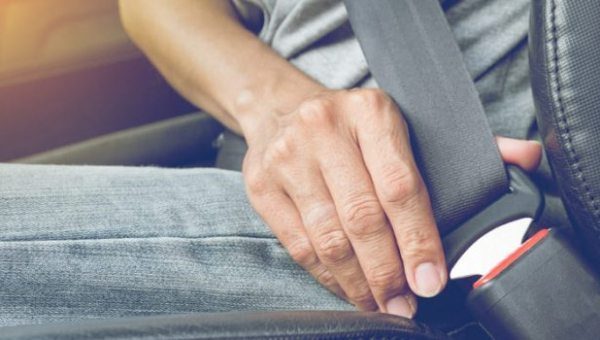

Buckle up to everything you need to know about seat belts.
What do kangaroos, Hugh Jackman, and the seat belt all have in common? They are all Australian exports… at least in a way. Victoria, Australia, was the first country in the world to adopt legislation making seat belts mandatory in all passenger vehicles in the 1970s, after many studies proved they reduced injuries and deaths in road collisions. The United States followed in the 1980s and the rest of the world quickly caught on.
Today, finding a car without a seat belt is quite a strange experience. As a friend’s father took me for a ride in his classic Aston Martin when I was a child, I remember my muscle memory making me reach for the seat and my shock when I found nothing but the leather upholstery.
There is a good reason why cars are equipped with seat belts and the law regarding them exists for a reason. There isn’t just one type of seat belt, however, and here we will give you all the information you need about the different types of seat belts, what they do, and what the laws are regarding them. Buckle up and let’s get started!
WHAT ARE SEAT BELTS FOR?
The main, and relatively obvious, purpose of seat belts is to reduce the risk of injury or death for passengers in the event of an accident or collision on or off the road. The seat belt keeps passengers as static as possible despite sudden stops or changes in momentum. When a car hits something, it loses its forward momentum. However, anyone in the car is traveling at the same speed and will not lose their forward momentum upon collision. This is where the seat belt comes in. Proper use of the seat belt will keep you in place, so you are less likely to hit the dashboard, wheel, or seat in front of you.
If worn correctly, a seat belt distributes the stopping force over the body of the person wearing the seat belt, particularly the pelvis and rib cage. These two areas of the body are more robust and stable than other parts, so by directing the force there, the belt minimizes the effect of the collision on the body. The webbed fabric of the seat belt is strong but flexible and this should allow for a small amount of movement when working correctly, again to minimize injury or shock. It must, however, be well-fitted.
To give you an example of this, not being restrained in the back of a car during a 30 mph accident means the force of hitting the front seat would be between 30 and 60 times that of your own body weight. That’s a lot of force!
Even if you are a careful driver, there is no guarantee that other reckless, occasional, or aggressive drivers will obey traffic signs and rules. It might not be a collision, but being suddenly cut off by someone or another driver failing to yield can force you to make a sudden or emergency stop. In these cases, your seat belt will protect you from head and neck injuries.
Seat belts also provide a stable driving position. This ensures you don’t move in tight turns and helps you focus on driving safely and reduces the risk of obscured vision. A driver wearing a seat belt therefore generally has better control of the wheel when having to perform sudden forced maneuvers, needing to brake hard, or reacting to other difficult scenarios or obstacles on the road.
With all this in mind, the seat belt will also save you money. If you still need to be convinced to wear one while knowing it can protect you, at least think about the costs of medical emergencies, the loss of work hours if you are injured, and the cost of treating disabilities resulting from accidents. This shouldn’t be the main reason you wear one, but it’s certainly true that an injury will cost you money.
WHAT DOES THE LAW SAY?
Sometimes people complain that seat belts are uncomfortable, too tight, or that they don’t need to wear one because they are just going to the shops or visiting a friend down the street. Unfortunately, the law disagrees and there are strict seat belt laws, although there are a few important exceptions to UK seat belt legislation.
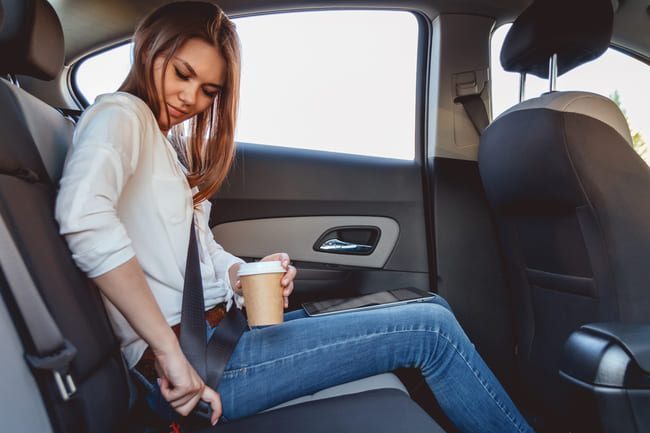
Under the law, if the vehicle seat you are sitting in is equipped with a seat belt, you must wear it. Similarly, only one person can use a seat belt at a time. This applies to both front and rear car seats. Failure to comply with this legislation can result in a fine of up to £500.
In most cases, you must also wear a seat belt during pregnancy. There may be circumstances where your doctor grants you an exemption, but in general, you must wear one at all times.
Wearing a seat belt in case of disability is also mandatory by law. Again, you can be exempted, but this exemption will need to come from your doctor. You may also need to adapt your vehicle to make this possible.
Some older vehicles are not equipped with seat belts (the classic car I mentioned earlier). You cannot carry children under 3 years old in this type of vehicle without a seat belt. Children over 3 years old must sit in the rear seats during a journey.
SEAT BELTS FOR CHILDREN
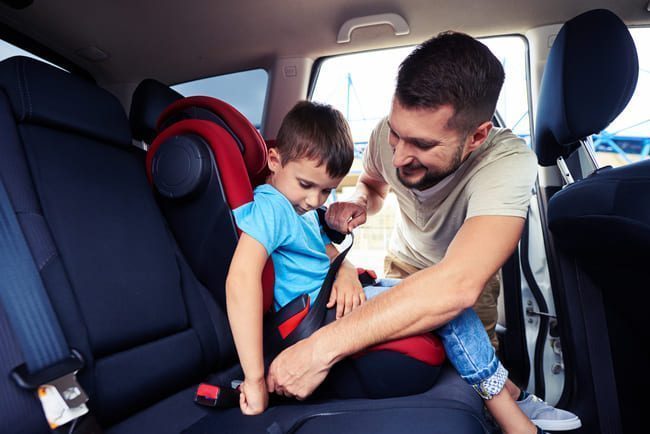
There are also rules for all children traveling in the car with you, regardless of their age.
Children under 13 or 135 centimeters tall must be seated in a child car seat suitable for their height or weight. If they are over 135 cm or 13 years old, they must wear a seat belt.
If this does not happen, the driver of the car receives the same fine as if they had not worn a seat belt.
SITUATIONS WHERE YOU ARE NOT REQUIRED TO WEAR A SEAT BELT
In some cases, you are not required to wear a seat belt in your car.
- If you are reversing a vehicle, you are allowed to remove your seat belt to have a better range of vision and to be able to turn more easily in the seat.
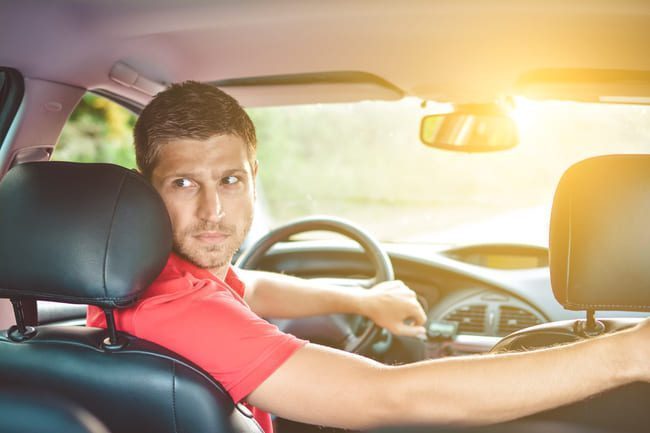
- If you are a driving instructor giving a lesson to a learner, you can also remove your seat belt to help see more clearly where the car is going.
- If you are driving a vehicle for emergency services, you are also exempt from wearing a seat belt, although this is of course highly recommended!
- If you are investigating a mechanical fault as a passenger in a commercial vehicle, you are also not required to wear a seat belt, just as if you were driving a utility vehicle for deliveries if there is no more than 50 meters between stops.
- If you are a licensed taxi driver (there is currently no decision on whether this applies to Uber drivers) while you are “hiring” or carrying passengers.
MEDICAL EXEMPTIONS FROM WEARING A SEAT BELT
Provided you have proof of authorization from your doctor, there are also several medical reasons why you might not have to wear a seat belt.
Doctors can issue a “Certificate of Exemption from Compulsory Seat Belt Wearing” and you must keep it in your vehicle while driving. The police will ask to see it if they stop you for driving without a seat belt and you must inform the vehicle insurer if you have a medical reason for not wearing a seat belt.
DIFFERENT TYPES OF SEAT BELT
The typical modern seat belt has a fabric strap that fastens around the driver or passenger. It is connected to a retractor. The retractor is designed with a spool around which the fabric winds. When the user pulls the belt, the spool rotates counterclockwise and allows the fabric to be moved further. When the seat belt is released, the belt winds back onto the spool. This rewinding action is due to a spring that provides the rotational force to the strap spool.
The retractor also has a seat belt mechanism designed to lock the belt in place if the car stops suddenly, causing the seat belt to tighten around the passenger. This stops any unwanted movement. There are several main types of seat belts that cars can be equipped with.
Also called a lap belt, the 2-point seat belt goes directly over the user’s knees to connect to the buckling mechanism and has no shoulder straps. We often find them in buses or in the center seat of cars, but otherwise, they are quite rare as they do not offer the safety and support of other types of seat belts.

A 3-point seat belt is a step forward and has a belt that goes over the user’s shoulder and then crosses their lap. This offers more support for the body and more area to distribute pressure in a collision. These seat belts distribute the force of an impact over the chest, pelvis, and shoulders, thus reducing the risk of injury to users in an accident. The design prevents more injuries than the lap belt alone, so the 3-point belt is the one primarily installed by car manufacturers.
There is also a 4-point seat belt that has two shoulder straps instead of one. This custom-style seat belt is also known as a racing car seat belt. They are similar to those found in a child’s car seat. The difference between them is that the car seat has a strap that goes between the legs; not the racing car seat belt.
Regarding animals, there is no specific dog seat belt, but they must also be secured using an appropriate restraint device or placed in a dog crate. This also applies to other pets.