
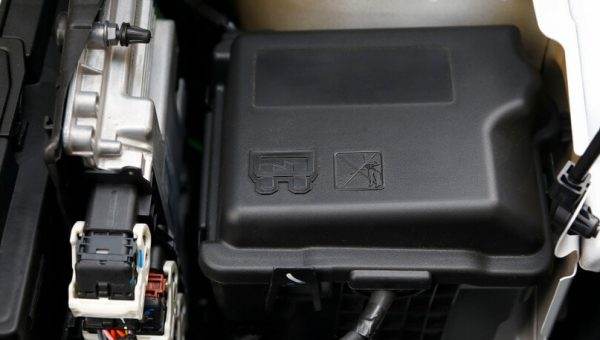

There was a time when vehicles weren’t equipped with sophisticated computer systems. These cars and trucks used pneumatic and mechanical systems to regulate idle, valve timing, and fuel supply. Today, vehicles are equipped with several actuators and sensors connected to computers, ensuring everything works as it should. Some of these computers include the PCM, ECM, ECU, and TCM.
But what’s the difference between PCM and ECM, ECU and TCM? Are they all the same things with different names or do they each have a unique job? We examine each module to determine how it’s used in your vehicle.
- TCM = Transmission Control Module
- ECM = Engine Control Module
- ECU = Engine Control Unit
- PCM = Powertrain Control Module
What is a PCM?
PCM stands for Powertrain Control Module. In one module, this technology combines both the TCM and ECM, which is why it’s found in newer models. Before this technology, a TCM and ECM were needed to do the same job.
A Powertrain Control Module manages your vehicle’s emissions, transmission, and charging systems. As a powertrain module, it’s also responsible for overseeing the transmission and engine.
The PCM manages more operations than the ECM and TCM could alone. With the sensors in place and data transferred, it makes quick adjustments to ensure optimal engine efficiency and performance. Over time, it also learns more about operations to make it even more efficient.
Some of the aspects managed by the PCM include:
- ABS braking
- Gear shifting
- Air/fuel ratio
- Emissions
- Variable valve timing
- Charging rate
- Idle
- Fuel injection
- Ignition timing
- Electronic differential performance
Of course, this list could go on because the PCM acts as the heart and brain of the modern vehicle.
What is an ECM or ECU?

ECM stands for Engine Control Module, while ECU stands for Engine Control Unit. Although these two have a different name, the modules are essentially the same thing.
These electronic modules control several vehicle systems, including ABS, airbags, cruise control, and air conditioning. However, the engine is what the module is primarily responsible for. It optimizes performance and ensures efficiency by controlling ignition, fuel injection, and airflow.
Using various sensors, the ECM interprets data, determining which systems need to be adjusted. It chooses the response to follow to create optimal running conditions. The manufacturer programs it to work with a specific vehicle, so it cannot be swapped with another ECU.
The ECM works in conjunction with air-fuel sensors, MAF sensors, oxygen sensors, crankshaft and camshaft position sensors, coolant temperature sensor, throttle position sensor, and EGR valve sensor to ensure everything works as it should. Upon startup, the ECM will undergo a full system check to ensure proper performance. If something isn’t working correctly, it can also put the vehicle into limp mode until repairs are made.
What is a TCM?
TCM stands for Transmission Control Module. It may also be called TCU or Transmission Control Unit, but TCU should not be used to describe this because it can also mean Telematics Control Unit.
The TCM enables gear shifting in automatic vehicles. The manual transmission car will not contain a TCM because the driver manages gear changes.
Various sensors are used to transmit information to the TCM, allowing the transmission to shift gears in an optimized way for better performance and fuel efficiency.
Some of the sensors working with the TCM include wheel speed sensors, turbine speed sensor, transmission fluid temperature sensors, vehicle speed sensor, and throttle position sensor. Additionally, the TCM monitors acceleration rate, road gradient, vehicle speed, and deceleration rate for optimized control.
Faulty Module Symptoms
The PCM, ECM, and TCM will all create symptoms when malfunctioning, most of which are performance issues.
- Engine won’t start
- Transmission not shifting smoothly
- Poor fuel economy
Engine Won’t Start
When any of these vital modules deteriorates, the engine may not start at all. When you start the engine, any fault can cause the system to shut down to protect it from further damage.
Additionally, the engine may run with issues. If you notice misfires, stuttering, rough idle, or stalling, it could be due to a faulty module. When this happens, you may also see warning lights on the dashboard.
Transmission Not Shifting Smoothly
When the modules deteriorate, they can affect the transmission’s operation. You might notice rough gear shifts and inappropriate shift times.
There may also be some hesitation when you press the accelerator pedal. When shifting issues occur, they are often related to the TCM on older vehicles and the PCM on modern models.
Poor Fuel Economy
For optimal fuel efficiency, the engine and transmission must operate as intended. Whenever part of the balance is thrown off, fuel efficiency can suffer.
You might first notice issues when taking the vehicle for emissions tests. However, if you monitor your fuel economy and notice a decrease, you might find the problem early.
Replacing a Defective Module
The average cost to replace an ECM is often between $500 and $1,000, while the average replacement cost for a TCM or PCM is similar. Using an OBDII scanner can help you determine if any of the modules are faulty.
Additionally, there are times when a simple reconfiguration or reprogramming by the dealer can be done to fix the issue. If the update doesn’t resolve the situation, a replacement would be necessary.
Aftermarket modules are available and help you save money, but they don’t always work as they should. The car manufacturer didn’t make the aftermarket chips, so they may require specific software to function correctly.
Some car manufacturers go further and discourage the use of aftermarket modules, for example by creating a problem that can only be solved with the proper module. If you drive a new vehicle, you might also void your powertrain warranty if you use anything other than the OEM module.
Although you can replace the module yourself with basic tools, you might not want to. New modules require programming that is best done at the dealership.