
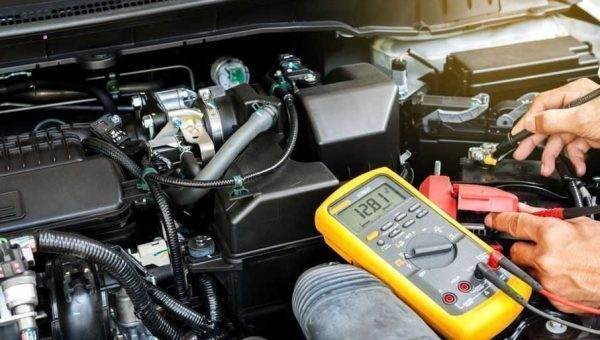

The battery is an essential component that powers your car. Its health affects whether your vehicle can function properly or not at all. Therefore, to reduce your risk of breakdown, it is important to test a car battery with a multimeter regularly, at least twice a year. Don’t wait until the car starts showing signs of weakness.
If you’re having trouble starting your car or experiencing other telltale signs, there’s a good chance your battery is failing. Ensuring your battery is in good condition before a long trip can save you a lot of hassle. Testing the battery also helps you quickly determine if slow starting is the result of a failing battery or problems elsewhere. Here is a step-by-step guide on how to test a car battery with a multimeter, a cheap and handy tool for easy car maintenance at home.

How to Know When Your Car Battery is Faulty
The most common signs indicating that your car battery needs to be recharged or replaced:
- One of the most obvious signs is the battery warning light1. illuminated on the dashboard.
- The headlights are dim. When the battery is weak, it doesn’t have enough power to run your car’s electrical components.
- You hear a click, or nothing at all, when you turn the engine over.
- The engine cranks slowly when starting.
- You have to press the accelerator pedal to start.
- No-start: The car simply refuses to start.
What is a Multimeter?
A multimeter measures the voltage that your car battery is currently storing or the amount of energy stored in the battery. Sufficient power ensures your vehicle functions properly, while insufficient power requires immediate charging. It’s a simple tool for testing the condition of your car battery at home and in no time. It’s one of our recommended tips for maintaining your car at home, saving you time and money with mechanics. You can find a multimeter for as little as $8 on Amazon.

How to Test a Car Battery with a Multimeter – Step-by-Step Guide
A very convenient way to know if your battery is sufficiently charged is to use a multimeter. Follow these steps to use a multimeter to test a car battery:
1. Turn Off the Car for at Least One Hour
Due to how the battery discharges, it is important to let the car sit for at least one hour, or overnight, before using the multimeter to test your car battery. If the car is running when the battery is tested with a multimeter, the charge from the powered alternator, which is the component that produces electricity and charges the battery, will affect the “true” reading of the multimeter. If the car has recently been running, the battery is likely to produce a misleadingly higher number on the multimeter, so it is inaccurate.
2. Locate the Battery
The battery is often housed in the engine compartment under the hood, on one side of the engine. On some cars, the battery is located in the trunk for better weight distribution. The battery will often have a plastic cover that can be opened easily, or may require removing a few bolts or screws. After locating the battery, ensure no metal objects are touching the battery terminals. Keep all tools away.
3. Prepare the Multimeter
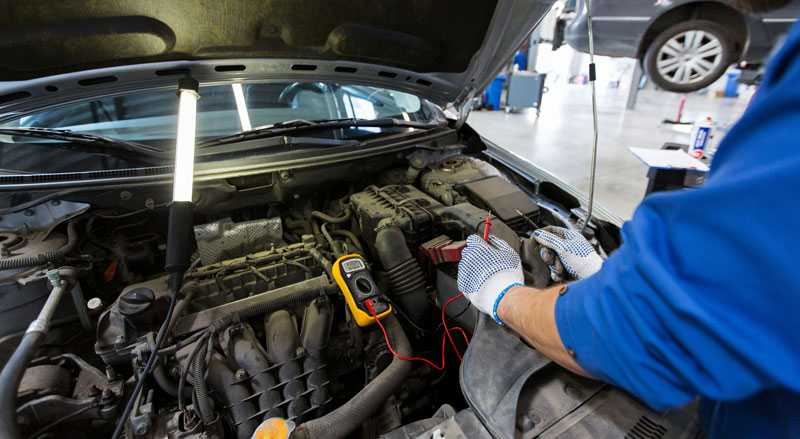
You need to set the multimeter to a specific range so it can measure within that range whenever you use it to test something. To test a car battery with a multimeter, set your multimeter to 20 DC volts, which will allow you to accurately measure a battery storing between 0 and 20 volts. To do this, turn the dial to 20 on the “DCV” (Direct Current Voltage) range. Sometimes this is indicated by the letter “V” with a solid line above a dashed line to its right. The multimeter should read 0.00.
4. Connect the Multimeter to the Battery
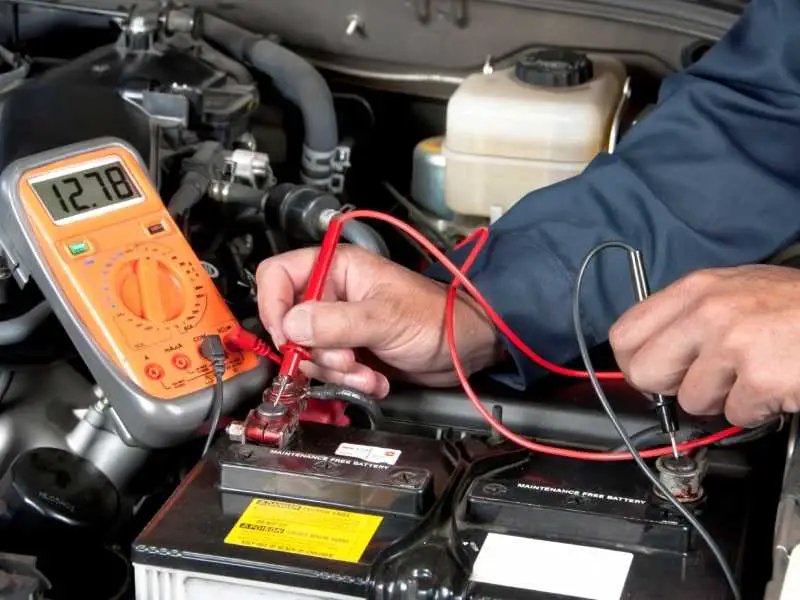
Touch the red probe (positive, marked “+”) of the multimeter to the red (positive) terminal of the battery. Touch the black probe (negative, marked “-“) of the meter to the black (negative) terminal of the battery.
5. Read the Multimeter.
When fully charged, batteries should have 12.6 volts or more. Note that when a battery drops to 12.2, it is only 50% charged. A reading below 12 indicates that the battery is junk and needs to be replaced.
6. Additional Test
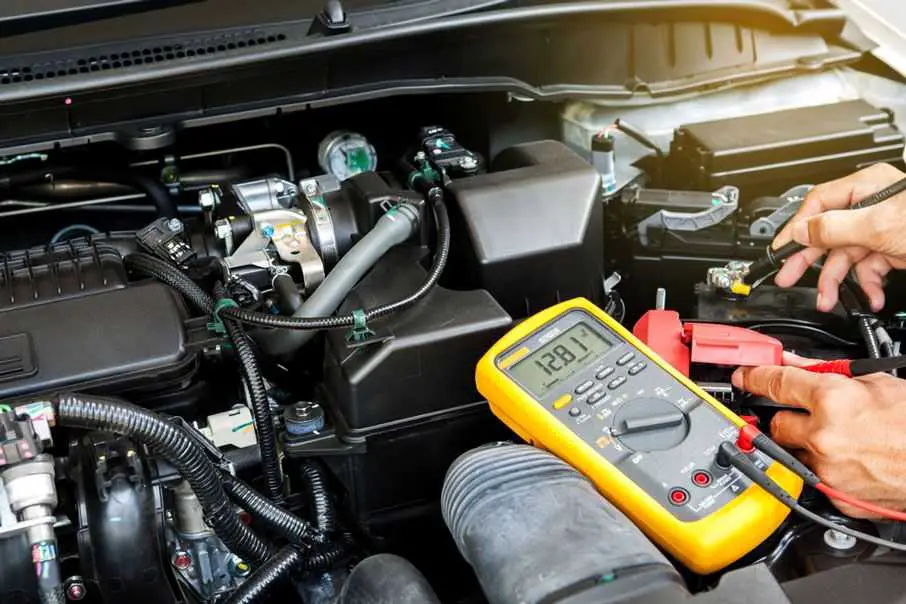
Have an assistant start the engine and read the multimeter again. This time, if the revised voltage drops below 5 when the car is running, it must be discarded and replaced immediately. If the reading is below 10, it’s a sign that the battery is not in good enough condition to turn the engine’s starter.
7. Charge Your Car Battery if It’s Not Fully Charged
If you get a reading below 12.6, disconnect the battery by disconnecting the battery cables and unscrewing the hold-down mechanism that keeps the battery in place. Charge it, then test again after it has rested overnight. If the new reading is not higher, replace the battery.
Other Possible Issues with Your Battery
1. Damaged Battery Case and Cables
Damage to the battery case can also be the cause of a faulty battery. Have it replaced if it is damaged in any way. Check the battery cables for worn insulation, cracks, or fraying and have them replaced if necessary. If after inspection this is not the case, try checking the possible issues below.
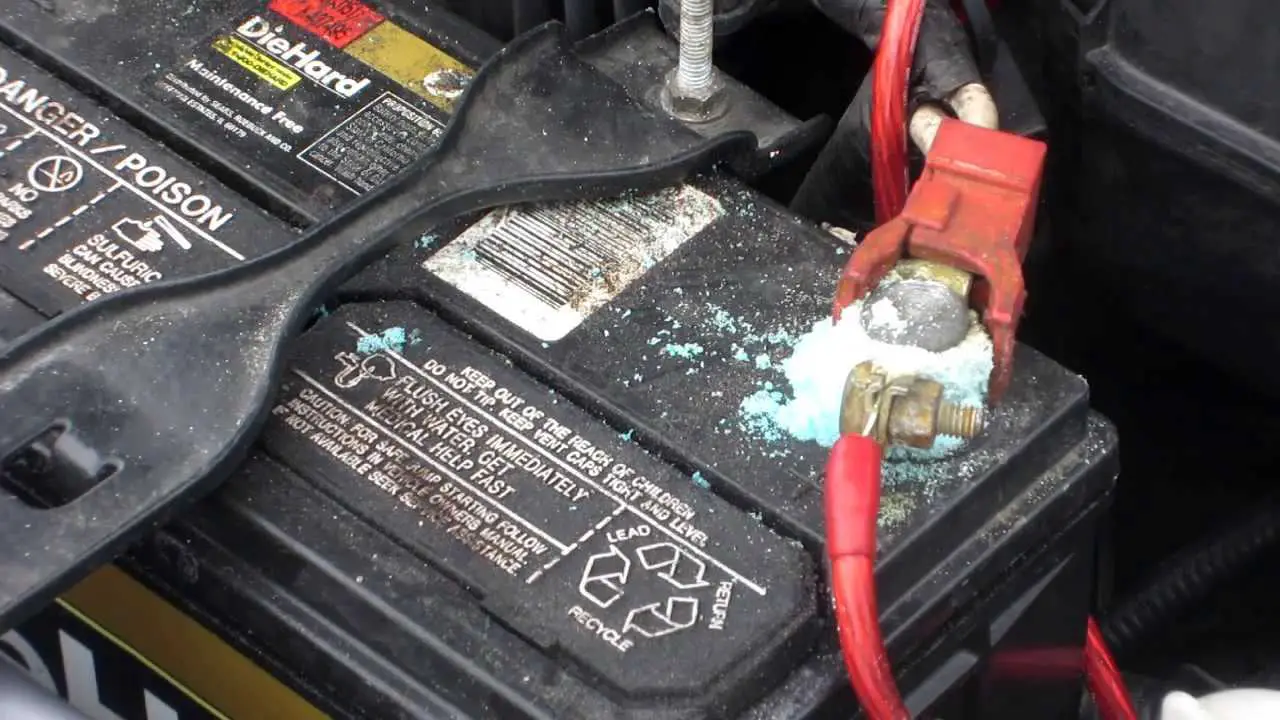
2. Battery Terminals are Dirty or Corroded
Another common issue is corrosion or dirt buildup at the terminal connectors. You can get rid of corrosion or buildup using sandpaper, or a brush and cleaning solution (warm water and baking soda will work effectively). Remember to wear gloves and safety glasses to protect your eyes.
3. Alternator Test
The alternator produces electricity and charges the battery. If the alternator is working well, your car battery’s lifespan is maximized. If it overcharges or undercharges, the battery’s lifespan will be shortened.
Here’s how to test the alternator with a multimeter. Let the engine run and perform the same battery test as above with the multimeter. A good alternator should produce between 13.8 V and 14.4 V at normal idle. A reading outside this range means your car is undercharging or overcharging, both unhealthy for the battery and your vehicle.
We hope you find our guide on how to test a car battery with a multimeter useful for easy vehicle maintenance in your own home. Ensuring your car battery is properly charged is crucial to maximizing its lifespan and providing you with a pleasant, hassle-free driving experience with your vehicle.
If you are experiencing slow starting or no-start issues and the multimeter test shows the battery is in good condition, it might be your car’s starter.