
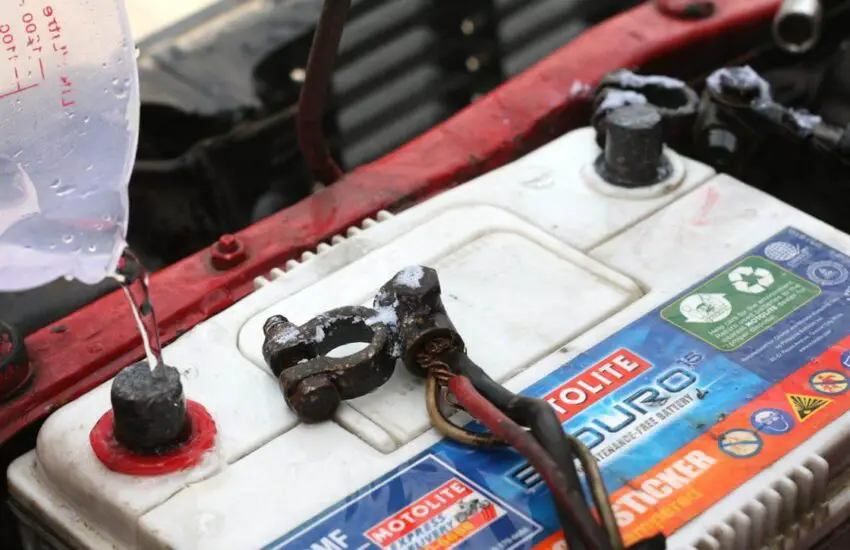
A car battery is one of the most expensive pieces of equipment that you want to keep in the best condition for a long time. A bad battery replacement can be costly, but not when you have an effective DIY guide on how to recondition a car battery solution. Yes, you read that right! You can easily recondition your car battery with our foolproof method. So first, let’s find out what car battery reconditioning is!
What Are Reconditioned Car Batteries?
Reconditioned car batteries refer to the process of restoring the healthy life and charging capacity of your old and dead cells. It would be a total waste to easily throw away your old batteries when you can still recondition them one to three times.
So, instead of throwing away the batteries. Let’s learn how to recondition a car battery at home. You will be able to learn it in the next section of our article.
Why Should You Recondition Batteries?
What we always see are people throwing away their car batteries. It’s understandable since no one wants the hassle and inconvenience associated with using batteries that are no longer effective. Likewise, drivers have no idea how to recondition batteries. Batteries are also incredibly expensive to replace, and their price might not even go down as the device ages.
Battery reconditioning allows you to preserve and refresh the function of your batteries so they can perform as before: giving you enough charge and saving you a lot of money. It is also better for the environment since the batteries themselves are very difficult to recycle and usually end up in trash cans, leaking chemicals into the environment and having a huge impact on the planet’s well-being.
So, let’s explore the entire procedure for reconditioning a car battery right now!

Use a Clever Way to Recondition a Car Battery
Reconditioning your car battery is not complicated at all. Just follow a complete procedure and do it yourself every time.
What Equipment Do You Need?
Please prepare these tools in advance to recondition the car battery!
- Battery charger
- Chemical-resistant neoprene
- Safety glasses and gloves
- Flat-head screwdriver
- Plastic funnel
- 1 gallon of distilled water
- Plastic bucket
- Voltmeter
- 1 lb of baking soda
- Optional battery terminal cleaner
How to Recondition a Car Battery
Step 1. Reconditioning the Basics
At the initial stage, cleaning corrosion is vital. You can use a ready-to-use post cleaner or prepare your own solution to clean the battery terminals. You can also choose any cleaning product available on the market. To prepare your solution, mix 2 teaspoons of baking soda and 1 spoon of water until you see it turn into a fine paste. Now, take a toothbrush and scrub it on the posts. In case of heavy corrosion, you can even use steel wool. This is the first step towards how to properly recondition a car battery.
If your battery has heavy corrosion, using 300-grit sandpaper or steel wool is a great choice.
Note: Remember to wear safety equipment like gloves and glasses.
Step 2. Check the Battery Voltage
The next step to restore the car battery is to check the battery voltage. The voltage tester voltmeter is the best choice with which one can obtain the correct power settings. There is nothing complicated about checking the voltage, just connect the voltmeter to the battery terminals and you’re good to go.
The condition for reconditioning a car battery is that the battery voltage is above 10 volts. If the readings are 12.6 Volts, the battery is in good condition, and if it is higher, reconditioning is surely necessary. If it is between 10 and 12 volts, you can restore the battery to full function. On the other hand, if it’s less than 10 volts, you’re probably wasting your time. You might see a zero reading. This indicates that the battery has short-circuited. This is the time when you need to use your maintenance tips or simply contact the mechanic to handle the situation the right way.
Step 3. Remove the Acid
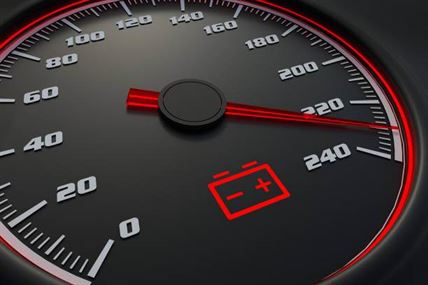
After successfully checking the voltage, it’s time to remove the old acid from the battery. Using a flat-head screwdriver, reach the battery caps. The caps can range from two to six. Remove all caps but make sure you have a container or bucket near you.
At this stage, before emptying each cell, you should take the time to test each battery cell individually. This could help you find out if your car battery has a dead cell or not. When the battery cells are all empty, set your battery aside, take ½ lb of your baking soda, and add it to your bucket of used battery acid. This will neutralize the battery acid so you can safely dispose of it later.
Note: The liquid (electrolyte) inside lead-acid battery cells is very dangerous. It is a mixture of sulfuric acid and water. You don’t want to get it on your skin, in your eyes, or even on your clothes. So make sure to wear all safety equipment.
Step 4. Restore the Battery to Working Condition
Now that you have cleaned the acid from the battery, it’s time to recondition it. For this, you need to fill the cell with electrolytes. The electrolyte is normally made of Epsom salt and distilled water. This will allow your battery to charge well and avoid sulfates. Now, pour it into the battery.
Step 5. Finally, Charge the Battery
The final step in reconditioning a car battery is to check if the entire reconditioning process is working or not. It is not recommended to put the caps back on the battery as the electrolyte might overflow during charging. So, take the battery charger and connect the black wire (negative) to the negative terminal and the red wire (positive) to the positive terminal. Maintain the charging speed around twelve V/two amps. Continue charging for at least one day or 36 hours. Remove the charger and take the readings via the voltmeter. Normal readings will be 12.42 V. You can also perform the battery load test if you wish. Otherwise, you are ready for an effective car battery.
There you go, you have completed the task of reconditioning a car battery. Remember to wear safety glasses, gloves, and other important things.
Tips and Warnings When Reconditioning the Car Battery
Tips
Unless you use car batteries for a few weeks or more, put them on a maintenance charger to limit performance loss. A stored battery gradually loses its charge, allowing sulfur to form on the lead plates.
To restore the battery to its maximum capacity, put it on the charger for three or four nights.
Do not put the caps that cover your battery’s cells back on during charging, as the electrolyte fluid is likely to heat up and overflow. You don’t want pressure to build up inside the cells.
Warnings
Do not use tap water as it contains chemicals that would damage a battery
Car batteries contain very dangerous sulfuric acid. You must work only in a well-ventilated area and with no open flames nearby. Wearing safety glasses and rubber gloves is also recommended. In an unfortunate case, if you get acid on your skin, irrigate it immediately with water.
Alternatives to Epsom Salt Battery Reconditioning
Normally, Epsom salt is used because it gives the best results. However, there are a few alternatives to Epsom salt that you can try for battery reconditioning.
Aluminum Sulfate
You can mix 1 lb of aluminum sulfate with 1 gallon of boiling distilled water. Stir this mixture until it is as clear as possible. Then you fill the cells with the solution and charge the battery. As a result, the battery charges faster thanks to the electrolyte produced from aluminum sulfate.
Copper Sulfate
Copper sulfate is another substitute for battery reconditioning. From our experience, it is not as effective as Epsom salt, which remains the safe choice.
To learn more about how to recondition a car battery, watch the video below:
Conclusion
I hope this article can be helpful to you, if you have any questions, feel free to leave our automotive experts’ comments in the box below, and we will answer them for you. Remember to read other maintenance tips to better understand your car’s problems and know how to fix them when needed.