

How to Clean Car Seat Belts: The Complete Beginner’s Guide. Most seat belts are devices that get dirty easily but are often overlooked. Drivers typically soil their seat belts with sweat, food stains, or coffee spills. Many people don’t know how to clean seat belts; therefore, in this article, we will guide you on how to proceed.
What Material Are Car Seat Belts Made Of?
Car seat belts are essential for ensuring driver safety, as they help minimize injuries resulting from body impact during an accident. However, it’s important to note that seat belts can get dirty and develop yellowish stains due to factors like sweat or food spills. If left unattended, these long-term stains can promote mold growth, compromising both aesthetics and health. Therefore, drivers should take proactive steps to clean their seat belts.
Car seat belts are technically produced to ensure driver safety even when the belt is pulled and stretched. The fabric that makes up the belt is a woven mesh, carefully designed to have extremely high tensile strength – approximately 3,000 to 6,000 lbs.
The seat belt material is typically 100% woven polyester. Nylon was once the most popular material, but it is more prone to stretching and wear. Even minor damage or wear on the belt will significantly reduce its tensile strength. Therefore, the difference between polyester and nylon is minimal but extremely important.
How to Clean Seat Belts in 3 Simple Steps
Required Items
- Hand clamp
- Scrubbing pad
- Small soft brush
- Sponge towel
- Fabric cleaner
- All-purpose cleaner
- White vinegar
- Dish soap
- Plastic cup
- Stiff-bristled brush
Steps for Washing the Car Seat Belt
You might be surprised to learn that cleaning seat belts is not extremely difficult. Once you have gathered all these necessary items, you are ready to start cleaning by following the simple steps below.
Step 1: Pull and Stabilize the Belt
Gently pull the seat belt out of the retractor to find mold and sources of foul odors. The belt should be pulled forward until it can’t go any further so that drivers can wash it completely. Use a metal clamp to prevent the belt from retracting into the coil while you work on it.
Step 2: Use the Cleaning Liquid
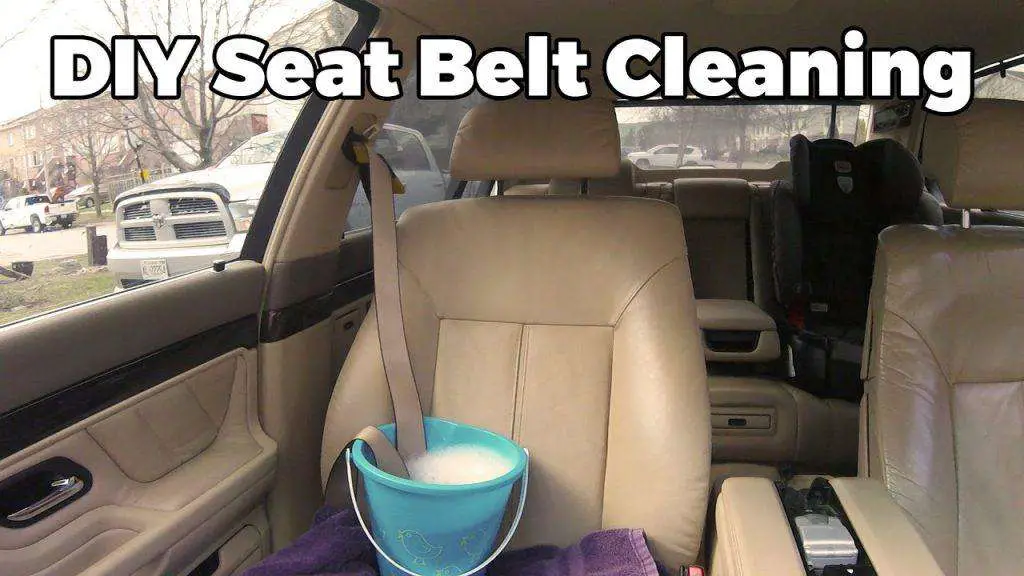
For a Normal Stain
Next, use a car seat belt cleaner to remove dirt. Lightly spray fabric cleaner onto the fibers and scrub with a medium to stiff-bristled brush, avoiding circular motions by scrubbing up and down. Most stains can be cleaned with an all-purpose cleaner that can be safely used not only on seat belts but also for the health of car owners.
For a Stubborn Stain
It is recommended for drivers to create the mixture by filling a cup with warm water and adding 3 tablespoons of all-purpose cleaner. Expert car owners usually create this cleaning mixture for tough stains. Use the minimum amount of cleaner and liquid needed to remove the stain and avoid oversaturating or spreading discoloration.
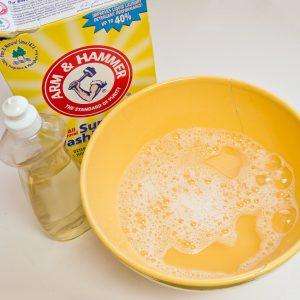
For Mold and Unpleasant Odors
To create a wonderful mixture, car owners can follow this recipe: non-bleach dish soap, warm water, and vinegar. Mix 1 tablespoon of dish soap in a cup of warm water, then add about 30 ml of vinegar. It is advisable to stir the mixture gently until completely combined.
Next, gently scrub the strap. Vinegar is excellent for killing odors and is a natural antibacterial agent to minimize future mold problems. If you have access to a steam machine, spray a fabric cleaner on the belt and blow pressurized steam onto the strap to remove dirt and kill germs. Steam is also useful for minimizing the amount of moisture used and, consequently, the drying time required.
Step 3: Gently Scrub the Belt
One of the most powerful cleaning tools available to car owners is the stiff-bristled brush. The brush can be used to restore the seat belt to its optimal condition. Car owners should scrub from bottom to top to avoid wearing out the belt threads. Remember to use the brush gently and not move it in a circular motion.
Use the minimum amount of cleaner and liquid needed to remove the stain and avoid oversaturating or spreading discoloration. By doing this, the nasty stains and mold will be completely eliminated.
After that, it is also recommended to use a microfiber towel to remove moisture.
Step 4: Let the Belt Dry
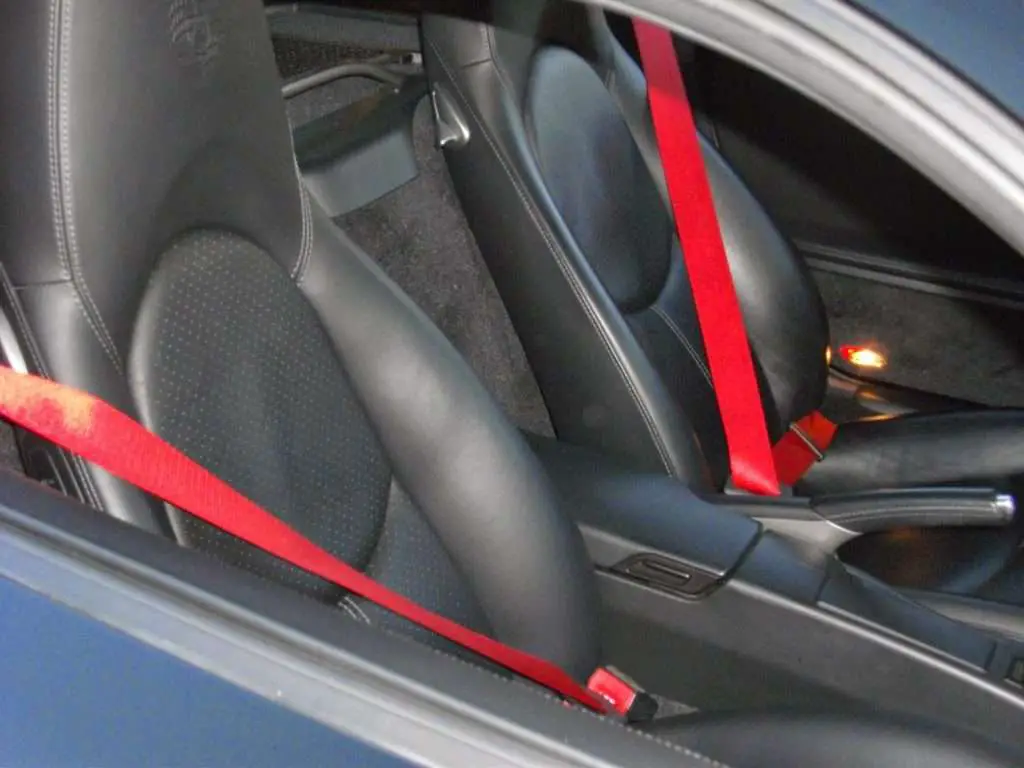
Finally, dry with a cloth towel by pressing the belt between your hands and running the fibers from top to bottom, to avoid damaging the belt threads. The belts must be dry before pulling and retracting to prevent mold from growing inside.
It usually takes overnight or longer for the belts to dry completely. If the belt is retracted and retains moisture, mold and bacteria will grow inside the coil, so allow enough time for proper airing.
How Often Should We Clean the Car Seat Belt?
Seat belts are designed to be rolled up and hidden, so they are often overlooked during car cleaning. However, in reality, seat belts are one of the sources of bad odors in cars.
Most compact cars are equipped with five seat belts: the driver’s seat belt, the passenger seat belt, and the other three on the rear seats.
For the passenger seat belt, the car owner can clean it at any time if someone often sits in that position. If the user frequently drives alone, cleaning is only required every six months to remove accumulated dust and dirt. The same applies to the rear seat belts. If there are often children or pets in the vehicle, the vehicle owners should clean the seat belts as often as the driver’s seat belt.
In Conclusion
We hope you find a detailed and helpful answer to the question of how to clean seat belts. Additionally, you can browse online to find the best maintenance tips and get more information on cleaning car seat belts.