
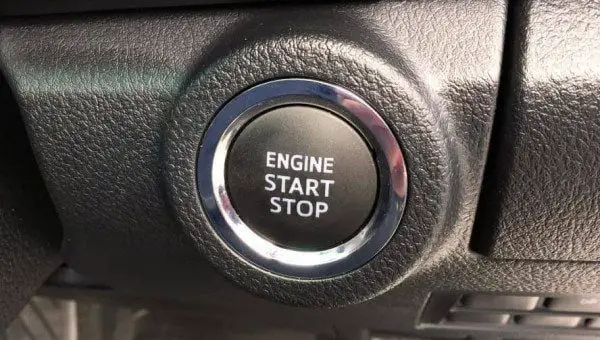

Nowadays, people will say just about anything to prove their point. Not only will they continue to confuse themselves, but they will also confuse your thoughts on a subject.
They will discuss the quality of fuel you should put in your car, the pressure you should have in your car’s tires, and even weigh the pros and cons of Auto-Stop/Start technology. Even if you can’t judge what is right and what is wrong, you can certainly find out the truth on the Internet.
That’s where this article comes into the spotlight. Does Auto-Start/Stop technology damage your engine and its components? That’s what we want to find out!
What is Auto Stop/Start Technology?
auto stop
Before talking in detail about Start/Stop technology, let’s look at its history and meaning.
The Auto Start/Stop system first appeared in the automotive world in the 1980s when Volkswagen used it in their high-end vehicles such as the Passat and Golf. The technology didn’t take off initially, but today, we can see it in almost every other car, regardless of their size.
Why is this technology so popular today compared to the past? Because the world is focusing more on saving the environment. When fuel burns, harmful chemicals and gases like carbon dioxide and carbon monoxide are emitted. These gases choke the environment day after day.
Scientists and engineers have tried to reduce gas consumption by using advanced methods to improve aerodynamics, engine, and vehicle design. Later, they discovered a very trivial fact: when an engine is not running, it does not produce potentially deadly gases. Auto Start/Stop technology is the implementation and practical application of this fact.
With Auto Start/Stop technology, the engine is completely shut off when a vehicle comes to a stop. The engine restarts automatically as soon as you decide to start moving again. This innovation is only useful if you make multiple stops along the way. You won’t save fuel when driving on the highway.
However, most trips that everyone makes are on city roads, so there is something to gain from using this technology. Even if the Start/Stop action saves a small percentage of fuel, in the long run, it can make a significant difference in your fuel costs.
How Does Start-Stop Technology Work?
start stop
There are a number of companies that produce such technologies, but the most popular among them is Denso. You might recognize Denso if you have ever worked with your car’s air conditioning. The Japanese company supplies Auto Start/Stop technology to all major American car brands such as Ford as well as other global car manufacturers.
The auto start/stop system detects that you have applied the brakes and the engine’s RPM stops. As soon as it detects that you have come to a stop, the system cuts off the engine. It restarts the engine as soon as you release your foot from the brake.
Difference Between Regular Starter and Auto Start
Every car has an ignition or starter to start the engine. The starter does this through a very simple process of rotating the flywheel and igniting the engine. However, this simple mechanical system is not suitable for normal starts.
With the Auto-Start/Stop technique, the engine is started multiple times during a trip. Therefore, a completely different component is used. This other component can handle hundreds of starts in a day without feeling the heat.
Vehicle Damage
A vehicle’s engine is vulnerable when it starts. The engine needs to heat the lubricants inside so they can flow easily to any angle. A cold engine is more vulnerable to damage, and that’s what many complain about when they talk about Stop/Start technology. Yes, the engine can be damaged when it’s cold, but auto start/stop technology is only activated when the car is on the road. This only happens when the engine has reached its operating temperature.
Even if you sit at a stoplight for about a minute, that time is not enough to cool the engine’s lubricants. Therefore, Auto Start/Stop technology does not cause much damage. In case you need to stay still for a longer period, the system is designed to start the engine automatically when it notices the lubricants cooling.
Moreover, the technology does not allow all the oil to flow back into the oil pan, so when the car is restarted, a considerable amount of fluid is already left in the engine compartment. Even so, to further reduce engine wear, engineers now use dry lubricants in key areas such as engine mounts. Modern engine mounts are designed to withstand many restarts even in the absence of oil to reduce friction.
Is There a Way Around This?
Frankly, saving the environment is the responsibility of every human being. It is better that we, as responsible people, use the systems set up by experts to reduce the harmful effects on the environment. But not everyone thinks so. Some people prefer less technology to the domination of technology, and they do not like these innovations. Car manufacturers respect this and, as such, they always offer manual control of the system.
If you don’t like the technology, you can disable its functions simply by pressing a button. With this button, you can toggle between using and not using the Auto-Start/Stop function. You may not want to keep your foot on the brakes when standing at a stoplight. Engineers have even solved this problem by providing you with a separate button that allows you to keep the technology in play while you release the brakes.
Conclusion
Does Auto-Start/Stop technology damage your engine? Yes, but not to the extent that you need to worry about it. The system is designed to minimize engine wear while preserving your content.