
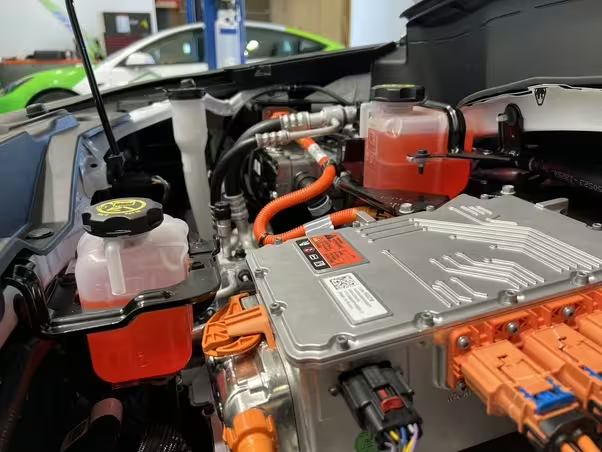
Electric vehicles (EVs) have become a major force in the automotive landscape. These silent vehicles offer a cleaner and more efficient alternative to traditional gasoline cars. One of the main differences between these two technologies lies in their cooling systems.
Since electric cars lack internal combustion engines, a major source of heat in gasoline vehicles, the question arises: do electric cars have radiators?
So fasten your seatbelts and discover the secrets to keeping these electric wonders cool!
Traditional Cooling Systems and Radiators
Internal combustion engines, the workhorses of traditional gasoline cars, are like tireless athletes: they generate a huge amount of heat during operation.
This heat is a byproduct of the combustion process, where gasoline and air ignite in the engine’s cylinders, propelling the car forward.
However, excessive heat can harm engine performance and lifespan. Imagine running a marathon without ever cooling down: that’s what an engine would endure without a proper cooling system.
This is where the radiator comes into play: it acts as the hero of the story, ensuring the engine stays within its optimal temperature range. The radiator is essentially a heat exchanger, located at the front of the car.
It consists of a network of thin fins and metal tubes filled with coolant, a special liquid that absorbs heat. When the hot coolant circulates through the engine block, it absorbs heat from the engine.
The coolant then flows through the radiator tubes, where air flowing through the car’s front grille helps dissipate the heat into the environment. A fan mounted behind the radiator helps draw air through the system more effectively, especially when the car is idling or moving slowly.
Traditional cooling systems, while effective, have some limitations. They can complicate engine design and require regular maintenance, such as checking and replacing the coolant. Furthermore, leaks in the cooling system can lead to overheating, potentially causing serious engine damage.
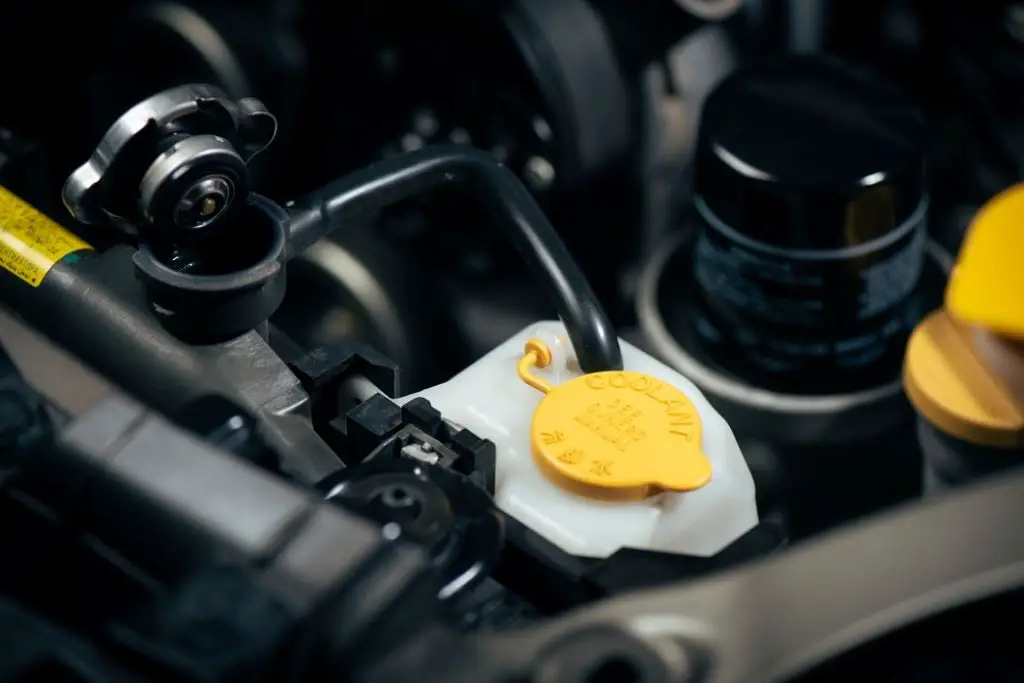
Do Electric Cars Have Radiators?
The fundamental difference between electric vehicles and gasoline vehicles lies in their power source. Gasoline engines rely on a process called internal combustion, where fuel and air ignite in the cylinders. This combustion process generates a huge amount of heat as a byproduct.
The engine must then expend extra energy to manage this heat, often requiring a complex cooling system with a radiator to prevent overheating.
Electric vehicles, on the other hand, operate on a completely different principle. They use electric motors powered by high-voltage batteries. Electric motors work by converting electrical energy into mechanical energy to spin the wheels.
While some heat is inevitably generated during this process, its amount is significantly lower than the intense heat produced by combustion engines. The reduced heat eliminates the need for a bulky radiator system like those found in traditional gasoline cars.
However, electric vehicles still require some form of thermal management to ensure optimal performance and battery health.
Although they don’t need the robust cooling systems of gasoline cars, electric vehicles often use alternative methods like liquid cooling or air cooling to maintain an adequate battery temperature.
Alternative Cooling Solutions for Electric Cars: Keeping Things Cool
Although electric vehicles (EVs) eliminate the need for a traditional radiator, thermal management remains crucial for optimal performance and battery health.
Unlike gasoline engines that generate enormous heat during combustion, electric motors operate at much lower temperatures. However, EVs still require effective cooling systems for several key components.
Battery Thermal Management
The battery is the heart of an electric car, and maintaining its optimal temperature range is essential. Two main methods are used to cool the battery.
- Liquid Cooling: This is the most common and effective approach. A network of cooling channels runs through the battery.
A pump circulates a coolant that absorbs heat from the battery cells and transfers it to a radiator located at the front of the vehicle. Air flowing through the radiator then helps dissipate the heat.
- Air Cooling: This method is typically used in smaller EVs or those with less powerful batteries. Strategically placed fans circulate air around the battery to cool the cells.
Although simpler and lighter, air cooling is less efficient than liquid cooling and may struggle to maintain optimal battery temperature in hot climates or during periods of high demand.
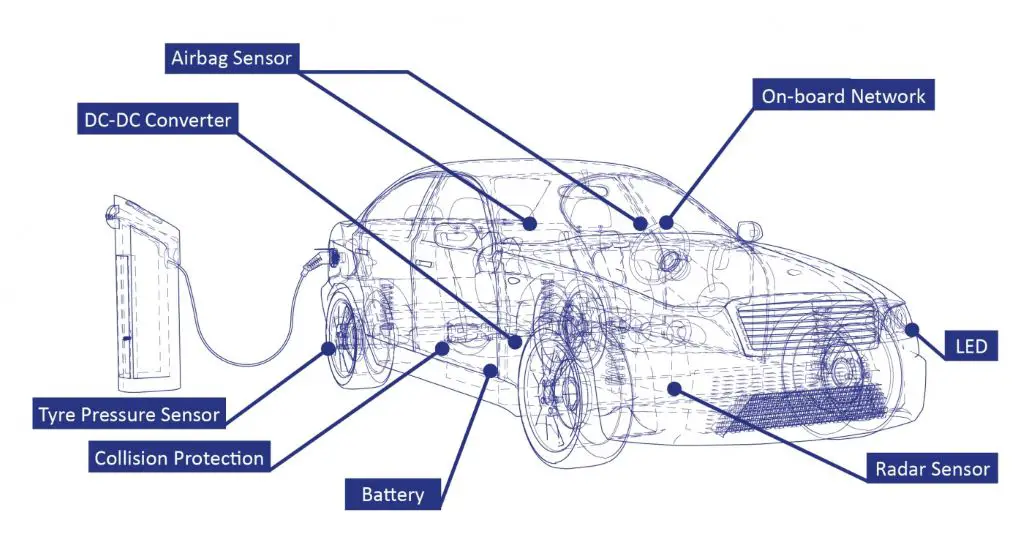
Additional Cooling Needs
Beyond the battery, other components in an electric car can also generate heat and require cooling.
Power Electronics
The power electronics module, which converts electricity from the battery into a form usable by the electric motor, can also generate significant heat.
Often, these modules are cooled using a separate liquid cooling loop or strategically placed heat sinks that dissipate heat into the surrounding air.
Electric Motor
Although electric motors generate less heat than gasoline engines, they still require some level of cooling, especially under heavy load or high-speed driving. Some electric motors use a jacket filled with coolant that circulates around the motor casing to regulate temperature.
By implementing these alternative cooling solutions, electric car manufacturers ensure that all vital components operate within their optimal temperature range.
This not only optimizes performance and efficiency but also extends the battery’s lifespan, a crucial element of any electric vehicle.
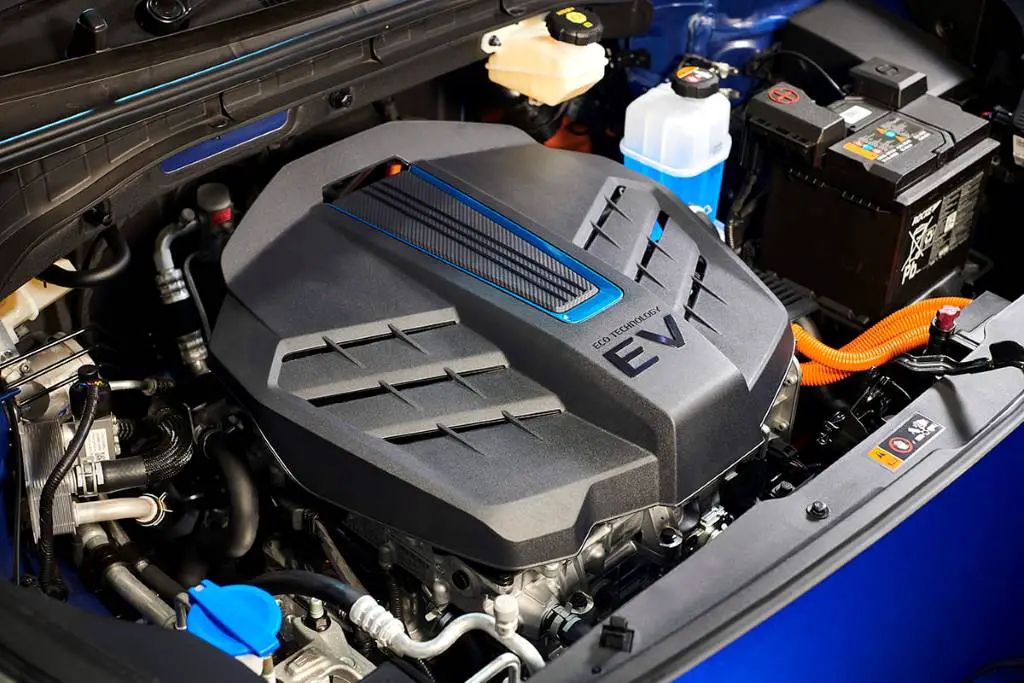
FAQ
- Do electric cars use the same type of radiators as traditional internal combustion engine (ICE) vehicles?
Electric cars do not use the same type of radiators as internal combustion engine vehicles. While they are equipped with cooling systems, these are typically designed to manage the heat generated by the battery, electric motor, and power electronics, rather than the engine cooling found in ICE vehicles.
- How does the radiator system of an electric car differ from that of a gasoline or diesel car?
In an electric car, the radiator system is often more compact and focuses on cooling the battery, motor, and inverter.
These components generate heat during operation, but the overall thermal management requirements are different and often less intensive compared to the cooling needs of a combustion engine.
- Can the cooling system of electric cars impact their performance and range?
The cooling system can significantly impact an electric car’s performance and range. Effective thermal management ensures the battery and motor operate within optimal temperature ranges, preventing overheating and preserving efficiency, which in turn can extend the vehicle’s range.
- Do electric cars have multiple cooling circuits or a single one?
Many electric cars have multiple cooling circuits to handle the different thermal management needs of various components.
For example, there may be separate circuits for the battery, electric motor, and power electronics, each optimized for its specific cooling requirements.
- What role does a heat pump play in an electric car’s cooling system?
Some electric cars use heat pumps as part of their thermal management system. A heat pump can move heat from the battery and other components to the cabin for heating, thereby improving overall energy efficiency, especially in colder climates.
- How does ambient temperature affect the cooling needs of an electric car?
Ambient temperature plays a significant role in an electric car’s cooling needs.
In hotter climates, the cooling system must work harder to maintain optimal temperatures for the battery and motor, while in colder climates, the system may need to balance cooling and heating to ensure components remain within their operating temperature range.
- Are there maintenance differences between electric car and traditional car cooling systems?
Maintenance of the electric car cooling system is generally less frequent and simpler than that of traditional cars, as there are fewer moving parts and no oil changes are required.
However, it is still important to regularly check coolant levels and ensure the thermal management system is functioning correctly.
- Do electric cars use air or liquid cooling for their components?
Electric cars can use either air cooling or liquid cooling, but liquid cooling is more common in modern EVs due to its greater efficiency in managing heat for high-performance batteries and motors.
Final Words
Electric car technology continues to evolve, and we can expect further advancements in thermal management. Research into new cooling materials and more efficient air cooling systems promises even better performance and range for future electric vehicles.
So the answer to the question “do electric cars have radiators” is clear: electric cars do not need traditional radiators. Instead, they rely on a new generation of cooling solutions, paving the way for a cleaner and cooler future for transportation.