
Introduction
The high-voltage battery is the heart of an electric vehicle (EV). Its proper functioning is crucial for range, performance, and safety. However, like any component, it can age or fail. Discover how to identify warning signs, diagnose problems, and choose the right solutions.
1. Symptoms of a Faulty EV Battery
a. Accelerated Range Loss
- Example: An advertised range of 400 km reduced to 250 km after 5 years.
- Key indicator: Drop in State of Health (SOH) below 70-80%.
b. Abnormal Charging Time
- Fast charging taking 2x longer than usual.
- Possible cause: Cell imbalance or BMS (Battery Management System) failure.
c. Error Messages and OBD Codes
- Common codes:
- P0A7D: Abnormal battery degradation.
- P0A80: Hybrid battery replacement required.
- U0293: Lost communication with battery module.
d. Unusual Behavior
- Sudden vehicle shutdowns.
- Reduced power in “Limp Home” mode (degraded mode).
2. Possible Causes of Battery Problems
| Cause | Description |
|---|---|
| Cell aging | Natural decrease in capacity (e.g., 2-3% loss per year). |
| Cell imbalance | One or more cells have lower voltage than others. |
| BMS failure | The management system no longer regulates charge/discharge correctly. |
| Thermal issues | Overheating or insufficient cooling damaging the battery. |
| Physical damage | Shocks, corrosion, or water infiltration (e.g., after an accident). |
3. Essential Tools for Diagnosis
a. Specialized OBD2 Scanners
- Autel MaxiSYS EV: Access to BMS data, cell status, temperature.
- ThinkCar ThinkDiag: Compatible with Tesla, Nissan Leaf, BMW i3.
b. Analysis Software
- LeafSpy Pro (for Nissan Leaf): Displays SOH, cell voltage, and charge history.
- Tesla Toolbox (professional access): In-depth diagnosis of Tesla battery packs.
c. Safety Equipment
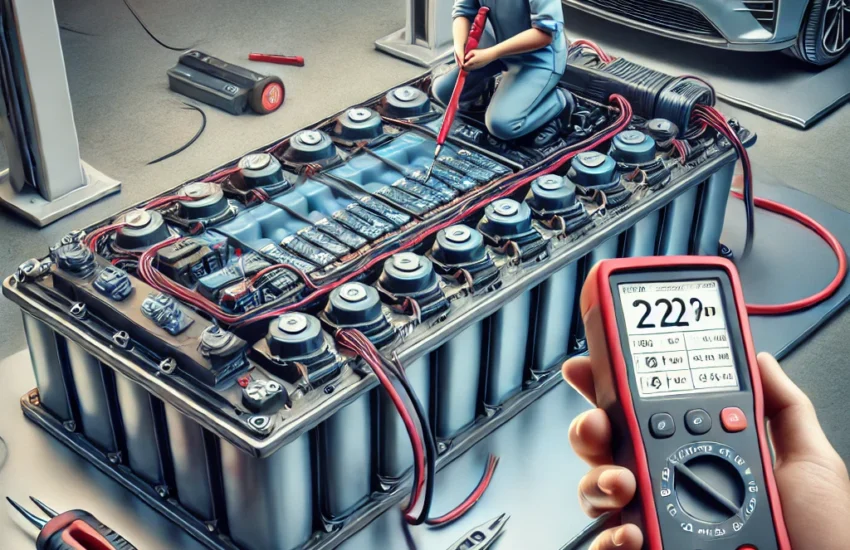
- CAT III/IV multimeter for measuring high voltages.
- Insulated gloves (1000V) and non-conductive tools.
4. Steps to Diagnose the Battery
Step 1: Reading OBD Codes
- Use a scanner to identify stored codes (e.g., P0A7D).
- Note the freeze frame data for context.
Step 2: Analyzing BMS Data
- Check:
- SOH (State of Health): Residual battery capacity.
- SOC (State of Charge): Actual charge level.
- Temperature: Abnormal variation between cells.
Step 3: Insulation Resistance Test
- Measure resistance between the high-voltage bus and ground (>1 MΩ expected).
Step 4: Physical Inspection
- Look for swelling, fluid leaks, or signs of corrosion.
5. Repair Solutions
a. Cell Rebalancing
- Procedure: Controlled discharge/charge via a professional charger.
- Cost: €200-500 (depending on model).
b. Replacing Faulty Cells
- Example: Replacing a 2.8V cell in a Nissan Leaf.
- Warning: Requires expertise to avoid imbalances.
c. Complete Battery Replacement
- Average cost: €5,000 to €20,000 (depending on capacity and manufacturer).
- Warranty: Often covered for up to 8 years/160,000 km.
6. Real Case Studies
Case 1: Tesla Model S – Code P0A7D
- Symptoms: Range dropped from 500 km to 320 km.
- Diagnosis: LeafSpy reveals 4 cells at 3.2V (vs. 3.8V).
- Solution: Replacement of faulty cells.
Case 2: Renault Zoe – Slow Charging
- Cause: Battery pack imbalance due to repeated fast charging.
- Solution: Rebalancing via a full slow charge.
7. Safety Precautions
- Disconnect the high-voltage battery before any intervention.
- Avoid metal tools near live components.
- Consult a professional for complex procedures.
8. FAQ – Frequently Asked Questions
Q: How long does an EV battery last?
A: On average 8-15 years, depending on usage and manufacturer.
Q: Can I repair my battery myself?
A: Not recommended without expertise – risk of electrocution or irreversible damage.
Q: How to extend my battery’s lifespan?
A: Avoid repeated 100% charges, extreme temperatures, and use suitable chargers.
9. Expert Advice
“A 20% range loss after 5 years is normal, but a sudden drop should alert you. Always use a compatible scanner to avoid approximate diagnoses.”
– Marie Legrand, Electrical Systems Engineer
Conclusion
Diagnosing an electric vehicle battery requires appropriate tools and a methodical approach. By quickly identifying symptoms and taking action, you will preserve your investment and avoid costly breakdowns. For complex issues, always prioritize the intervention of a certified technician.