
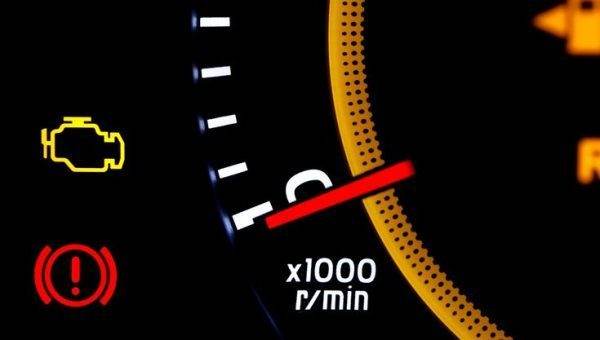

When starting the vehicle, all warning lights turn off except for some indicators like the seat belt light or the door open light. However, when your car is driving on the road, if the check engine light blinks and then stops, it means your car has issues. Whether these problems are dangerous or not, please follow our article today to understand the reasons and solutions for this error.
What does it mean when the Check Engine light blinks and then stops?
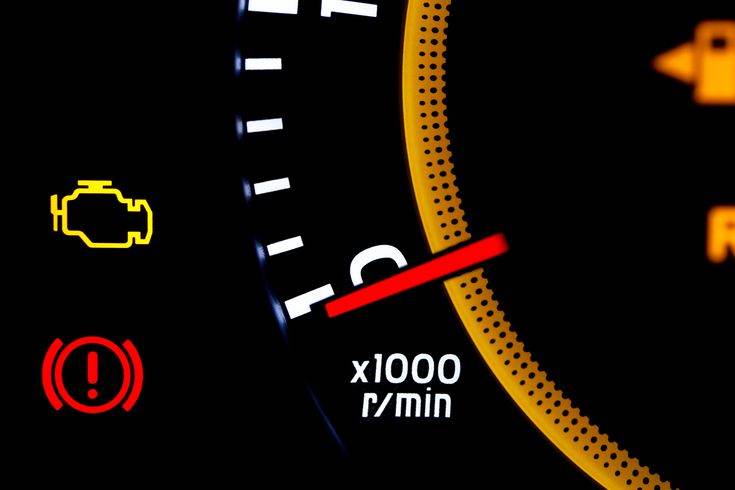
A check engine light is a warning light when your engine or related parts have an error. Check Engine lights are usually located in the instrument cluster behind the steering wheel. When the ECM detects that sensor data is different from the normal value or loses the signal, the Check Engine light turns on to warn the driver.
When the “check engine” light is on, it either stays on continuously or blinks and goes off. This can give drivers a feeling of unease or even panic. A check engine light is probably the most misunderstood indicator on the dashboard because it doesn’t specifically tell you what’s wrong with your car.
However, if you see the check engine light blink and then go off. The most common reason the check engine light goes off might be that you touched or clicked the reset button after turning off your key. But if that’s not the case, it means your vehicle is in a dangerous state, and you should pull the car over to the side of the road as soon as possible. You need to turn off your car and have it towed to a trusted mechanic to perform the necessary repairs. The check engine light blinking is so dangerous because it means your engine has a serious misfire problem. Or there is something seriously wrong with the ignition fuel timing or the compressor… To learn more about the causes of a check engine light blinking and then stopping, let’s move on to the next part with us.
8 reasons why the Check Engine light blinks and then stops while driving
It could be one of these many causes for the check engine light blinking stops and then stops. Just look at 8 common reasons below:
Faulty Oxygen Sensor
An oxygen sensor in the car is an electronic device that measures the residual oxygen concentration in the car’s exhaust gases, to help the engine adjust the appropriate level of fuel injection. This ensures operational performance while strictly complying with emission standards. If the oxygen sensor does not work properly, it can increase fuel consumption by up to 30%. When the Oxygen probe malfunctions, the information is incorrect, and the combustion process will no longer be efficient, so the vehicle will often have to consume more fuel to compensate. Therefore, when the check engine light blinks, it is likely that the oxygen sensor is faulty. There are two reasons why this sensor does not work or the measurement is incorrect:
- The wire is broken
- Due to the quality of gasoline mixed with a high concentration of ethanol, it exceeds the permitted standard.
The only way to rectify a faulty oxygen sensor is to replace it with a new one. This should be done as soon as possible because delays can cause the catalytic converter to burst.
Gas Cap is Open or Not Tight
As simple as it may seem, a loose gas cap can cause the check engine light to turn on and off. A gas cap plays an important role as it prevents fuel vapors from leaking. Normally, if the fuel tank cap is properly closed, the pressure in the fuel tank will reach the optimal level and the sensor will measure this pressure. However, in some cases, if your tank cap is open or the rubber ring is scratched, then the sensor system detects and also reports an engine failure.
How do you fix or repair a loose gas cap? When you receive codes pointing to a faulty cap, you need to physically inspect this component to see if it fits perfectly or not.
Bad Catalytic Converter
Did you know that if your car had to run without a catalytic converter, you would have harmful gases including carbon monoxide? The catalytic converter is responsible for processing harmful components in the exhaust gases before they are released into the environment. If the catalytic converter fails, the car will also turn on the check engine light.
To clear this light, you can repair it or replace it with a new one. The unpleasant part is the cost; you may have to part with $2,000 to get a new catalytic converter. The pleasant part is that there are the best catalytic converters as low as a few hundred dollars on the market.
Faulty Mass Air Flow Sensor
If your check engine blinks and then stops, you might be facing a problem with a faulty mass air flow sensor. A MAF sensor plays a crucial role in measuring the intake air flow entering the engine, transmitting the signal to the ECM to calculate and adjust the appropriate amount of fuel and ignition timing. However, when it operates for a long time, this sensor is also sensitive to dust and dirt, making the transmitted information incorrect and affecting the entire system. Therefore, if it detects that the intake air flow sensor is faulty, the Check Engine light icon turns on to notify it.
Stuck or Damaged Air Filter Valve Relay
During engine operation, gasoline would be vaporized without this filter valve system. All this gasoline vapor would escape into the environment. This valve is responsible for recovering gasoline vapors and then passing them through a filter and injecting the vapor mixture into the combustion chamber. Therefore, the gasoline vapor will not be lost, helping the engine operate more optimally and save more fuel.
If this valve is faulty or damaged, the vehicle will report an engine error, and only a specialized checker can detect if this valve is damaged or not. A new gas cap is incredibly affordable.
Damaged Spark Plugs
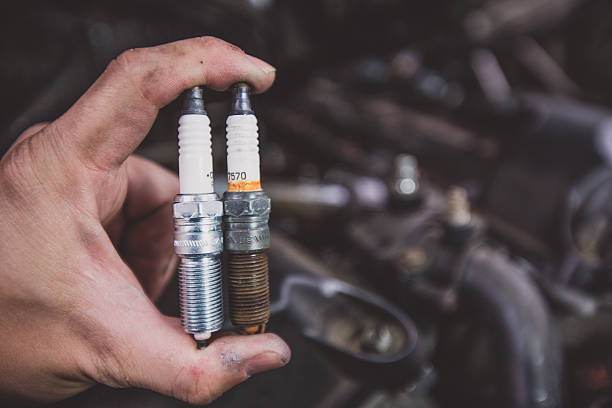
The Check Engine light blinking error is usually caused by a malfunctioning spark plug, such as a dirty spark plug, a damaged spark plug connector, or a damaged high-voltage wire. These errors can cause the spark plugs to emit weak sparks or at the wrong time, greatly affecting the combustion of the gas and fuel mixture. This will reduce engine efficiency, causing vibrations, car shaking during acceleration, difficulty starting, car stalling…
Broken Thermostat Valve
The thermostat valve is responsible for regulating the circulation of coolant to cool the engine. The thermostat valve ensures a cooling temperature of 80 to 95 degrees Celsius for the engine to operate optimally. However, over a long time, the valve can also have problems like being stuck. This will affect the cooling effect, causing the engine to overheat. If not treated promptly, your engine will have serious problems. When the ECM detects that the thermostat is faulty, your dashboard displays the Check Engine light.
Faulty EGR System
The Exhaust Gas Recirculation (EGR) system is responsible for returning exhaust gases to the intake air to reduce the concentration of NOx. After a long period of work, the exhaust gas recirculation control valve or this piping system can become clogged due to dirt and soot. At that time, you will see that the check engine will blink and then stop.
It can be said that this check engine light is a complex light, involving many systems on the vehicle. If you are unsure when diagnosing the reasons. You should take the car to a reputable car dealer and garage to accurately check and correct the error encountered by the car to avoid losing money.
Check Engine Light Blinks Then Stops: Why It Requires Immediate Attention.
Driving a car with a blinking check engine light will cause unburned fuel to spill into the exhaust system. And more seriously, it will cause your vehicle to catch fire. When the Check Engine light is on, if the vehicle has minor problems, the engine can still operate normally.
However, you should not be subjective because if you do not correct it quickly. The state of the car’s error can become more serious. Because the engine operation is a combination of several parts. If one part fails, the chain can affect many other parts. At that time, for better safety, the driver should only let the vehicle run at a speed lower than 40 km/h. Then, take the car to the garage to immediately check the error.
If the Check Engine light blinks continuously. It is a sign that there is an emergency situation; the engine may overheat. Continuing to drive can severely damage the vehicle’s operating system. Therefore, it is best at that time to find a safe place to stop the car and tow your car to a trusted mechanic for checking.
Solutions for Check Engine Light Blinking Then Stops
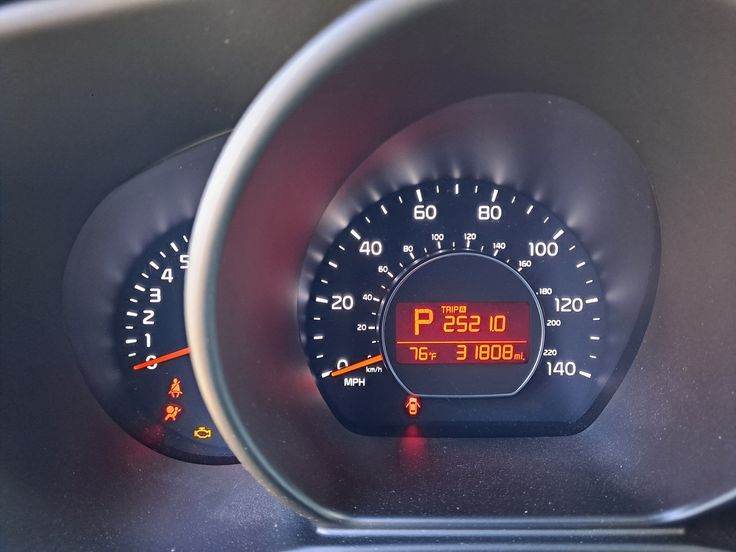
In any situation, when your check engine light is blinking. You will need a diagnostic scanner to try to solve the problem yourself. Currently, on the market, there are also many types of car error readers at cheap prices, compact and convenient. You can equip yourself with one if you want to check the car yourself. Otherwise, if you don’t have this tool, you can take your car to an auto parts store that normally performs this service for free.
When the check engine light is flickering, the cause of the check engine light blinking phenomenon. It could be the exhaust gases caused by spark plugs, ignition coil, and thermostats. In this case, you need to quickly clean the spark plugs and sensors and replace the car’s fuel pump.
Note: You should not arbitrarily clear the check engine light by disconnecting the power source; this can be dangerous if you are not experienced in removing the battery. In some cases, the light blinks when performing this method, but the error is not completely corrected, only temporarily. The best way is to take the car to the garage with a diagnostic machine or fault scanner to identify the correct error and repair it in time.
Meaning of Check Engine Light Warning Colors
When the engine warning light is on, depending on the colors displayed on your car’s dashboard. We can determine the danger level of the error, thus giving the next steps in a timely manner:
Check Engine light is on in yellow:
This is a warning color. With this light on, you don’t have to worry too much when driving the car if the engine doesn’t have abnormal noise. The exhaust is not black and has a strange smell, and fuel consumption does not increase abnormally.
Inspect the simple parts that can be checked, such as the gas tank cap. If the check engine light is still on, take the car to the nearest reputable garage. So that you can check exactly where this yellow light error comes from and handle it.
The light is on in red:
This is a warning that your car is in a dangerous situation. As soon as this warning signal lights up, you absolutely must not continue driving. If you do not stop the vehicle in time, other parts of the vehicle will be damaged. At that time, you need to call the technical staff of the company to check and process the error.
Final Thoughts: Why does my Check Engine light blink and then stop?
Above are the possible and detailed information about the causes and solutions when the check engine light blinks and then stops. With these summaries, we hope you will be confident and calm. When handling problems related to errors, they are warned by the check engine light to control the vehicle in safe traffic. We hope you always have a pleasant experience with your car! Keep reading and remember to follow the next article.