
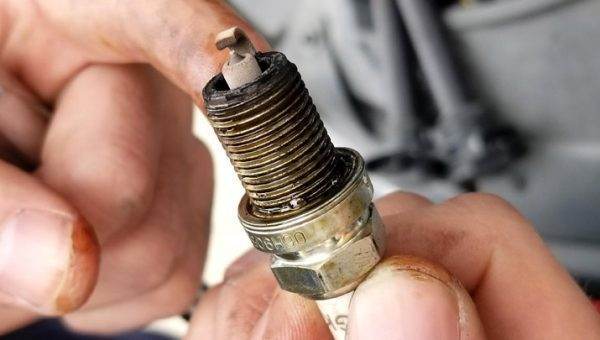

Perhaps you’re performing routine maintenance and discovered oil on your spark plug threads. Or maybe you were investigating why your vehicle had low oil levels and found your spark plugs covered in oil.
Either way, now that you’ve found it, you’re likely asking a few questions. Are you supposed to have an oil leak in the spark plug wells? Is it serious and what’s causing it?
We’ll answer all these questions here and – spoiler alert – it’s not normal. You’ll want to fix it as soon as possible.
Reasons There’s Oil On Your Spark Plugs
Once you’ve discovered oil on your spark plugs, it’s time to find out why it’s there. It’s not like there’s a leaking spark plug gasket – so what’s happening? We’ve highlighted the most common reasons why there might be oil on your spark plugs below.
#1 – Leaky O-Ring Seal
Although your spark plugs don’t have gaskets, they use O-rings. These O-rings keep oil and everything else on one side of the spark plug and the other side stays dry.
If you only have oil on a single spark plug, you might have a leaking O-ring. This is one of the best outcomes if you have oil on your spark plugs. However, you still need to address the issue as soon as possible. Leaking O-rings can cause your engine to misfire and lead to more significant damage.
#2 – Blown Head Gasket

While coolant in your compression chamber is what most people associate with a blown head gasket, another fluid that could leak is oil. When this happens, it’s common for oil to enter the combustion chamber.
You’ll notice excessive smoke and there will be oil on the tip of your spark plugs. You’ll need to replace the head gasket before the problem worsens and leads to more serious issues. The good news is that head gaskets are cheap – the bad news is that it’s a labor-intensive process.
#3 – Worn/Leaking Valve Guides
Valve guides ensure that your intake and exhaust valves remain in the proper position at all times. Not only that, but they have seals that prevent oil from entering the combustion chamber.
If these seals give way, then oil enters the combustion chamber, and it’s a quick hop, skip, and a jump away from getting onto the spark plug threads.
Like other components here, the valve guides themselves aren’t that expensive, but they require a lot of labor and time to replace, which can lead to a hefty bill at the repair shop.
#4 – Valve Cover Gasket Leaking
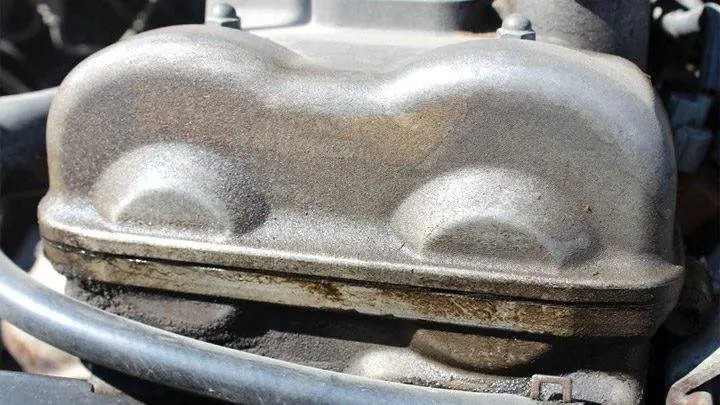
Your vehicle uses valve cover gaskets to keep oil near the components that need it and away from those that don’t. One of the components it keeps oil away from are the spark plugs. But if the valve cover gasket is leaking, oil can easily seep into the spark plugs.
Like head gaskets, valve cover gaskets are cheap, but replacing them is labor-intensive.
#5 – Damaged Piston Compression Rings
Around each piston in your engine, there are compression rings that prevent oil from seeping into the combustion chamber. But when these compression rings are damaged, nothing stops oil from entering the combustion chamber.
These rings ensure everything runs smoothly and prevent larger problems. So, if you suspect damaged compression rings, it’s best to repair them as soon as possible.
#6 – Damaged Piston
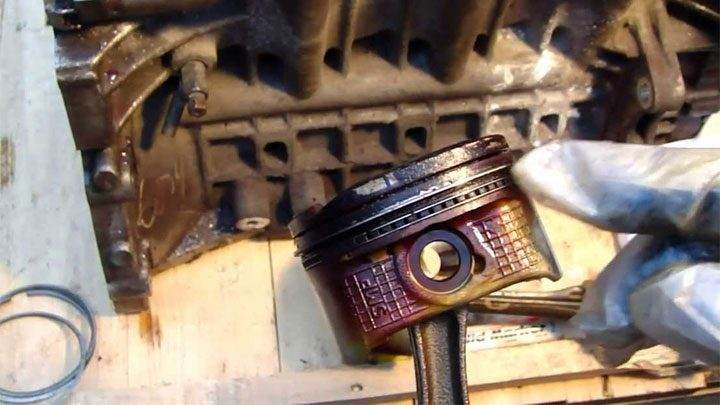
Although damaged or cracked pistons are rare, it’s not entirely unheard of. Combustion chambers get extremely hot, and as pistons age, this heat can become too much for them. If you have a cracked piston, you’ll need an engine rebuild, which is not a cheap process.
However, if you let the problem go, you risk breaking down on the side of the road and potentially completely destroying your engine. Cracked or damaged pistons are not an issue you can ignore.
How to Get Oil Out of Spark Plug Wells
If there’s oil in the spark plug wells, you might be wondering what you need to do to remove it. The truth is that it’s more important to find the source of the problem and fix it.
That’s because the oil will enter the compression chamber and burn. As long as there’s no more oil leaking, that’s the end of your problem.
So, while oil on your spark plugs is a big issue, you don’t need to disassemble your engine to clean it. Once you’ve found and fixed the faulty component, you should be good to go.
However, if you’re concerned about the excess oil, all you need to do is spray some carburetor cleaner into the spark plug holes and let the oil drain into the combustion chamber. Reinstall the spark plugs and let your engine burn off the excess oil.
Can You Drive With Oil On Your Spark Plugs?
In short, yes, you can drive with oil on your spark plugs, but you’ll want to figure out how it got there. That’s because oil on your spark plugs is not a normal condition, and it could be a much more serious problem.
Oil on the spark plugs isn’t the issue – it’s how the oil got there that can damage your engine.
Can you Clean and Reuse Spark Plugs?
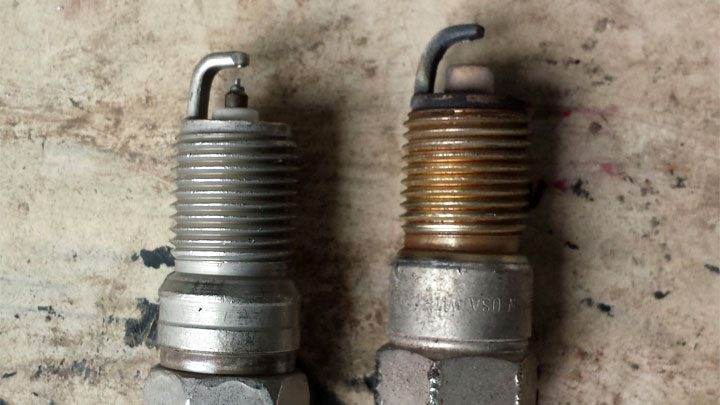
Absolutely! Once you’ve completed the necessary repairs to prevent oil from coming back, use a carburetor cleaner to spray the electrode and threads and let it all dry. Once dry, reinstall the spark plugs and you’re good to go!