
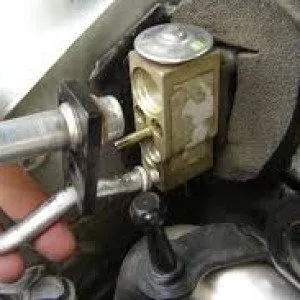

The air conditioning expansion valve is located in a vehicle’s air conditioning system. The purpose of the valve is to manage the amount of refrigerant liquid that can flow through this system.
Whenever there is an abundance of refrigerant, the evaporator core becomes too cold and eventually freezes. Just as if there wasn’t enough refrigerant, the core would become too hot and overheat.
To prevent either scenario from happening, the air conditioning expansion valve controls the flow based on the evaporator temperature and the demand for cool air from the system.
Operation of an Air Conditioning Expansion Valve
The A/C expansion valve manages this refrigerant flow via a rod that exists inside it. The rod can be moved down or up, causing the passage for the refrigerant to close or open; respectively.
If the passage is open, the refrigerant will be able to flow. If it is closed, the refrigerant cannot flow. When you set the air conditioner to a cooler temperature, it causes more refrigerant to circulate through the passage. This is how the air can become colder.
When the refrigerant flow is regulated, it is essentially metered by the air conditioning expansion valve. In other words, the valve calculates the amount of refrigerant that needs to flow through the passage based on the demands placed on it.
This includes not only when the driver sets a cooler temperature but also when outside temperatures are naturally warmer. Whenever the heat resistance is greater in the environment, the air conditioner will need more refrigerant to create a cool temperature in the cabin.
Bad Car Air Conditioning Expansion Valve Symptoms
When you have an expansion valve that is no longer functioning correctly, symptoms appear quickly. These symptoms mainly concern the functionality of the air conditioning system. If it is a hot summer day and you turn on your air conditioning system, you will notice something is wrong if you don’t get the cool air you expect.
Here are five common symptoms of a bad air conditioning expansion valve:
1) Warm Air from Vents
The most recognizable symptom of a bad air conditioning expansion valve is when you turn on your air conditioner and warm air starts blowing from the vents. This would obviously mean that an insufficient amount of refrigerant is making its way to the evaporator core.
Most people will discover this problem at the worst possible time, like in mid-August. You should always test your air conditioner in the months before summer approaches. This way, you will be prepared to deal with this problem in advance.
2) Frost on Vents
A car’s air conditioner should never be cold enough to the point where frost forms on the vents. If you have frosted vents in your vehicle, it indicates that your evaporator is freezing.
The air coming out of the vents will also be much colder than normal. You might think this would be a good thing, but it will actually damage the overall performance of the system if it continues like this.
Obviously, in this situation, the air conditioning expansion valve failed to prevent an overflow of refrigerant from entering the core.
3) Air Conditioning Compressor Always On
If your air conditioning expansion valve remains open and cannot close properly, this is how refrigerant is continuously pumped into the air conditioning system. The compressor will simply keep pumping this refrigerant without ever stopping.
The longer this continues, the more pressure is put on the compressor. Once this happens, other components in the air conditioning system begin to wear out and fail.
4) Inconsistent Airflow
Sometimes a bad air conditioning expansion valve will provide erratic performance in its ability to regulate the refrigerant flow throughout the system. If this were to happen, the air coming out of the vent could be too cold or too warm.
The air will likely alternate between the different temperatures at different times. People might mistakenly think the system is working fine and just needs a few minutes to fix itself.
However, if the air ever switches back from cold to warm, inspect the air conditioning expansion valve immediately.
5) Air Conditioning System Failure
If you experience any of the symptoms on this list but continue to ignore them, it will eventually lead to your air conditioning system failing. In other words, some of the vital components of the air conditioner will be damaged.
Even if you replace the A/C expansion valve after that, you will also need to repair the other components that deteriorated as well.
Cost of Replacing an Air Conditioning Expansion Valve
You will notice when the air conditioning expansion valve goes bad because your air conditioning system will ultimately stop working correctly. It will either produce less cool air, or it won’t produce any cool air at all. At this point, you will need to replace your air conditioning expansion valve to fix the problem.
The cost to replace an air conditioning expansion valve is between $200 and $450. The cost of the parts itself will be between $100 and $200 while labor costs will be between $100 and $300. There are also local taxes and other additional fees.
If you want to reduce your expenses as much as possible, you should get quotes from the various auto repair shops in your area and see which one will give you the cheapest quote.