
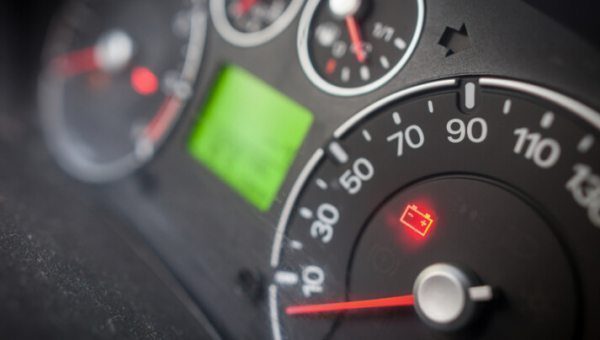
It can always be a problem when you see an unexpected light on your dashboard. Your worries are more than doubled when you also don’t understand what that light indicates.
So, in this article, we will not only explain to you what a battery light is, but also the 8 most common reasons why it may appear while you are driving.
Your battery light does NOT always indicate whether your battery is faulty or not. It is a simple indicator to tell you whether your vehicle’s alternator is charging your battery or not.
Since your alternator is driven by the accessory drive belt (serpentine belt), it generates an electrical charge designed to run your engine’s electrical systems while you drive and recharge your battery. Your battery needs to be recharged because it loses a percentage of its charge every time you start your vehicle.
Therefore, if your vehicle detects that its battery is no longer charging, it will turn on your battery light while you are driving.
Battery Light Causes
There are actually quite a few things that can cause your car’s battery light to come on.
The most common causes of an illuminated battery light are a broken serpentine belt, a faulty alternator, a bad ground strap, a faulty car battery, or faulty alternator wiring.
Here is a more detailed list of the most common causes for your car’s battery light being on.
1. Broken Accessory Drive Belt (Serpentine Belt)
This is by far the most common reason why your battery light comes on while driving. If your accessory drive belt is broken, it means it can no longer spin your alternator, which means no electrical charge is being generated to charge your battery. Your vehicle is smart enough to recognize this as a fault and warn you via the battery light.
If your belt has broken, you will usually also notice a few other symptoms indicating it, such as loss of power steering and loss of air conditioning.
The diagnostic process for this fault couldn’t be simpler; perform a visual inspection of the engine and it should be immediately obvious if your belt has broken. As long as your vehicle hasn’t been driven for an extended period without the belt, you should be able to get away with simply replacing it and driving normally.
Top Tip: Make sure to remove ALL debris from the old belt that may have lodged in various parts of your engine bay, as this could cause you problems down the road if it gets stuck in the pulleys or cooling fans.
2. Faulty Alternator
So, if your serpentine belt seems fine, the next component we look at is your vehicle’s alternator. Your alternator is a fairly complex unit with several internal components that could go wrong. From faulty diodes to broken windings, they will all cause your alternator to stop charging at the rate currently required by your vehicle.
This is a fairly technical diagnostic process; however, if you are not comfortable working with electricity on a running engine, take your vehicle to a local garage. They will often have a specialized tester that will be able to easily diagnose your alternator for you for a small fee.
3. Broken Alternator Wire
This is a fault that can be a bit trickier to determine, but I have seen it many times. The wire that powers your dashboard is often just a small 15-amp cable, making it prone to wear and corrosion. This wire will often be connected to the alternator via a standard block connector and then run either directly to your dashboard or via an ECU.
The easiest way to determine this fault is the process of elimination. Have your battery and alternator tested to ensure they are both functioning as they should. If no fault is found with these, you will then need to check this wire. Perform a visual inspection on the block connector mounted on the back of the alternator and ensure a good connection is visible. Then, perform a visual inspection of the actual wire to check for corrosion or cable breaks. If you find any, repair it and run your vehicle to ensure the battery light goes out after starting.
4. Faulty Instrument Cluster
Although this fault is towards the rarer end of the list, it still happens frequently enough to make it here.
Usually, with a faulty instrument cluster, you will also notice other faults such as incorrect odometer readings or other lights illuminating when they shouldn’t and vice versa.
In order to determine if your instrument cluster is faulty or not, you will usually need to have it bench tested by a specialist.
5. Faulty Battery
Another common issue that would be indicated by the battery light coming on while you are driving is that your battery may be faulty. A short circuit in your battery could prevent it from accepting the electrical supply from your alternator and, therefore, will not charge. This fault can also be indicated by your vehicle starting slowly, especially on colder mornings.
In order to diagnose this fault, you will need to take your battery for testing. A simple multimeter will not always indicate a shorted cell in a battery. However, most garages will have a proper battery tester and will perform the test for a small fee.
6. Corroded Battery Terminals
Corroded/loose battery terminals can cause a whole host of peculiar faults on your vehicle. Although unlikely, it can sometimes cause your battery light to come on while you are driving.
Perform a visual check of the battery terminals for corrosion and ensure the connections are tight. Top Tip: Spray a small amount of clear grease onto your battery terminals.
7. Broken/Corroded Engine Ground Strap
Similar to loose/corroded battery connections, a broken or corroded ground strap can also cause a whole host of strange faults on your vehicle. This is a very rare but not unknown fault that is actually quite easy to check. You can often find one between the body and the engine and one between the car battery’s negative terminal and the body.
Simply perform a visual inspection of your vehicle’s ground straps and check for any breaks or tears. At each end of the straps, it is important that you also check for a buildup of corrosion as this could lead to a poor ground connection. Top Tip: Remove the mounting bolts and clean the contact points with a fine sheet of sandpaper to ensure a good connection. Then refit the strap and tighten the mounting bolts fully.
Worn Alternator Pulley
This is a rare fault on most cars, but quite common on German car models. Some of these alternators are fitted with a pulley specially designed to only turn in one direction. While this design is ideal for preventing damage to the alternator; it can be an awkward fault when it goes wrong.
To diagnose, simply remove your accessory drive belt and try to manually turn your alternator’s pulley by hand. It should spin freely in the direction of rotation. If not, the pulley will need to be replaced; this can often be done without replacing the entire alternator assembly.
Conclusion
So, if your battery light comes on while you are driving, just know that your vehicle will not run for very long, depending on the state of the battery and the accessories you have turned on.
Pull over as soon as you can do so safely and have your vehicle towed home or to a garage, as continuing to drive risks causing further damage to your engine.
It is important to have your battery tested regularly, as this can reduce the risk of you being caught out by a problem like this.
We hope this list can be of great use to you, so feel free to refer back to it when you need to.