
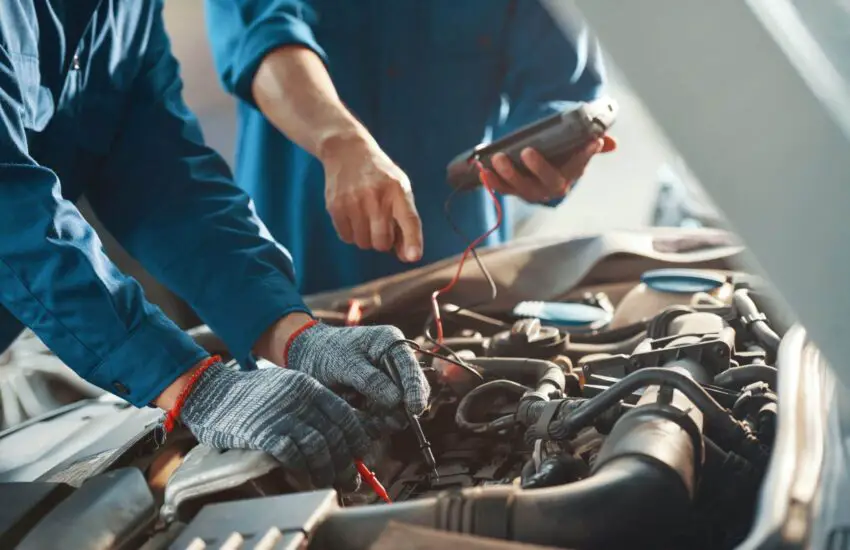
If you have trouble starting your car, or if your interior lights begin to dim or flicker and other accessories are not working as usual, you may be dealing with an electrical problem. An automobile is a maze of wires, fuses, and a host of electrical components, and if any of these parts malfunction, it can lead to poor performance and efficiency, or worse, your car may not start at all. As basic car maintenance, you need to learn the most common car electrical problems and how to fix them.
Most Common Electrical Problems and How to Fix Them
Dead or Faulty Battery
The most common electrical problem, and a major issue at that, is a dead or faulty battery. The battery is usually the very first thing you should inspect if you have difficulty starting your car or if your car has no power and completely refuses to start.
When starting, the engine draws amperage from the battery. Therefore, if the battery is depleted or if it is nearing old age and doesn’t have enough power to do its job properly, the engine will usually take longer than usual to start, or not at all. One of the most common scenarios of a weak or old battery is if you hear the engine cranking slowly.
Another version of a hard starting problem is that you don’t hear the engine cranking at all, but a rapid clicking instead. This happens when the battery is nearly or completely dead, so there is too little power available to even crank the engine. Or if you hear a slight click and the engine still doesn’t start, your battery may be faulty or it’s not receiving a proper charge from the alternator, which is another common electrical problem with the alternator.
Another telltale sign is that many electrical accessories are not working properly at all at the same time. Note that if something isn’t working but others still are, the problem often lies with the faulty accessory rather than a dead battery. When the battery is weak, it cannot provide power to run these functions. This can include dim headlights, or the dashboard gradually dimming while the car is running, or a buzzing radio noise through the speakers, and more.
Hard starting problems are usually more frequent in winter. Extreme cold puts extra stress on car batteries. While younger batteries under 3 years old have higher resistance to extreme cold, a battery loses strength with age. So, if you live in a place that frequently drops below freezing in winter and your battery dies one morning, it often suggests that the battery is old enough to require replacement very soon.
You should avoid deeply discharging your car’s batteries repeatedly before recharging them. Over time, too many deep discharges would accelerate the deterioration of the battery and thus bring it to the end of its life sooner. And batteries are not cheap to replace.
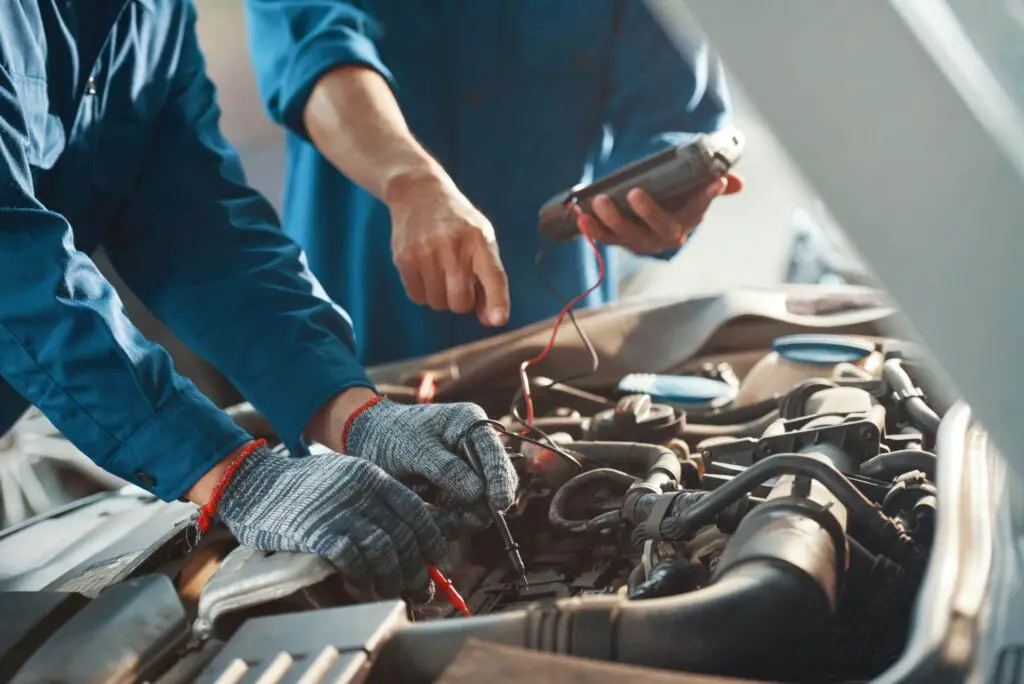
The energy stored in the battery at a given time is measured in voltage, and this shows how healthy and functional your battery is. To track the health of your battery and know when it’s time to replace one, you will need a multimeter or voltmeter to measure your battery’s voltage. A battery is fully charged when it holds 12.6 volts or more. When a battery drops to 12.2 volts, it is only 50% charged. At 12.2 volts and below, a car battery is considered weak and needs to be charged to be fully recharged. If a battery holds 12 volts, it is considered “dead” and should be replaced.
Another reason to keep your battery sufficiently charged is that when the battery is discharged, the alternator and starter will draw excessive voltage to compensate, so they will be overworked. If this is repeated, they will malfunction and need to be replaced prematurely.
Other Battery Problems
Other common battery problems are loose battery terminal connections and corrosion on the terminals. The battery can only do its job properly when all connections are intact. Corroded or loose terminals, frayed or damaged cables can limit the alternator’s ability to charge the battery and provide power to start your car.
These electrical problems can result in weak or no starting, weak dashboard and interior lights or faulty electrical accessories, and no ignition. Thus, they can be mistaken for a dead or weak battery and can lead the owner to replace a new battery without any need. Therefore, before proceeding with a costly replacement, it is wise to inspect the battery for loose or corroded terminals.
Corrosion is a natural phenomenon with all types of car batteries due to the chemical reaction that occurs in the terminals and the ends of the battery cables. Car battery corrosion looks like a crusty, ashy substance that forms around the battery ports and is white or green in color.
Another corrosive process called “sulfation” usually forms white sulfur crystals on the negative battery terminal and occurs when a battery is undercharged, either because the car is only driven for short trips, so the alternator doesn’t have enough time to recharge the battery, or simply because the battery is too old and cannot hold a charge properly. In contrast, if sulfur crystals accumulate around the positive electrode, the alternator is overcharging the battery.
Fortunately, tightening loose terminals and cleaning corrosion is simple. First disconnect the negative cable and then the positive cable. Apply a mixed solution of baking soda and water or a commercial cleaner for this purpose to the terminals, then use a finishing brush or an old toothbrush to remove the accumulated corrosion. Wipe and let dry completely.
If the terminals or cables are severely damaged, you will need to replace them. Also look for dried, cracked, and flaking insulation, which is the plastic or rubber coating of the cable, and check if the copper strands are intact, and replace them if necessary.
Damaged or Broken Alternator
If the hard starting problem occurs when the engine is hot, meaning when the car has been running, especially if you have performed an inspection and determined that your battery is still young and in good condition, the alternator would be the most likely culprit.
The alternator is the charging system of a car. It produces electricity from the car’s mechanical energy to charge the battery, as well as to run various electrical parts such as dashboard lights, interior lights, the stereo system, and the air conditioning. Optimal alternator performance means your car battery’s lifespan is maximized. Undercharging or overcharging would be detrimental to your battery’s lifespan.
Note that aside from a faulty or damaged alternator, a hard starting problem can be caused by a damaged alternator belt, so check if the belt is intact and replace it if necessary.
You should test the alternator regularly with your battery, say every 4 to 6 months using a multimeter. To test an alternator, you must first test the battery. This is because the battery starts the car; when the car is running, it spins the alternator and this rotation keeps the battery charged. If the battery is too weak, the car won’t run and therefore the alternator cannot be tested.
Testing an alternator is the same process as testing the amount of voltage a battery stores. Remember to let the engine idle, turn off all electrical accessories that might consume electricity. A good alternator should produce between 13.1 V and 14.6 V at normal idle. Anything lower means your car is undercharging or, if higher, overcharging, which is unhealthy for the battery and your vehicle’s operations.
Faulty Starter
After a weak or dead battery and a faulty alternator, the next electrical incident likely to cause a slow or no starting problem is the starter, which might need to be repaired or replaced.
The starter is part of an electrical circuit that sets the engine in motion, hence its name. It needs to receive electrical current from the battery to do its job. It is very easy to diagnose a faulty starter. Since the starter is responsible for starting the engine, you won’t hear that click when you turn the ignition key.
If this happens, check if something is obstructing the flow of electrical current to the starter. Check the connection of all cables between the starter and the battery for a loose connection. Tighten everything to ensure good current flow to the starter.
Also check for accumulated corrosion on the starter and the battery cable clamps and terminals. Disconnect the battery and use fine sandpaper or a brush and a cleaning solution for this purpose to remove the buildup.
Another reason the starter doesn’t work is a stuck gear. This happens when you find the starter is dead but the windshield wipers and headlights work. In this case, locate the starter and give it a few light taps using a hammer or a wrench. Use a light hand and avoid damaging the part.
Faulty Spark Plug
The spark plug is another electrical part prone to wear due to its intensive use. To generate a series of explosions inside the engine’s combustion chamber as a means of power production, spark plugs provide the electrical spark that ignites the air-fuel mixture.
Generally, automotive spark plugs are made from durable materials and can withstand millions of explosions before needing replacement. That said, over time, repeated explosions and corrosion lead to smaller or weaker sparks. Car manufacturers generally recommend replacing your spark plugs approximately every 30,000 to 50,000 miles. Faulty spark plugs can lead to various problems, including engine misfires, the Check Engine light coming on, and hard starting problems, as not all cylinders fire.
The main wear on spark plugs is with the electrode. If you look at a spark plug, you’ll notice one end is bulbous, with a small metal rod sticking out from the center. This center rod is the electrode, where electricity passes from it to the hook.
During normal use, the electrodes wear down to the point that the gap between the two wires begins to widen. As a result, it doesn’t create as much or any electrical arc. Or worse, the plug corrodes to the point of breaking, which would damage the inside of the cylinder and call for an extremely expensive repair.
When you get new spark plugs, you should also replace the spark plug wires at the same time. Although you should periodically inspect your spark plugs to ensure they are intact, also inspect the wires for fraying, cracks, and even bites, as some wires are made from a soy-based material that is rodents’ favorite snack.
Spark plugs are for gasoline engines, while glow plugs are for diesel engines. Glow plugs heat the cylinder so that diesel can ignite more easily under pressure.
Although they are also made from very durable materials, glow plugs are essentially heaters, and as with all heaters, they will eventually burn out. If a glow plug burns out, the engine usually starts normally, and they typically burn out one by one instead of all at once, which would be a problem.
Short Circuits
Where there is an electrical installation, there is a risk of a “short circuit,” which is a fault in the wiring harness. Short circuits are one of the oldest electrical problems in a car.
A short circuit can be caused by faulty connectors, damaged relays, damaged insulation on wires, damaged devices or poorly installed custom devices, or faulty car bulbs. Damaged wire insulation usually occurs due to a pinched or damaged wire during maintenance work performed on the car, including simple painting work.
Severe cases of short circuits can cause an electrical current runaway that quickly overheats and burns cable harnesses and devices. This can happen under the hood, in the trunk or cargo area, or under the dashboard.
A short circuit is not too expensive or laborious to repair and does not require complicated tools. The hardest part is locating the short circuit, and to find it, you may need to disassemble a few parts, including covers, trim pieces, and fuse boxes. Generally, you will need a systematic elimination process where you disconnect certain parts of the installation until you can locate the short circuit’s location.
Blown Fuse
A short circuit is dangerous, as they can cause burned wiring and devices, and God forbid, could even trigger a fire. To prevent this disaster, fuses are placed in the system as deliberately weakened points that burn out in case of a short circuit or any other type of overload. Fuses are an essential element of any electrical installation.
They are therefore made to burn out. But this electrical problem is easy to fix. You just need to find the blown fuse, remove it, and replace it with a new one with the correct amperage. It’s a good idea to take note if the same fuse you recently replaced blows again too soon after or multiple times in a row, then the problem may lie elsewhere and you need to address the issue as soon as possible.