
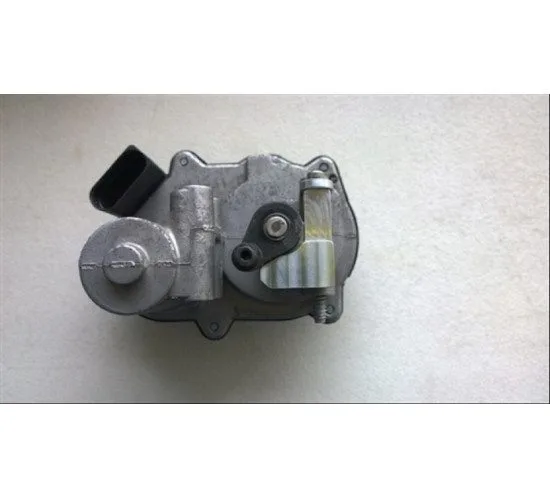
Symptoms of a P2015 engine code may include:
- Malfunction Indicator Light (MIL) illuminated
- Lack of power
- Occasional misfires
- Poor fuel economy
The causes of this code to be set are as follows:
- Sticky/faulty throttle plates/body
- Sticky/faulty IMRC valve
- Faulty IMRC actuator/sensor
- Rarely – Faulty Powertrain Control Module (PCM)
- (Programming required after replacement)
Diagnostic Steps and Repair Information

A good starting point is always to check the Technical Service Bulletins (TSBs) for your specific vehicle. Your issue may be a known problem with a known fix released by the manufacturer and can save you time and money during diagnosis.
The next thing you should do is notice if there are any other diagnostic trouble codes. If any are related to the engine intake/performance system, diagnose them first. Misdiagnosis of these codes is known to occur if someone diagnoses this code before the intake/engine performance system-related codes have been thoroughly diagnosed and repaired. Ensure there are no intake or exhaust leaks. An intake leak, or vacuum leak, causes the engine to idle roughly. An exhaust leak gives the impression of a lean-running engine by pulling air past the Air/Fuel Ratio (AFR/O2) sensor.
Next, locate the IMRC valve/sensor on your specific vehicle. Once located, visually inspect the connectors and wiring. Look for chafing, scuffs, bare wires, worn spots, or melted plastic connectors. Separate the connectors and carefully inspect the terminals (the metal parts) inside the connectors. Check that they are not burnt or corroded. If in doubt, get an electrical contact cleaner from any auto parts store if terminal cleaning is needed. If not possible, get rubbing alcohol and a small plastic-bristled brush to clean them. Once cleaned, let them air dry. Pack the connector cavity with a dielectric silicone compound (the same used for light bulb sockets and spark plug wires) and reassemble.
If you have a scan tool, clear the diagnostic codes from memory and see if this code returns. If not, the connections were likely your problem.
If the code returns, we will need to test the voltage signals of the IMRC valve/sensor to and from the PCM. Monitor the IMRC sensor voltage on your scan tool. If no scan tool is available, test the signal from the IMRC sensor with a Digital Volt-Ohm Meter (DVOM). With the sensor connected, the red voltmeter lead should be attached to the IMRC sensor signal wire and the black voltmeter lead connected to ground. Start the engine and monitor the IMRC sensor input. Snap the throttle. As engine RPM increases, the IMRC sensor signal should change. Check the manufacturer’s specifications, as there may be a chart informing you of the voltage at a given RPM.
If it fails this test, you will need to check that the IMRC valve will move and is not stuck or binding inside the intake manifold. Remove the IMRC sensor/actuator and grasp the pin or linkage that moves the plates/valves inside the intake manifold. Keep in mind that these may have a strong return spring, so there may be tension when you turn them. Check if the plates/valves are binding/loose when you turn them. If so, you will need to replace them, and this usually means you will have to replace the entire intake manifold. It is best to leave this task to professionals.
If the IMRC plates/valves turn without any binding or excessive looseness, this would indicate the need to replace the IMRC sensor/actuator and retest.
Again, it cannot be stressed enough that all other codes should be diagnosed before this one, as issues causing other codes to be set can also cause this one. It cannot be overemphasized that once the first or first couple of diagnostic steps are performed and the problem is not obvious, it would be wise to consult an automotive professional regarding the repair of your vehicle, as most repairs from this point forward will require the removal and replacement of the intake manifold in order to properly fix this code and the related engine performance issue.
It is also wise to note that some of the IMRC plates/valves may be held in place with the sensor/actuator assembly and cannot be replaced separately. Attempting to disassemble them may cause them to break. If you are unsure about your vehicle, please consult an automotive professional.