
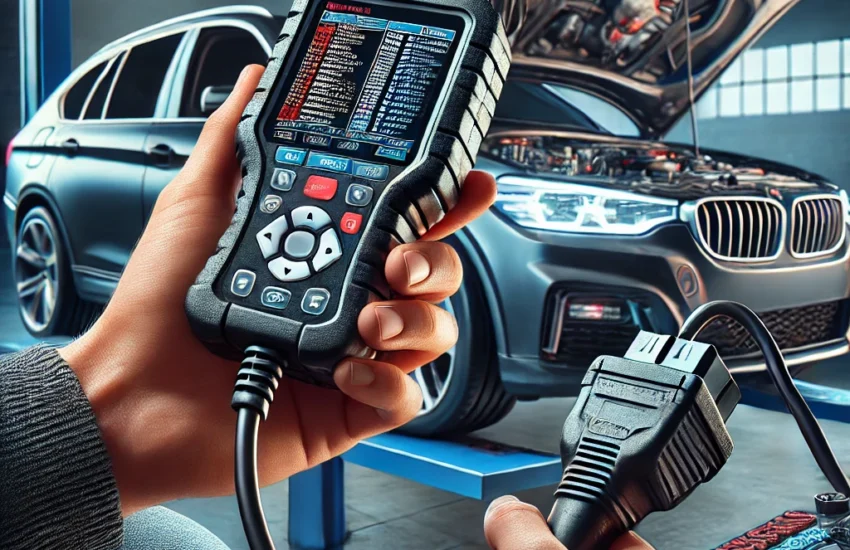
OBD2 (On-Board Diagnostics) codes are an essential window into a vehicle’s health status. They allow professionals and enthusiasts to quickly diagnose problems related to the engine, exhaust, or other vehicle systems. If you want to interpret these codes like a pro, here’s everything you need to know.
1. What is an OBD2 Code?
An OBD2 code is a combination of letters and numbers issued by a vehicle’s on-board diagnostic system when it detects an anomaly. These codes help identify the source of a problem.
An example code: P0302
- P: Denotes the system (Powertrain).
- 03: Identifies the specific function or failure.
- 02: Locates the problem, here cylinder number 2.
Possible first letters:
- P: Powertrain (engine and transmission).
- C: Chassis (brakes, steering, etc.).
- B: Body (air conditioning, airbags, etc.).
- U: Communication network (problems related to CAN bus).
2. Structure of an OBD2 Error Code
An OBD2 code consists of 5 characters:
- 1st character (letter): System (P, C, B, U).
- 2nd character (digit): Code type.
- 0: Standard generic code (applies to all brands).
- 1: Manufacturer-specific code.
- 3rd character (digit): Affected subsystem.
- 1: Fuel and air measurement.
- 2: Injection and fuel.
- 3: Ignition system.
- 4: Auxiliary emission control.
- 5: Idle system.
- 4th and 5th characters: Precisely identify the problem.
3. Tools Needed to Read an OBD2 Code
To interpret the codes, you need an OBD2 scanner.
- Basic readers: Display error codes without details.
- Advanced scanners: Provide descriptions, allow clearing codes, and display real-time data.
- Mobile applications: Connect a Bluetooth OBD2 adapter for reading via your smartphone (e.g., Torque, Car Scanner).
4. Where to Plug in the OBD2 Scanner?
The OBD2 port is generally located under the dashboard, near the steering column. Plug in the scanner and turn on the ignition (without starting the engine).
5. How to Interpret an OBD2 Code?
Let’s take an example: P0420
- P: Engine-related problem.
- 0: Generic code.
- 4: Auxiliary emission control system.
- 20: Catalyst efficiency below threshold (bank 1).
This indicates that the catalyst in bank 1 (the engine side closest) is not functioning correctly, often due to a sensor problem or clogging.
6. What to Do with an OBD2 Error Code?
- Identify the code: Look up the meaning of the code via a manual or online.
- Analyze the context: The conditions that triggered the code (temperature, speed, etc.).
- Check common causes:
- Faulty sensors.
- Damaged connectors or wiring.
- Worn mechanical components.
- Repair or reset:
- After repair, clear the code to see if it returns.
7. Most Common OBD2 Codes
- P0300: Random misfire detected.
- P0420: Catalyst system efficiency below threshold.
- P0171 / P0174: System too lean.
- P0455: Evaporative emission control system leak detected (large).
- P0500: Vehicle speed sensor malfunction.
8. Tips for Interpreting Like a Pro
- Use an advanced scanner: It provides detailed information about codes and displays real-time data.
- Consult manufacturer databases: Some brand-specific codes require specialized documentation.
- Observe symptoms: Don’t rely solely on codes, but also on the vehicle’s behavior.
Conclusion
Interpreting OBD2 codes may seem intimidating at first, but with practice and the right tools, it becomes child’s play. Mastering this skill will save you time and money while extending your vehicle’s lifespan.