
Encountering an obscure trouble code like U1000 can be confusing for drivers. This manufacturer-specific code applies to certain brands such as Nissan, Infiniti, GM, and Isuzu vehicles. But what does it mean?
Although the code itself provides few details, it often indicates an underlying electrical issue. Let’s explore the possible causes of a U1000 code, its severity, and how to accurately diagnose and fix this problem.

What Does the U1000 Code Mean?
OBD-II Trouble Code U1000 Description
Communication Malfunction (Manufacturer Specific)
Due to its manufacturer-specific nature, the exact meaning of the U1000 code can vary slightly from one brand to another. However, most manufacturers use the DTC U1000 to indicate a failure within a vehicle’s CAN (Controller Area Network) data bus system.
Here are the exact DTC U1000 definitions for each manufacturer.
- GM: Class 2 Communication Malfunction Conditions
- Nissan: CAN Communication Circuit
- Infiniti: CAN Communication Line – Signal Malfunction
- Isuzu: Class 2 Communication ID Not Learned
To understand the meaning of the U1000 diagnostic code, you must first familiarize yourself with the inner workings of modern automotive communication systems. Today’s vehicles rely on a complex system of modules and wiring harnesses to ensure proper operation.
Each module in this system has its own specific purpose. For example, an ECM (Engine Control Module) collects data from numerous temperature and pressure sensors to monitor engine performance.
This data is then used to determine a motor’s fuel adjustments and throttle body positioning (on drive-by-wire systems). Additional modules found on most vehicles include a TCM (Transmission Control Module) and a BCM (Body Control Module), among others.

These modules must communicate with each other to function as intended. For example, a vehicle’s TCM depends on information from the ECM to control shift timing.
Similarly, a vehicle’s BCM is responsible for illuminating certain instrument cluster warning lights when prompted to do so by additional modules.
This communication interface, as a whole, is known as a vehicle’s CAN-bus system. Data is transmitted point-to-point within this system via a series of complex electrical connections.
In some of today’s most advanced systems, this data is relayed in various forms, including 12-volt power, 5-volt references, system grounds, and hertz (Hz) signals.
The U1000 diagnostic trouble code indicates a fault within this communication network, likely negatively impacting data transmission. This communication failure can result from faulty wiring or originate from a module itself.
See also: U0001 Code, U0073 Code, U0100 Code, U0101 Code
Symptoms of the U1000 Code
Depending on the root cause of the U1000 DTC, additional symptoms may or may not be present. In a number of cases, the only indicator of such a problem will be the presence of the underlying code. However, in other cases, concerning drivability-related issues may be encountered.
Additionally, a secondary code is usually stored alongside the U1000 DTC, which serves to identify the affected module or circuit. While this secondary code is used to identify the issue in question, the U1000 DTC serves more to generalize that something is wrong.
Here are some of the most common symptoms associated with the U1000 DTC, many of which have been documented in Nissan service bulletins on this subject.
- Hesitation
- Engine Stalling
- Lack of Power
- Failure to Start
Causes of the U1000 Code
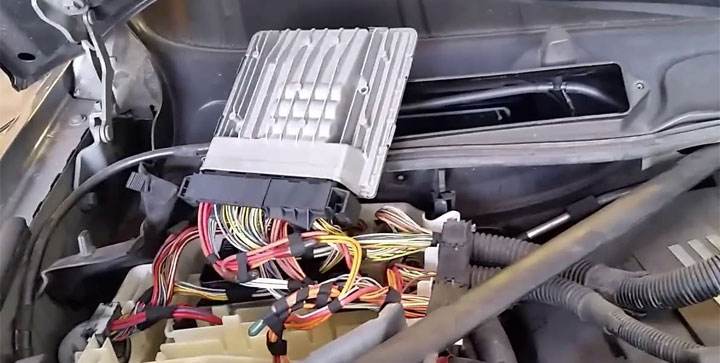
The root cause of the U1000 DTC often varies significantly from one vehicle make and model to another. However, most problems of this nature are related to inefficiencies within one or more of a vehicle’s data communication networks.
All secondary codes stored in addition to the U1000 code will further guide you toward identifying the issue at hand. In cases where no other active codes are present, the U1000 code often serves as an electrical anomaly that will not present any other problems.
In some cases, replacing the ECM may be necessary as an appropriate means of rectifying the U1000 code, if a fault in this module has been identified. Other potential causes of the U1000 DTC include damaged wiring, faulty grounds, corroded wiring, and poor connector contact at a wiring harness/module junction.
Is the U1000 Code Serious?
The severity of the U1000 code largely depends on a particular manufacturer’s use of this specific DTC. While Nissan explicitly mentions that the U1000 DTC can lead to a multitude of additional symptoms, many of which can negatively impact a vehicle’s drivability, other manufacturers consider this DTC to be of a much less urgent nature.
In any case, additional diagnostics should be performed on any vehicle displaying a U1000 trouble code at the first available opportunity. Since this code implies that a vehicle’s communication network is operating at less than peak efficiency, the risk of additional problems always exists.
Therefore, a code of this nature, if largely ignored, can pose potential problems, or even leave you stranded, in the near future.
How to Fix
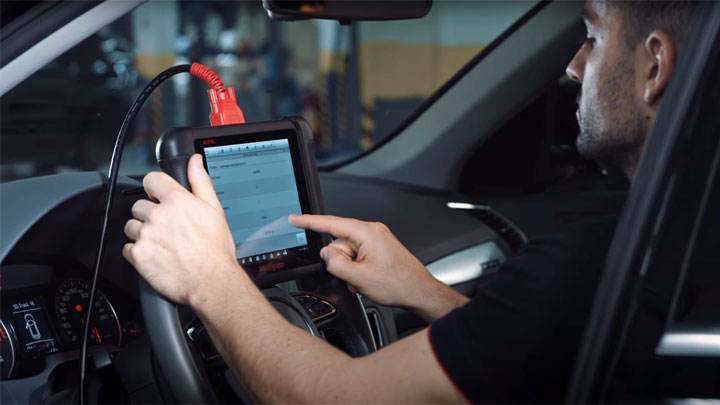
It is best to entrust the repair of the U1000 DTC to your local automotive professional whenever possible. This is because complex testing is often necessary to condemn a faulty module, whichever it may be.
Failing to thoroughly diagnose the issue in question can also lead to significant unnecessary expenses. Furthermore, replacing a module, such as the ECM, typically requires “flashing” it with manufacturer-specific software.
However, motorists can determine the root cause of these issues by following the steps below.
#1 – Look for Additional Codes
Since the U1000 DTC is usually set in addition to secondary codes, all active trouble codes should be recorded for further troubleshooting using an automotive scan tool. In many cases, further diagnosis of these secondary codes will reveal the root causes of your vehicle’s U1000 trouble code.
#2 – Consult Relevant Service Bulletins
Several manufacturers, such as Nissan, have released service bulletins detailing issues related to the U1000 DTC. Reading these service bulletins in their entirety often outlines the upcoming diagnostic process.
#3 – Consult Factory Wiring Diagrams
It is also important to locate a wiring diagram specific to your vehicle’s model. Diagrams of this nature will highlight relevant connections that might prove worthy of further inspection.
#4 – Clean Grounds/Check Connections
Thoroughly clean and inspect all ground connections related to your vehicle’s CAN bus system. Additionally, it is also important to check all wiring harness/module connections for any signs of corrosion.
#5 – Locate Vehicle-Specific Service Documentation
If the U1000 code persists, the appropriate service documentation for your vehicle should be located.