
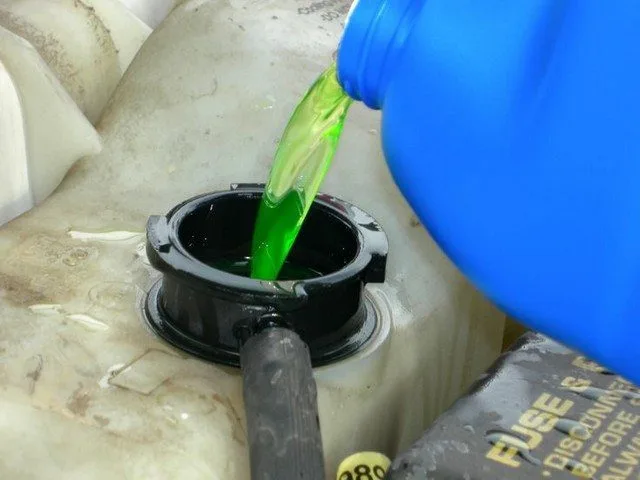

Radiator coolant, sometimes called antifreeze, is the green, yellow, or orange liquid that fills your car’s radiator.
The coolant in your radiator is a 50/50 mixture of commercial coolant and water, and together, this solution creates a liquid that helps cool your engine by circulating through the cooling system. It also prevents your cooling system from freezing in winter.
When you notice the coolant level in your radiator is low, you might wonder if you can use that partially used jug of coolant/antifreeze on your garage shelf. So, how long will that jug of antifreeze last before it deteriorates? It turns out that coolant/antifreeze lasts a very, very long time.
What does coolant/antifreeze contain?
The main ingredient in commercial antifreeze/coolant is either ethylene glycol or propylene glycol. It may also contain ingredients intended to prevent metal corrosion in your radiator. When mixed in a 50% coolant/water solution, this liquid has both a lower freezing point and a higher boiling point than water, meaning it can function as both an antifreeze and a coolant in your engine’s cooling system. The antifreeze solution, in a proper mixture, will not freeze until the air temperature reaches -35 degrees Fahrenheit and will not boil until the solution reaches 223 degrees Fahrenheit.
Does antifreeze/coolant deteriorate?
The chemical ingredients in antifreeze/coolant are quite stable and hardly ever degrade. This means the commercial product you purchased can truly sit on your shelf almost indefinitely without ever deteriorating, provided, of course, that you keep the container sealed against dirt and other contaminants. There is no reason why you cannot use a partial container to mix an additional solution to top off a radiator that is a bit low on coolant. It is also not a problem to use an old jug of coolant/antifreeze when it’s time to flush and fill your radiator.
Disposal Caution
Both ethylene glycol and propylene glycol are hazardous chemicals, and worse, they have a somewhat sweet taste that can make them appealing to children or pets. Always keep antifreeze containers in a safe place and out of reach, and be careful not to leave spills on the ground where pets or wildlife might drink them.
Most states have prescribed methods for disposing of used antifreeze solution or unused commercial coolant containers. It is illegal and unethical to pour antifreeze or coolant down the drain or dump it on the ground. Antifreeze can easily flow into rivers and streams or seep through the soil into groundwater reserves. Instead, store old or leftover antifreeze in sealed containers with clear labeling and drop them off at an official recycling center. Some auto repair shops and dealerships may accept old antifreeze for reprocessing, sometimes for a small fee. In some communities, any retailer that sells antifreeze is required by law to also have procedures for handling old antifreeze. Recycling centers will typically send old antifreeze to treatment centers that remove contaminants and reuse the active chemicals in new products.