
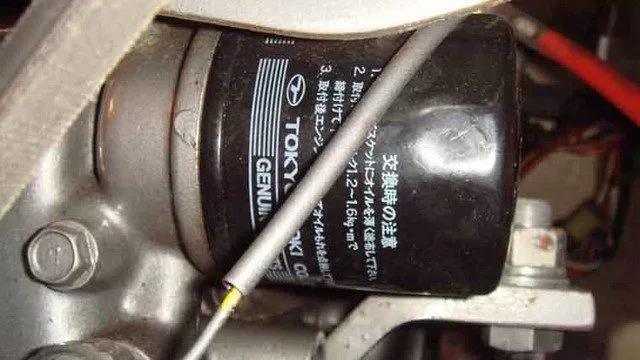
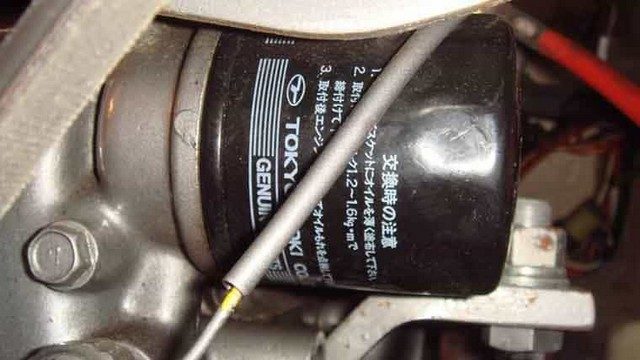
The oil filter has the crucial task of filtering the oil that lubricates your engine components. As oil circulates through the engine, it picks up contaminants and debris along the way. You’ll want to keep these contaminants out of the engine to preserve its lifespan.
The only way to prevent these contaminants from damaging engine components is to have an oil filter that can stop them from entering the engine in the first place. The engine relies as much on the filter as it does on the oil itself.
If you didn’t have an oil filter in your vehicle, contaminants would build up quite quickly inside the engine. This would create many functionality problems in the engine and the vehicle.
Symptoms of a Bad Oil Filter
Most of the time, you’ll want to replace your oil filter at the same time as an oil change. But sometimes, it’s normal to replace the filter at a slightly longer interval.
However, if you notice certain symptoms occurring in your vehicle, it will be a sign that you need to replace your oil filter with a new one. Otherwise, you risk permanently damaging your engine, which will cost thousands of dollars to replace.
Here are five of the most common symptoms of a clogged or leaking oil filter in your car. You might even have the wrong type of filter installed, which could cause problems.
As soon as you recognize these signs, go to your local auto parts store to buy a new filter and install it yourself, or take your vehicle to the nearest auto mechanic or quick lube shop so they can replace the filter for you.
1) Engine Overheating
Like your air filter or fuel filter, your oil filter can become clogged if left too long. With an oil filter, this could be an even worse problem because it can prevent oil from fully entering the engine. Once this happens, the engine receives no lubrication for its moving parts.
As you know, friction between metal components quickly generates heat. If this heat cannot be cooled by the oil, it could lead to engine overheating. You will often see the “Check Engine” light come on when this happens.
2) Poor Performance
Your vehicle’s performance will tell you more than enough. If contaminants build up in your engine because the oil isn’t being filtered properly, it will reduce the engine’s ability to generate power for the vehicle.
This means that when you press the accelerator pedal, your acceleration will be reduced or non-existent. If you continue to leave this issue unresolved, the performance will only get worse.
3) Dirty Exhaust Smoke
Take a look at the exhaust gases coming out of your vehicle’s tailpipe. Can you see smoke coming from the exhaust pipe? If the exhaust appears gray or blue, you have an oil burning problem. This is sometimes the result of a clogged oil filter causing oil to leak into your exhaust system where it burns.
You might even smell a burning odor inside your vehicle. These are very obvious signs that you need to replace your filter quickly.
4) Low Oil Pressure
Your vehicle’s dashboard should have an oil pressure gauge. Under normal circumstances, the gauge will display a steady amount of oil pressure that never changes. But if you see the oil pressure dropping irregularly while you’re driving, then you definitely have a problem with your oil pressure.
One of the causes of low oil pressure can be a leaking or clogged oil filter, which prevents oil flow from entering your engine.
5) Metallic Noises
When oil isn’t entering your engine and all those metal components are grinding against each other, all that friction will cause two things. As mentioned earlier, it will lead to engine overheating.
But it will also cause a lot of metallic noises as a result of the grinding. These noises should be very easy to hear when you’re driving. When this happens, the internal components of your engine are wearing out and causing damage. Check your oil level and filter to make sure that’s not the culprit.