
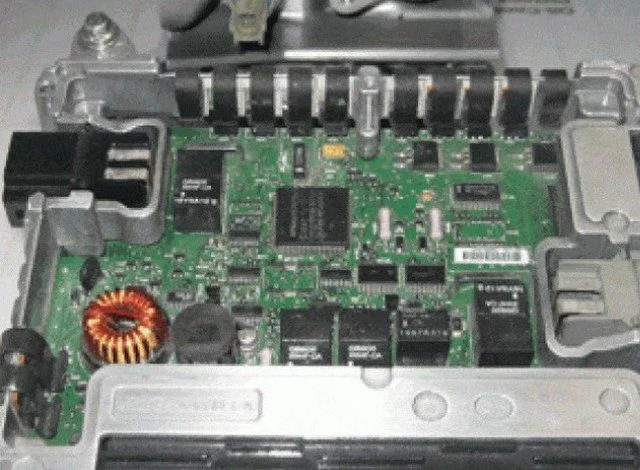
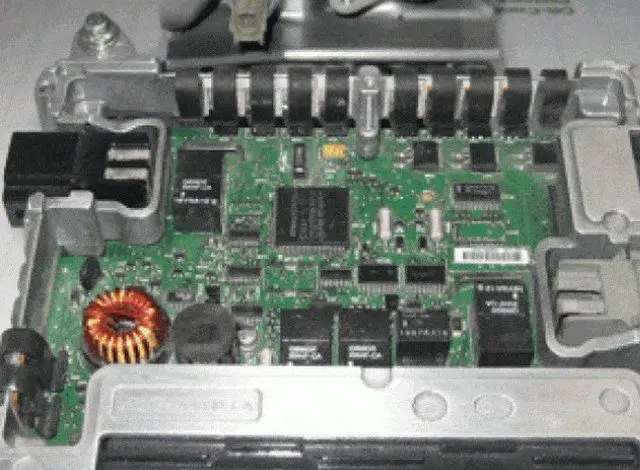
The Engine Control Module (ECM), also known as the Engine Control Unit (ECU), is an essential component that connects your engine to your vehicle’s central computer. The ECM manages most engine functions based on the information it receives from other electronic systems and components in the vehicle.
If the ECM were to become damaged or faulty, it could cause problems for the entire engine because it would not be managed properly. If the engine is not managed correctly, it will not function properly, and your car will not operate correctly. Do you see how everything is connected?
1) Poor engine performance
2) Engine stalling
3) Poor fuel economy
4) Warning light
5) Car won’t start
Average ECM replacement cost
The 5 main symptoms of a faulty engine control module
If you have a faulty ECM in your vehicle, the symptoms will become more than obvious. But it is important that you recognize these symptoms as they occur so that you can address them immediately.
Here are 5 common symptoms of a faulty engine control unit in a vehicle.
1) Poor engine performance
A bad symptom you will notice from a faulty engine control module is poor engine performance. Your engine will start to have poor timing, and it will not generate power as efficiently as before from the internal combustion process.
This will ultimately affect your ability to accelerate the vehicle when you press the accelerator pedal. If you notice acceleration issues, it could be due to a faulty engine control module.
2) Engine stalling
Along with poor engine performance, you might actually experience engine misfires or at least significant stalling. This does not necessarily mean something is wrong with the engine itself, but it could indicate a malfunction with the engine control unit.
Engine stalling will likely be inconsistent, so it may stall at times and then disappear at other times. But even if you experience it once, you should take action right away.
3) Poor fuel economy
When the engine control module is faulty, the engine may not always know the correct amount of fuel to supply to the internal combustion process. Often, it will start burning more fuel than usual just to meet normal driving needs.
This will reduce the vehicle’s fuel economy, meaning you will pay more money at the gas pump.
4) Warning light
One of the most obvious indicators of a possible ECM problem is when the engine warning light illuminates on your dashboard. This light could mean a number of possible issues with the engine.
If you’re lucky, it only means that the engine control unit is in trouble and not the engine itself. You will need to use a diagnostic scanner to confirm the actual problem.
5) Car won’t start
If your car simply won’t start and you can’t figure out why, it might be because the engine control module has malfunctioned or stopped working completely.
You may still be able to crank your engine, but that’s all it will do. If the engine control unit is not working, it won’t be able to send electronic input to the engine.
Average ECM replacement cost
ECM replacement cost
If you know for sure that your engine control module is not functioning properly, you will need to replace it if you want to keep your car in drivable condition.
The cost of replacing the engine control module is certainly not cheap and starts at $450 but could go up to $1,750. The exact cost will mainly depend on the make and model of your vehicle. Used or refurbished units can often be obtained with significant savings.
Parts costs will be the most expensive, as they typically range from $350 to $1,550. Labor costs will likely be between $100 and $200.
So, even if you find a (qualified) inexpensive mechanic to perform the replacement work, you will still have to spend a lot of money on the engine control module itself.