
The two types of brakes used on modern cars are disc brakes and drum brakes. All new cars have disc brakes on the front wheels, while the rear wheels may use either disc or drum brakes.
Disc Brakes
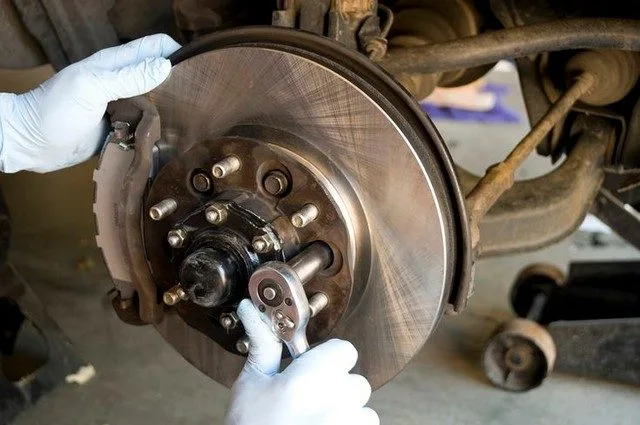
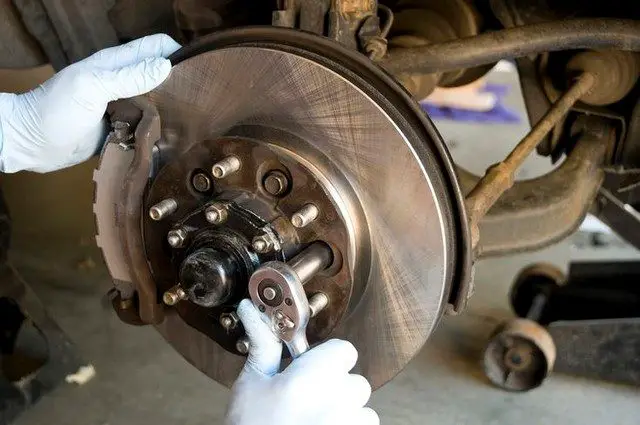
Disc brakes, sometimes called “rotor” brakes, use a flat metal disc-shaped rotor that rotates with the wheel. When the brakes are applied, a caliper squeezes the brake pads against the disc, similar to how you would stop a spinning disc by pinching it between your fingers, and slows the wheel.
Drum Brakes
Drum brakes use a wide cylinder open at the back, resembling a drum. When the driver presses the brake pedal, curved shoes inside the drum are pushed outward, rubbing against the inside of the drum and slowing the wheel.
The Difference Between Disc and Drum Brakes
Disc brakes are generally considered superior to drum brakes for several reasons. First, disc brakes do a better job of dissipating heat. Under severe use conditions, such as repeated hard stops or braking down a long slope, disc brakes take longer than drum brakes to lose effectiveness, a condition known as “brake fade.” Disc brakes also perform better in wet weather, as centrifugal force tends to throw water off the brake disc and keep it dry, whereas drum brakes collect water on the inner surface where the brake shoes contact the drums.
Why Many Cars Use Rear Drum Brakes
All cars sold in the United States use disc brakes for the front wheels, but many cars still use drum brakes at the rear. Braking shifts the car’s weight forward; as a result, about 70% of the braking work is done by the front brakes. This is why your front brakes tend to wear out faster. Drum brakes are less expensive to manufacture than disc brakes, mainly because they can also serve as the parking brake, while disc brakes require a separate parking brake mechanism. By installing disc brakes on the front wheels and drum brakes on the rear wheels, manufacturers can offer most of the benefits of disc brakes while reducing costs.
Even so, a car with disc brakes on both the front and rear axles will provide superior braking performance in rainy weather and during long descents. By the way, you should never ride the brakes when driving down a long slope. Instead, downshift and let the engine control the car’s speed.
How to Tell if Your Car Has Disc or Drum Brakes
If your car was built in the last thirty years, it likely has disc brakes on the front wheels, but it may have drums at the rear. If the car has wheels with large openings, you may be able to see part or all of the brake assembly. Viewed through the wheels, disc brakes have a flat rotor set back from the inner surface of the wheel and a wider piece (the caliper) in front of or behind the disc. Drum brakes have a cylindrical drum that sits flush against the inner surface of the wheel.