
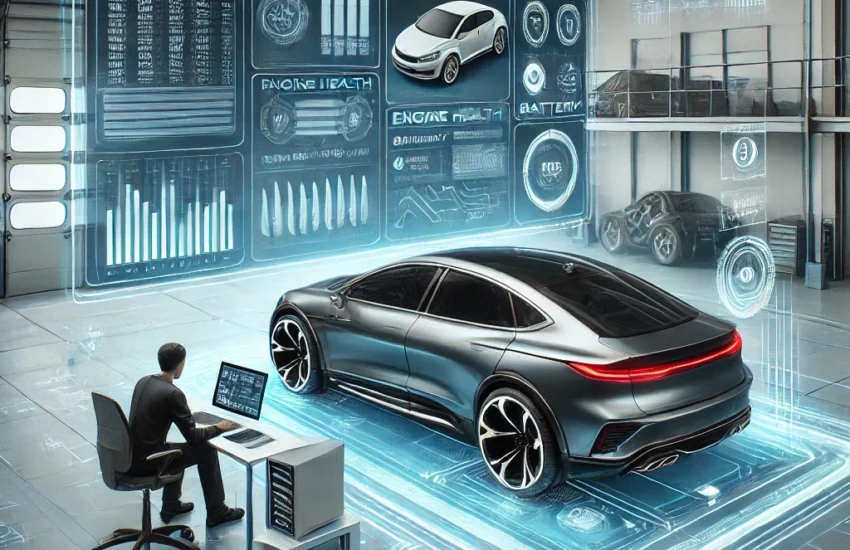
The automotive industry is undergoing a revolution thanks to remote diagnostic technology. This innovation allows workshops, vehicle owners, and manufacturers to access car data in real time, paving the way for faster, more accurate, and more efficient maintenance. Here’s how this technology is transforming automotive maintenance.
1. What is Remote Diagnostics?
Remote diagnostics uses an Internet connection and embedded technologies, such as telematics communication units (TCU), to collect, analyze, and transmit data about the vehicle’s condition to a central server or a remote technician.
Key Features:
- Real-time reading of error codes (DTC).
- Monitoring of critical systems (engine, brakes, batteries).
- Proactive notifications about potential issues.
- Integration with mobile apps to alert drivers.
2. Benefits of Remote Diagnostic Technology
a. Predictive Maintenance
- Continuous analysis of vehicle performance to anticipate failures.
- Example: Detecting a battery issue before it fails.
b. Reduced Downtime
- Quick identification of problems before the vehicle is brought to the workshop.
- Technicians can prepare necessary parts in advance.
c. Real-Time Monitoring
- Continuously updated data to monitor critical systems.
- Ideal for vehicle fleets where availability is essential.
d. Savings on Maintenance Costs
- Fewer unnecessary workshop visits thanks to accurate diagnostics.
- Reduction in costly repairs through early intervention.
e. Improved Customer Experience
- Transparency about necessary repairs.
- Personalized notifications to schedule maintenance.
3. How Does Remote Diagnostics Work?
- Embedded Sensors: Modern vehicles are equipped with sensors to monitor various systems (engine, braking, transmission, etc.).
- Telematics Communication: Sensor data is sent via a mobile or Wi-Fi connection to a central server.
- Data Analysis: Data is analyzed using algorithms to identify issues.
- Recommended Actions: Technicians or owners receive recommendations to resolve identified problems.
4. Practical Applications
a. Fleet Management
- Fleet managers can monitor the status of multiple vehicles in real time.
- Route optimization and maintenance scheduling to minimize downtime.
b. Electric Vehicles (EV)
- Battery monitoring to prevent degradation.
- Analysis of charging cycles to maximize battery lifespan.
c. Remote Assistance
- In case of a breakdown, a technician can diagnose the problem remotely and guide the driver.
5. Challenges and Limitations of Remote Diagnostics
a. Data Privacy and Security
- Cybersecurity risks with the transmission of sensitive data.
- Need for encryption and secure protocols.
b. Dependence on Connectivity
- An unstable Internet connection can limit diagnostic effectiveness.
c. High Initial Costs
- Necessary equipment for workshops and integrated solutions in vehicles can be costly.
d. System Compatibility
- Not all vehicles are equipped for remote diagnostics, especially older models.
6. The Future of Remote Diagnostics
- Artificial Intelligence: More precise algorithms for advanced predictive diagnostics.
- Integration with Autonomous Driving: ADAS systems and autonomous vehicles will benefit from constant diagnostics to ensure safety.
- Automated Maintenance: Automatic scheduling of repairs and maintenance.
Conclusion
Remote diagnostic technology is redefining automotive maintenance by making it more proactive, transparent, and efficient. Although challenges remain, its growing adoption promises to improve the driver experience and reduce long-term costs for owners and workshops.