
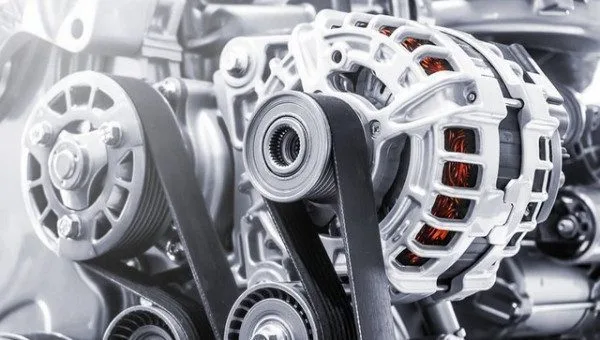
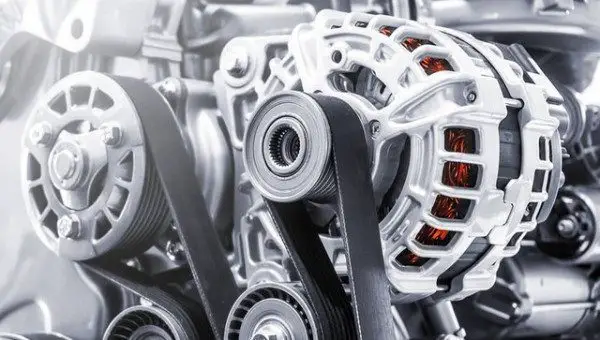
When you hear a loud squealing noise under the hood of your car, it is very likely that the problem is a belt slipping against the pulleys. Most cars today have a single continuous serpentine belt that wraps around various pulleys found on different components at the front of the engine.
The alternator, power steering pump, water pump, and air conditioning compressor can all be connected to this serpentine belt. Older cars may not have a serpentine belt, but they have different V-belts that drive different systems. When one of these belts starts to slip, the resulting friction can cause a piercing squeal.
A belt usually slips for one of three reasons:
There is fluid on the belt
The belt is too loose
The belt is too tight
Fluid on the Belt
Start by simply wiping the belt with a cloth while the engine is off. If you notice the cloth absorbing a lot of fluid when you wipe the belt, it is likely that oil or another liquid has been spilled on the belt and is causing it to slip. The remedy is simply to wash, rinse, and thoroughly dry the belt. If this eliminates the squealing, everything is fine. But you must first ask yourself why the fluid is on the belt. It is possible that this is simply due to an accidental spill that occurred when adding engine oil, power steering fluid, or coolant. But if the belt soon starts squealing again, you may have a leak in one of the engine components that needs to be fixed.
A belt that is too loose or too tight
If there does not seem to be any fluid on the belts causing them to slip, the next thing to check is the tension on the belt. A belt that is too loose or too tight often slips against the pulleys, causing the squealing.
While the engine is running, pour water on the squealing belt. If the noise stops, it tells you that the belt needs to be tightened. There is a belt tensioner adjustment that is usually located halfway at the front of the engine. Normally, there should be about 3/4 inches of play in the belt, and the tensioner can be adjusted to bring the belt back to normal tension. A very old belt may be so worn that it is impossible to tighten it enough to stop the squealing, so if you find this to be the case, be prepared to have the belt replaced.
A Temporary Solution: Spray-on Belt Dressing
If you cannot stop the squealing with any of these methods, you can use a spray-on belt dressing compound, widely sold in auto shops. It is applied to the belt while the engine is running, and you should notice the squealing stop almost instantly. This is a temporary solution, however, and it only quiets the squeal without solving the underlying problem. Your belt likely has another issue that needs to be addressed. It is also possible that the problem lies elsewhere in the system, such as the power steering reservoir, water pump, or brakes.
Applying an aerosol belt dressing is as simple as it seems. You just need to aim and spray. The catch is that you must do this with the engine running, so be very careful!
You need to direct the spray towards the inside of the belts, the part that touches all the metal pulleys. Since the belt is moving, you just need to find a good spot to spray. Spray along the entire length of the belt by holding the nozzle down for about 10 seconds while the belt passes by.
Safety First!
Work on a flat surface with good footing so you don’t lose your balance.
Do not wear loose clothing that could get caught in a belt and pull you in with it.
If you have long hair, do not lean close enough to the belts for your hair to get caught.
When working in a running engine compartment, always focus on the task and avoid distractions. If there is too much going on around you, wait until you can do it calmly.
Remember, this is a temporary fix. Your belts are squealing because they are worn or loose and need to be properly repaired as soon as possible.