
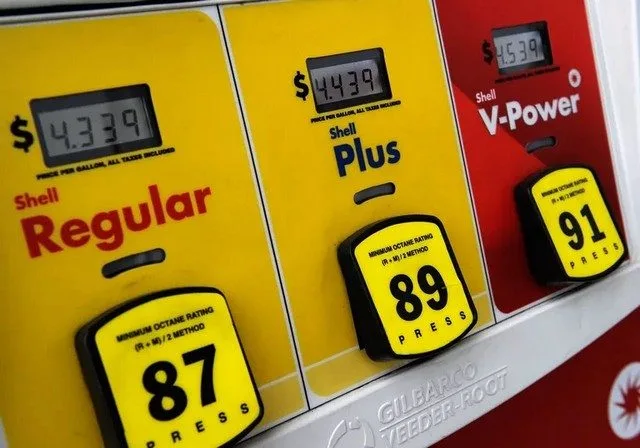
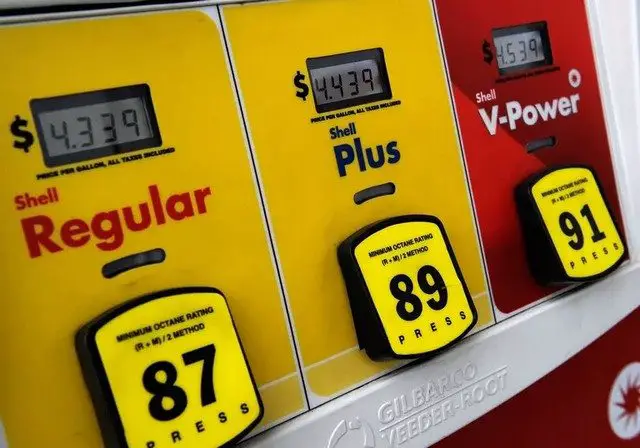
Most gas stations offer three categories of gasoline: regular, mid-grade, and premium. However, many consumers don’t know which gas quality they should put in their car. Will premium gas really help your car run better or keep your fuel system cleaner?
In short, the only time you should use premium fuel is if your car’s manual recommends or requires it. If your car was designed to run on regular gas (87 octane), there is no real benefit to using premium gas.
Understanding Octane Grades
Contrary to what many people think and what oil companies would like us to believe, higher grades of gasoline do not contain more energy to run your car. Gasoline is graded by octane. Generally, the regular rating is 87 octane, the mid-grade is 89 octane, and the premium is 91 or 93 octane. Octane ratings indicate the gasoline’s resistance to pre-ignition.
Here’s how pre-ignition works. Engines compress a mixture of fuel and air and ignite it with a spark. One way to get more power from an engine is to increase the compression of the fuel-air mixture before burning it, but these higher compression ratios can cause the fuel to ignite prematurely, hence the term pre-ignition. It is also known as “knock” because it produces a soft knocking sound.
Higher octane gasoline is more resistant to pre-ignition, which is why high-compression engines, often found in luxury or sports cars, require premium gasoline.
Several decades ago, pre-ignition could cause serious and expensive internal engine damage. Modern engines have knock sensors that detect pre-ignition and recalibrate the engine on the fly to avoid it. Pre-ignition is still bad for your engine, but it is less likely to occur.
Using Too Low or Too High Octane
If you use too low an octane – that is, regular gas in a car that requires premium – the engine will produce slightly less power and achieve lower fuel economy. Engine damage, although unlikely, is still possible.
If you use too high an octane rating – that is, mid-grade or premium in a car that requires regular – you are simply wasting money. Many oil companies advertise the additives in their expensive gas; in reality, all gasoline contains detergents to help keep your fuel system clean.
How to Know Your Car’s Requirements
If your owner’s manual says to use 87 octane gasoline, you’re in luck! Think of all the money you’ll save by buying cheap gasoline. There is no benefit to using mid-grade or premium gas in your car.
If your car has a label saying “premium fuel required,” you should always buy premium fuel. Your car’s knock sensor should prevent problems, but it’s better not to risk it.
If your car says “premium fuel recommended,” you have some flexibility. You can safely run on regular or mid-grade, but you will get better performance and possibly better fuel economy with premium gas.
Try tracking your fuel economy on different gas grades; fill up the tank and reset the trip odometer, burn through the tank, then fill up and divide the number of miles driven by the number of gallons it took to fill up. The result is your MPG or miles per gallon. From there, determine which type of gasoline gives you the best performance and economy.
Using Premium Fuel in Older Cars
If your car is really old – we’re talking 1970s or earlier – you may need to use 89 octane or better, and you should listen for pre-ignition knocks. If you hear it, it probably means your car needs a tune-up, not better gas. If your car was made since the late 1980s, use the fuel recommended in the owner’s manual. If the car runs poorly, it could be a sign that the fuel or ignition system needs to be cleaned or adjusted. It’s better to spend money on an engine tune-up than to buy more expensive gas.
High Altitudes and Lower Octane
If you’re driving in the mountains, you’ll often find gas stations with low-octane gasoline, for example, “85 regular octane” instead of “87 regular octane.” This is because air density is lower at high altitude, which affects how fuel burns in the engine.
Choose your gas based on how long you’ll be staying. If you’re spending the week, it’s safe to fill up with the grade you normally use, such as regular or premium. If you’re just passing through, plan for lower altitudes and follow the numbers on the pump. If your car requires 87, use 87 or higher. If your car requires premium, buy just enough gas to get you back to lower altitudes, then fill up with 91 or 93 octane once you reach your typical altitude.
Diesel Engine Options
In the United States and Canada, most stations offer a single grade of diesel fuel, which may be labeled ULSD or Ultra-Low Sulfur Diesel, so there are no difficult choices to make. At most stations, the diesel pump is green. Do not put regular gasoline in a diesel vehicle’s fuel tank. The engine does not run on gasoline and the repairs are expensive.
Biodiesel Fuel
Some stations offer biodiesel blends indicated by a BD label, such as BD5 or BD20. Biodiesel is made from vegetable oil, and the number indicates the percentage; BD20 contains 20% biodiesel and 80% petroleum-based diesel.
Check your owner’s manual to see if your engine is BD compatible, and if so, to what percentage. Most new cars are limited to BD5. Biodiesel contains methanol, which can damage the soft rubber components of the car’s fuel system, and can be too thick to flow through the finer orifices of modern fuel injectors.