
When you see a car advertised as “turbocharged,”
style=”font-size: 12pt;”>everyone has the general feeling that it’s somehow a more powerful engine capable of extra performance, but you might not know exactly how it accomplished this magic.
style=”font-size: 12pt;”>How a Turbocharger Works
style=”font-size: 12pt;”>In a standard internal combustion engine, it’s actually the airflow that is most critical to engine performance. Normally, in a running engine, it’s the downward movement of the pistons that draws air into the engine cylinders. The air is mixed with fuel and the combined vapor is ignited to create power. When you press the accelerator, you’re not actually pumping liquid fuel into the engine, but rather sucking in more air, which in turn draws in vaporized fuel to create power.
A turbocharger is a mechanical device driven by exhaust gases that increases engine power by pumping more air into the engine. A turbocharger uses a pair of fan-shaped cast parts mounted on a common shaft. One (called the turbine) is connected to the exhaust, while the other (the compressor) is connected to the engine intake. The exhaust flow spins the turbine, which spins the compressor. The compressor serves to blow air into the engine at a rate higher than it can draw in on its own. The larger volume of air can be mixed with a larger volume of fuel, increasing the power output.
TurboFor the turbocharger to work properly, there must be sufficient exhaust pressure to spin (“spool up”) the turbines. This can only occur when the engine speed reaches 2000 to 3000 revolutions per minute (RPM). This gap in time while the engine reaches the necessary speed is called turbo lag. Once the turbo spools up, watch out – the result is usually a strong surge of power, sometimes accompanied by a jet engine-like whistle.
style=”font-size: 12pt;”>
Which Cars Use Turbochargers?style=”font-size: 12pt;”>
In the past, turbochargers were only used on sports cars to give them an extra kick. But since the government imposed higher fuel economy standards, many car manufacturers are turning to small turbocharged engines to replace larger, less fuel-efficient engines. A turbocharger allows a small engine to produce power like big engines on demand, but when demands are low (like cruising on the highway), the smaller engine uses less fuel. Traditionally, turbocharged engines require high-octane fuel, so many of these fuel-efficient turbo engines use direct fuel injection, which allows the use of cheap 87-octane gas. Remember that your mileage will vary depending on your driving habits: if you have a heavy foot, a small turbocharged engine will consume as much fuel as a large engine.Most diesel engines use turbochargers. Diesel is powerful at low RPM but lacks power at higher RPMs; Turbochargers give diesel engines a broad, flat power curve that makes them better suited for passenger cars. Unlike gasoline engines, diesel is generally more fuel-efficient when equipped with a turbocharger.
Turbochargers vs SuperchargersA similar type of device is called a supercharger. Instead of using a turbine driven by exhaust gases, the supercharger is mechanically driven by the engine – usually by a belt, sometimes by gears. Superchargers have the advantage of eliminating turbo lag, but they require a lot of power to spin, so they don’t always produce the same net power gains as a turbocharger. Superchargers are often used in drag racers, which need to produce a lot of low-end power. The Swedish car manufacturer Volvo combines supercharging and turbocharging in their Drive-E engine.
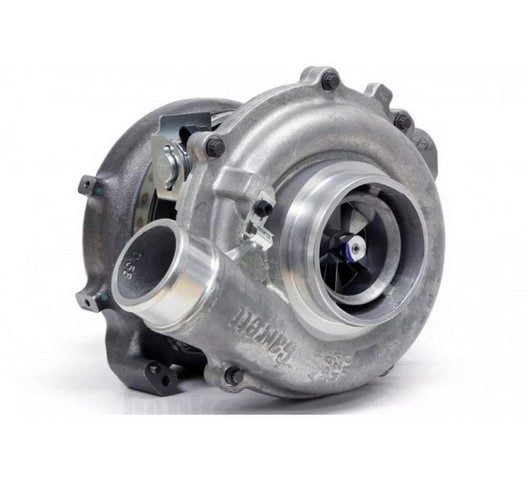
How a turbocharger works on an engine
Posted by
