
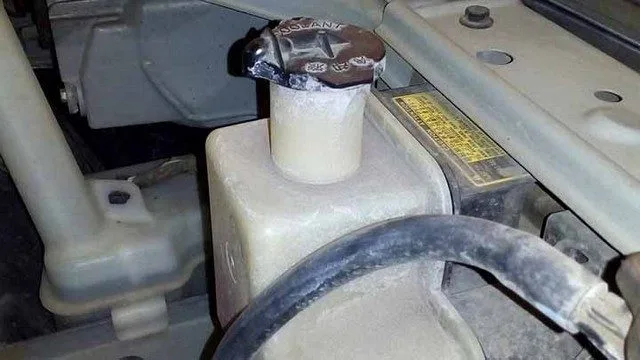
The radiator coolant overflow tank is designed to store excess coolant that is released by the radiator due to pressure buildup from heat. It functions similarly to an expansion tank on a water heater.
As you may know, an engine working very hard will heat up very quickly. Oil alone is not enough to cool the engine components. The engine relies on coolant to ensure it does not overheat in these high-performance situations. While this heat is generated, the coolant absorbs all that heat to keep the engine cool.
How a Radiator Overflow Tank Works
As the coolant heats up from absorbing the engine’s heat, the fluid expands and creates additional pressure in the radiator. Since the pressure causes the coolant to exceed the pressure cap, the excess coolant must be captured somewhere to prevent leaks.
Thus, the radiator overflow tank works to achieve this specific purpose. The excess fluid flows into the overflow tube and goes into the overflow tank. Once the driver parks the vehicle and turns off the engine, the heat dissipates, causing the coolant to no longer be as hot.
The coolant will then contract instead of expand; this results in a decrease in the coolant’s volume. It’s somewhat like a vacuum effect where the decrease in pressure allows the excess coolant in the overflow tank to flow back, so it can return to the radiator.
4 Main Symptoms of a Bad Coolant Overflow Tank
Here are four of the most common signs of a faulty radiator overflow tank.
1) Coolant Leak
If the radiator overflow tank is damaged or cracked, you can expect coolant to leak out. Sometimes, cracks will form on the overflow tank if it is too old and worn out. You should notice small puddles or drops of coolant on your garage floor or in your driveway.
Note: Coolant is very harmful to dogs and cats. If you notice a coolant leak on the ground, have it cleaned up immediately so your pet doesn’t clean it up for you. There have been many cases of dogs and cats becoming very ill or even dying because they ingested engine coolant.
3) Coolant Smell
In addition to the coolant leak, there will be a noticeable coolant odor coming from the front of your vehicle. If it worsens enough, it may even circulate into the cabin of your vehicle.
Although it’s not the worst smell in the world (it’s slightly sweet), it’s not something you want to smell for long periods. So, if you smell this warning sign, check the condition of the overflow tank and replace it as soon as possible.
4) Overheated Engine
Since the coolant’s job is to cool the engine when it’s overworked, a leak can mean your engine isn’t circulating enough coolant through the engine to cool it properly. As a result, you can expect your engine’s temperature to rise and overheat. This will be indicated on the engine temperature gauge located on the dashboard.
5) Low Coolant Level
If you check your coolant levels in the radiator overflow tank and they are low, you either have slow evaporation or a coolant leak. Usually, people who don’t realize they have a leak may find it’s a small leak that is barely noticeable externally.
To confirm, you should check the coolant level to ensure you have a leak. The overflow tank cap is often the source of the leak. Make sure it is properly closed and replace the cap if that’s where you suspect coolant is escaping.
Radiator Overflow Tank Replacement Cost
Before spending money on a new overflow tank, make sure the problem isn’t actually the overflow cap or the tubes coming out of the tank at the bottom, as these are common issues. They are much cheaper to fix than replacing the tank itself.
Otherwise, the cost to replace a radiator overflow tank ranges from $90 to $260. The parts cost will be between $50 and $150 while labor costs will be $40 to $110.
On many vehicles, replacing the overflow tank is an easy DIY job. On others that are harder to access, you should let the professional handle the replacement. There will also be additional fees and extra taxes.