
A fault code P0171 or P0174 means that the oxygen sensor or air-fuel ratio (AFR) sensor (in bank 1 [P0171] or bank 2 [P0174]) has detected a lean fuel mixture: either too much air or not enough fuel in the engine. One of these lean fuel condition codes or both may be set for several reasons:
- Inaccurate MAF sensor information (dirty or faulty sensor)
- Air filter assembly leak
- Clogged fuel filter
- Worn fuel pump
- Dirty or clogged fuel injectors
- PCV system leak
- Faulty fuel pressure regulator
- Vacuum leaks
- EGR system problems
- Oxygen sensor problems
Additionally, although less common, a problem in the powertrain control module (PCM), the car’s computer, can cause these codes. Either the PCM has failed, or its software needs an update.
When you have P0171 and P0174 codes, you may also notice:
- Rough idle
- Lack of power
- Misfire
- Hard starting
When they receive P0171 and P0174 codes, drivers often assume that the oxygen (O2) sensor is faulty. This can be the case; but the oxygen sensor or AFR sensor (in gasoline direct injection [GDI] and other engines) is not as common a cause of these codes as the other problem sources listed above.
So, before replacing an O2 sensor in your car, check the following sections to avoid wasting time and money.
One more thing. Before starting tests, make sure all air ducts and intake hoses are properly connected. Loose or improperly secured ducts and hoses are a common source of lean codes.
| Hint |
|---|
| 1. What You Need to Know About Lean Fuel Codes |
| 2. MAF Sensor and Throttle Body Problems |
| 3. Vacuum Leaks |
| 4. PCV System Problems |
| 5. Fuel System Problems |
| 6. Oxygen Sensor Problems |
| 7. Preventing Damage from P0171 and P0174 Fault Codes |

Fault code P0171 points to bank 1 (cylinder 1 side) of the engine.
1. What You Need to Know About Lean Fuel Codes
The Difference Between P0171 and P0174 Fault Codes
Basically, a P0171 code points to “bank 1,” the engine side with cylinder number one, while P0174 points to the cylinders on the other side of the V6 or V8 engine.
If your engine has four or six inline cylinders (i.e., all on one side of the engine), you will likely get a P0171 code. However, on some newer vehicle models, the computer processes the engine as two separate banks when generating codes, even if it is inline configured. For example, in a four-cylinder engine, bank 1 represents cylinders one and two, while bank 2 represents cylinders three and four.
If you need more information about your specific model, consult your vehicle’s repair manual.
What If I Have Other Codes?
Often, a P0171 and/or P0174 code will be accompanied by a random misfire trouble code P0300. In this case, focus on the P0171 or P074 code, as they are the most likely cause for the engine experiencing a random misfire.
If your computer has recorded P0171 and P0174 codes, focus on components affecting all cylinders, such as a MAF sensor, a clogged fuel filter, or issues with a fuel pressure regulator. Otherwise, focus on the engine side represented by your diagnostic trouble code.
Just be aware that problems with a MAF sensor sometimes trigger only one code even if they affect all cylinders.
Using a Scan Tool
A P0171 or P0174 trouble code can occur due to a vacuum leak or a faulty sensor. Vacuum leak defects usually manifest – not always – more easily at lower speeds; such as a rough idle, for example.
Problems at higher engine speeds are more common. Issues at higher speeds are often caused by a faulty sensor or a problem in the fuel system. Sensors that can malfunction include the MAF sensor, engine coolant temperature (ECT) sensor, throttle position sensor (TPS), barometric pressure sensor, or other sensors that control fuel supply.
A capable scan tool can check fuel trim values at idle and higher engine speeds and detect when the lean condition occurs. This can be a great help in locating the source of the problem.
If your computer has other fault codes pointing to one or more sensors, check them first. They may be the cause of the P0171 or P0174 codes.
If you get a code for an oxygen sensor, it may or may not be the cause of the fault; more often, it’s the other sensors causing issues. You may want to check other components first before testing and replacing the O2 sensor.
Model-Specific Issues
If you cannot find the cause of the code(s), a particular component specific to your vehicle model may be causing the problem. Consult your vehicle’s repair manual.
If you don’t have your model’s manual, you can buy a relatively inexpensive aftermarket manual from Amazon. Haynes manuals can not only help you locate your vehicle’s components but also come with step-by-step procedures for many maintenance, repair, and troubleshooting projects you can do at home. This way, you can save thousands of dollars a year on many simple maintenance tasks and repairs you can do right at home.
OK. Let’s take a look at the most common problem sources so you can diagnose the cause of the issue in your engine.

2. MAF Sensor and Throttle Body Problems
A common source of P0171 or P0174 fault code is a dirty or failing MAF sensor. It can produce the following symptoms:
- Increased fuel consumption
- Engine surging
- Rough idle
- Lack of engine power
- Engine hesitation or surging
- Engine stalling at idle
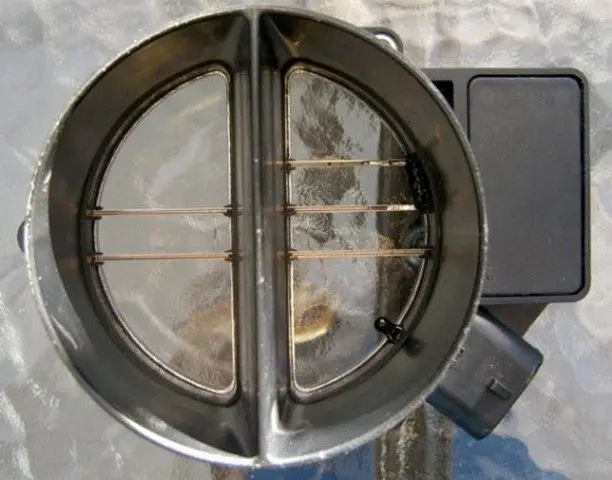
Dirt can enter the MAF sensor housing and clog the film element or hot wire.
Cleaning the MAF Sensor:
You can perform a quick visual inspection of the MAF sensor by unplugging the sensor’s electrical connector and disconnecting the air chamber assembly.
A dirty filament inside the sensor can interfere with the sensor’s ability to measure incoming air. To clean the sensor:
- Get a can of MAF sensor cleaner
- Access the sensor as suggested by your repair manual
- Follow the instructions on the product packaging to clean the sensor
- If necessary, also replace the air filter and clean the inside of the filter housing. Remove debris and dust using a damp cloth. This will prevent contaminating the new or newly cleaned sensor and extend its lifespan.
The MAF sensor harness can also be faulty. Check the connector and wires using a digital multimeter (DMM), if needed.
Problems with the fuel system or vacuum leaks can also produce some of the same symptoms. If necessary, test the MAF sensor using a digital multimeter.
Checking the Throttle Body:
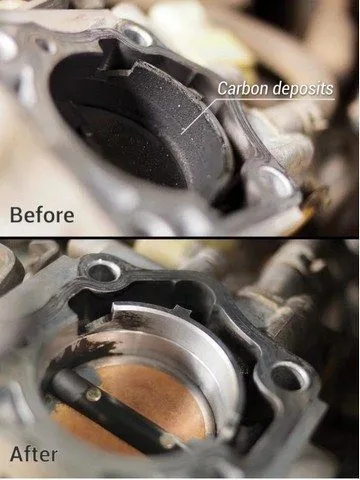
After checking your MAF sensor, check for carbon buildup around the throttle body bore and under the valve. This can also cause problems.
To Clean the Throttle Body:
- Disconnect the air filter from the throttle body.
- Spray some carburetor cleaner onto a clean shop cloth.
- Use the cloth to clean around the throttle body and valve.
The problem with P0171 and P0174 codes is that often, drivers assume the oxygen sensor is faulty.
Check vacuum hoses, connections, and seals for vacuum leaks.
3. Vacuum Leaks
Problems in the vacuum system also frequently contribute to a lean condition.
- Look for potential leaks around the air filter assembly, between the MAF sensor and the throttle body. A loose or damaged boot can introduce unmetered air.
- To check for potential gasket issues under the throttle body and intake manifold:
- Spray carburetor cleaner around the gasket sealing area with the engine idling.
- If the idle speed changes while you spray a particular area, there might be a leak.
Other Key Areas to Check for a Vacuum Leak:
- Check that intake hoses are not loose.
- Look for damaged or cut intake hoses.
- Inspect intake hoses routed near hot areas like the engine or exhaust system for potential damage.
- Check that vacuum-operated devices are not damaged which could cause a leak.
- Ensure each fuel injector is properly installed and their O-rings are not damaged.
- Inspect the vacuum hose between the intake manifold and the charcoal canister purge valve.
- Although not too common, an EGR valve can also be the source or contributor to a lean condition. Check for loose mounting bolts or a damaged gasket under the valve.
- On some Ford models, a Delta Pressure Feedback EGR (DPFE) sensor can develop too much corrosion to the point of failure. The ECU (car computer) ends up opening the EGR valve for too long, causing a lean condition.
- Also inspect the exhaust system for leaks between the engine and the O2 sensor. Run the engine at idle, then slightly increase the engine speed while paying attention to sounds or smoke from the gasket area, pipe fittings, or any other place between the engine and the catalytic converter.
Using a Vacuum Gauge:
If necessary, you can use a vacuum gauge to check for potential leaks. Here is a simple procedure:
- Warm up the engine to operating temperature.
- Connect the vacuum gauge to the intake manifold.
- Set the parking brake and set the transmission to Park (automatic) or Neutral (manual).
- Start the engine and let it idle.
- Get the vacuum reading from the gauge.
- A good condition engine will produce a vacuum reading with the needle steady between 15 and 20 inHg (inches of mercury) at sea level. At higher altitudes (2000 feet or more), subtract one inHg for every 1000 feet above sea level.
- A leak in the intake manifold will show a steady needle at the lower end of the gauge.
- A leaking head gasket can cause the needle to fluctuate between 6 and 20 inHg.
Check and replace the PCV valve, if necessary.
4. PCV System Problems
A stuck valve or a torn hose in the positive crankcase ventilation (PCV) system can also lead to a lean air-fuel ratio and cause idle and stalling issues.
A leaking engine seal can cause the PCV valve to draw unfiltered air into the intake.
Usually, a quick inspection can reveal the cause of the problem:
- Check PCV hoses for proper connection and condition.
Many PCV valves use an internal control needle to control airflow in one direction:
- Remove the valve from the valve cover and disconnect the hose from the valve.
- Connect a hose to the outlet side of the valve (the end pointing towards the intake manifold).
- Blow air through the hose.
- If you can easily blow air through the valve, it is stuck open. Replace the valve.
Replace the fuel filter if it is overdue.
5. Fuel System Problems
Problems with the fuel system are also common causes of a lean air-fuel ratio.
If the engine seems to lack fuel at any speed range, the problem may be caused by:
- Restricted fuel filter
- Clogged fuel injector(s)
- Bad fuel pump
Fuel injector restriction can be produced by high resistance in the injector’s electrical circuit. When current cannot flow properly through a wire or connector, it prevents an injector’s pintle from opening fully, reducing fuel injection.
Or the engine may idle fine but lack fuel at higher speeds or under load. There may be one or more reasons for this:
- Clogged fuel filter
- Faulty fuel pump
- Bad pressure regulator
- Clogged or dirty fuel injectors or intake screens
- Fuel injector electrical circuit problems
The issue may be resolved by simply replacing the fuel filter. Consult your car’s owner’s manual or vehicle repair manual for the recommended maintenance schedule for the filter. If it is overdue, replace it and see if engine performance improves.
Checking the Fuel System:
On a throttle body injection (TBI) system, you can confirm that fuel is being delivered by removing the air filter housing cover. When starting the engine or with the engine idling, you can visually inspect the fuel injection and fuel pattern at the injector’s outlet.
You should see a partially atomized, inverted V-shaped fuel distribution pattern coming out of the injector. An irregular pattern may indicate a restricted or faulty fuel injector, or insufficient fuel system pressure.
You may want to check fuel pressure using a fuel pressure gauge if you suspect an insufficient amount of fuel is being supplied. Consult your vehicle’s repair manual if necessary.
Checking fuel pressure and comparing it to your vehicle’s make and model specifications will really help in your diagnosis, as you can see in the following video.
Checking Fuel System Volume:
Along with fuel system pressure, fuel system volume is another common fault in a lean operating condition.
In this case, the fuel system may or may not have adequate pressure, but it may not deliver the correct volume of fuel according to engine operating conditions, especially at higher speeds or under engine load.
You might suspect insufficient volume if everything else seems in order. Generally, a fuel system will deliver about three pints of fuel over 30 seconds.
You need a graduated container and a fuel pressure gauge with a relief valve to perform a volume test. Nevertheless, you can get a rough idea of how your fuel system is performing by using a fuel pressure gauge to perform this other test at home by following the steps outlined in the following diagram.
Keep in mind that the fuel pump volume may be somewhat low, and you might not notice the effects unless your engine is under heavy load. But the test above can give you a rough idea of the fuel pump’s condition.
Checking Fuel System Pressure on Multiport Fuel Systems:
On multiport fuel injection systems, you cannot check fuel flow as easily as with a TBI system. So you need to test fuel pressure and, if necessary, fuel volume.
You will need a fuel pressure gauge and a pair of slip-joint or hose clamp pliers for the following tests. During tests, wrap a cloth around any fuel line you need to pinch with the pliers.
- Connect the fuel pressure gauge to the test port (Schrader valve) on the fuel rail. If your vehicle does not