
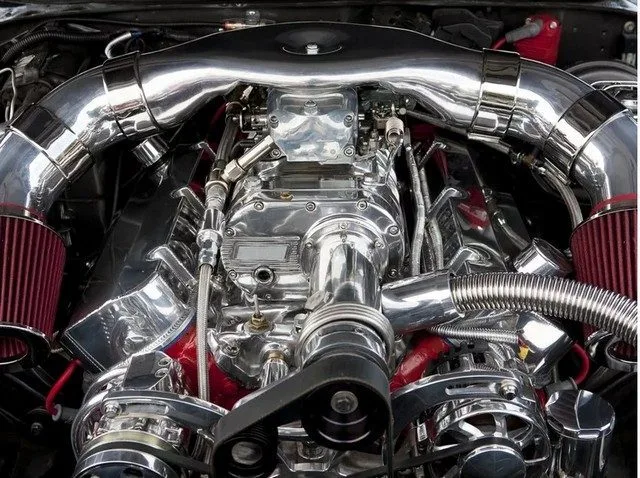
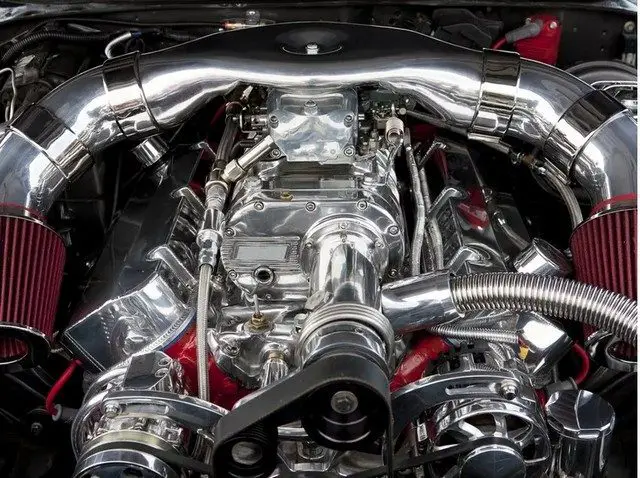
As car manufacturers increasingly turn to smaller engines for better fuel economy and lower emissions, drivers continue to expect at least the same amount of power for basic performance needs. To achieve both goals, forced induction via a turbocharger or supercharger could be the answer.
Tip: Regular oil changes
Regular oil changes are essential to keep your turbocharger or supercharger in perfect condition. Superchargers have their own oil system, while turbochargers share theirs with the engine.
Forced induction refers to a way of forcing more air into the engine than would normally be drawn in. Naturally aspirated engines have a continuous vacuum in the intake system, as the cylinders on the intake stroke draw air past the throttle body. Forced induction engines use a pump (most often a turbocharger or supercharger) to force air into the intake. Because air is a compressible gas, the result of pressurizing the intake and cylinders is more oxygen. More oxygen mixed with more fuel results in more power.
There are two ways to use forced induction. For those interested in performance, adding forced induction can significantly increase engine power and torque, as seen in Shelby GT Mustang engine options. Forced induction can also give small engines the same power as a larger, less efficient engine. The overall result is better fuel economy without sacrificing power, perhaps the best of both worlds.
Types of forced induction
There are three types of forced induction pumps and three ways to drive them. All work slightly differently and have different strengths and weaknesses.

The typical turbocharger is a centrifugal pump driven by exhaust gases. Centrifugal pumps are variable displacement, meaning they change flow depending on the speed at which they are driven.
The typical supercharger is a positive displacement pump driven by a belt from the engine’s crankshaft. Positive displacement pumps compress the same amount of air with each revolution. Roots-type superchargers, also called “blowers,” use meshed multi-lobe rotors to compress intake air. Lysholm twin-screw rotors are similar but more expensive.
ProCharger is actually a brand name referring to a belt-driven centrifugal pump. Instead of being driven by exhaust gases, the ProCharger is driven by a belt.
More recently, as electric motors find broader application in the automotive world, especially with the advent of hybrid electric vehicles, another way to drive forced induction pumps has been devised. Instead of a belt or exhaust, these are driven by an electric motor. Formula 1 engines use an electric motor to drive the turbocharger at low RPM, then allow exhaust gases to drive it at higher RPM.
Which is best or why not both?
Due to how these forced induction pumps work and are driven, there are various advantages and disadvantages. For additional forced induction, such as for sports cars, track cars, or “just because,” much of your choice will depend on the engine configuration, whether you want to pass emissions tests, and your budget. Here are some additional factors:
Exhaust turbochargers do not provide boost at low RPM. This is called “turbo lag” and can surprise inexperienced drivers. These do not add much drag to the engine, so cruising and idling do not use much fuel. When you need power to pass or accelerate, there is a slight delay before full boost and power are achieved. Because they are mounted on the exhaust, extra space is needed in the engine compartment around the engine.
Belt-driven superchargers deliver boost at all engine RPMs, so there is no delay in power delivery. It is easier for many drivers to get used to. At the same time, because it is directly driven by the belt, it increases drag on the engine, leading to reduced fuel economy during cruising and idling. Depending on the type of supercharger, you may need space on top of the engine for installation, which is why some supercharged engines feature hood cutouts or bulges.
Aftermarket exhaust-driven turbochargers tend to cost more than belt-driven superchargers, and it is good to consider a specialist if you plan to maintain, diagnose, and repair one. Also keep in mind that increasing engine power will increase wear and may damage the rest of the drivetrain, such as the transmission, differentials, and axles. Upgrades or repairs will increase operating costs.
If pure power is your concern, or you want the best of both forced induction options, twin-charging is the way to go. However, this is not limited to supercars. The Nissan Micra / Nissan March Super Turbo is a twin-charged daily driver hatchback, and Volkswagen/Audi’s 1.4 TSI engine is found in most of the automaker’s sedans, wagons, and SUVs. Other automakers are also finding uses for twin-charging, and it is very likely that we will see increased use of electric turbos as the technology trickles down to production models.
How to maintain your turbocharger or supercharger:max_bytes(150000):strip_icc():format(webp)/GettyImages-74375998-5ba160cc4cedfd0025cb0042.jpg)
Whether you purchased a supercharger, turbocharger, or a vehicle with one or both already installed, maintaining your forced induction system will ensure consistent performance, fuel economy, and reliability. The main thing you need to know here is oil changes. Since superchargers spin up to 72,000 RPM and turbochargers up to 300,000 RPM – most street engines spin at 7,000 RPM maximum – constant lubrication is essential to keep them running. Additionally, compressing intake air generates a lot of heat.
:max_bytes(150000):strip_icc():format(webp)/GettyImages-182788481-5ba16138c9e77c00500c0b3d.jpg)
To address this, make sure to change the oil on time, every time! Superchargers have their own oil system, which some manufacturers recommend changing annually. Turbochargers share their oil supply with the engine, making regular engine oil changes an important part of forced induction maintenance. Finally, whether your car, truck, or SUV is equipped with a factory or aftermarket supercharger or turbocharger, knowing when to seek professional help will keep your forced induction system running as intended.
:max_bytes(150000):strip_icc():format(webp)/17317379738_5328288335_k-5ba16112c9e77c005075ac95.jpg)