
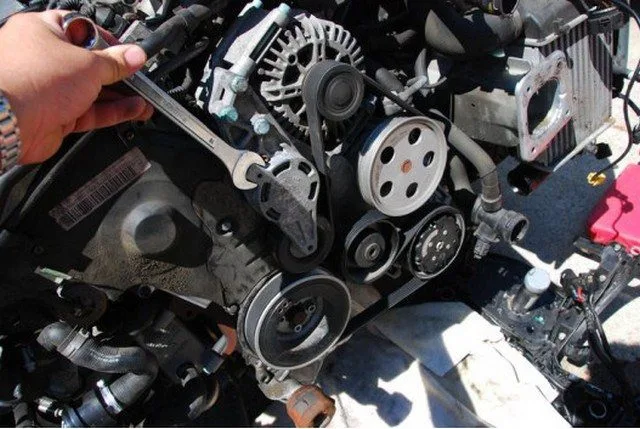

The timing chain is an important component because it keeps the camshaft and crankshaft connected and synchronized as they rotate. If you have ever seen a bicycle chain before, the timing chain is very similar.
There are several pulleys and gears that drive the camshaft, crankshaft, and other mechanical components of the system. The timing of the rotation is extremely important for the engine to function properly.
This can only occur if the timing chain runs smoothly over the gears. If there is any hesitation or resistance in these movements, it could cause problems for the engine.
Timing chains tend to last a long time, longer than timing belts. But they are also very fragile components, meaning they won’t stay strong forever. If you start having timing chain issues, one of the first symptoms you’ll notice is noise.
As the timing chain moves, it generates noise that can become unbearable over time. The solution may be to replace the timing chain, depending on the actual cause of the noise.
Sometimes the cause may be directly related to the chain, while other times it’s another component it’s connected to. You need to determine the cause and fix it to get rid of the noise.
Here are five of the most common causes of noise coming from the timing chain.
1) Wear
The most common cause of timing chain noise is when the timing chain simply wears out. All the wear it undergoes over the years will reduce its ability to function properly.
Even if you’ve had proper oil changes and performed regular engine maintenance, this won’t completely prevent problems with your timing chain.
These actions will only extend its lifespan. But eventually, the timing chain wears out. Noise will be the first sign of this.
2) Not Changing Engine Oil
You’re supposed to get oil changes every 3,000 to 5,000 miles in most cases, or whatever oil change interval is recommended by your car’s manufacturer. Oil is important for lubricating your engine’s components, including the timing chain.
If you don’t change the oil regularly, the quality of the oil will decrease. This means it won’t be able to lubricate as it did before. Once this happens, your timing chain will wear out faster than normal.
3) Wrong Engine Oil
In addition to changing the oil regularly, you should also use the right type of oil in your engine. Check your vehicle’s owner’s manual and see what oil grade and viscosity your manufacturer recommends.
You should also choose an oil that contains anti-wear additives. You’ll find these with most synthetic oil options. Even though you’ll have to pay more money for synthetic oil, it’s a worthwhile investment in many cases because these additives help extend the timing chain’s lifespan.
Otherwise, if you choose an oil with the wrong viscosity for your engine, it could lead to faster timing chain wear and more noise.
4) Bad Oil Filter
Oil filters are placed either on top of the engine or on the side. These filters have an anti-drain back valve that prevents oil from leaving the filter after the engine is turned off.
But if this valve fails or malfunctions, the oil flow will be delayed when you restart the engine. This results in a delay in lubricating the engine, including the timing chain.
So, you’ll likely hear a lot of noise shortly after starting the engine. Spending a few extra dollars on a high-quality oil filter is worth the peace of mind.
5) Heavy Loads
Adding more weight to your vehicle puts more stress on your engine. Whenever you add more stress to your engine, it increases the wear on the timing chain. If the timing chain is already in poor condition, you can expect the noise to appear much more quickly.