
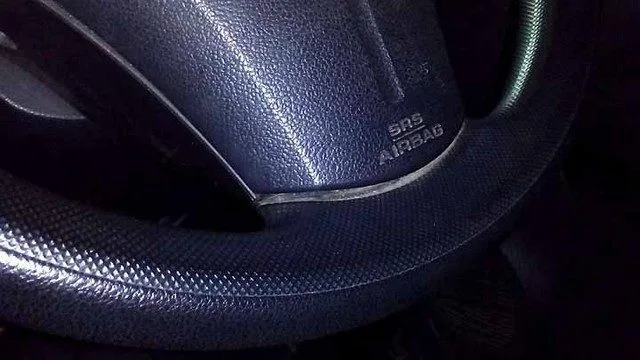
There are a variety of different warning lights on a vehicle’s dashboard. Most people will only see them light up if there is a particular problem with their vehicle that is indicated by that light.
Whether you know it or not, you have probably already seen the airbag light come on without even realizing it. For example, when you get into your vehicle and start your engine, you may see a warning light that reminds you to fasten your seat belt.
In some car models, the seat belt warning light is the same as the airbag light. This means that people are used to seeing this light as a warning about their seat belt. They are not used to seeing it as a warning about the airbags. Therefore, they may simply want to ignore this warning light if it comes on without realizing that it is a problem with the airbags and not the seat belt.
If you have your seat belt fastened and the airbag light is still on, you should not ignore this warning light, as it likely means that you have at least one non-functional airbag in your vehicle.
It is essential that you resolve any issues with your airbag system, as airbags can save your life in a car accident. You don’t want to find out the hard way whether your airbags are working or not.
Table of Contents
What can cause the airbag light to come on?
1) Airbag Deactivated
2) Seat Belts
3) Minor Accident
4) Water Damage
5) The Airbag System Has Not Been Reset
Minimum Speed for Airbag Deployment
What can cause the airbag light to come on?
Below are five common causes of an airbag warning light coming on:
1) Airbag Deactivated
The most common cause of the airbag warning light coming on is that the airbag system is deactivated or turned off. There can be several reasons for this that you had no control over.
There may be a problem with the crash sensors or any other airbag component. Alternatively, the passenger seat sensor that determines whether that airbag should be activated or not may be faulty.
2) Seat Belts
As mentioned earlier, not fastening your seat belt could cause the airbag light to come on. But there could be other seat belt issues that could also cause this light to come on.
Perhaps your seat belt does not click properly into the buckle and stay in place. There may be a problem with the buckle sensors, and they are not accurately telling the computer that you have buckled your seat belt.
3) Minor Accident
It is possible to be in a minor car accident that does not deploy your airbags but still triggers the crash sensors. This means your airbag light will stay on until you go to an auto repair shop and have it reset by the technician.
A minor accident could be a situation where you hit something with the front of your vehicle while driving at less than 8 mph. Crash sensors tend to be sensitive to any type of accident, whether big or small.
4) Water Damage
If the internal components of your vehicle are water-damaged for any reason, corrosion can form on the crash sensors of your airbag system. This corrosion impairs their ability to function correctly and can cause the airbag light to come on.
5) The Airbag System Has Not Been Reset
Once you are in an accident that causes the airbags to deploy, it is not enough to just replace the airbag. The crash sensors, seat belt pretensioners, and other SRS components must also be replaced. Additionally, the airbag control module (the brain of the airbag system) will need to be reset.
You will need to have the computer reprogrammed by a qualified mechanic or dealer so that the airbag system can be reused. Alternatively, some companies allow you to ship the airbag control module to them; they reset it for a fee and then send it back to you ready for installation.
Minimum Speed for Airbag Deployment
Airbags are designed to deploy when the front (or nearly the front) of your vehicle collides with another vehicle or a solid barrier. However, for the airbags to deploy, the minimum speed you must be driving during your collision is between 8 mph and 14 mph.
Most people drive well above these speeds when they crash, typically between 35 mph and 60 mph. The faster you are going during a collision, the more you will need an airbag to save your life.