
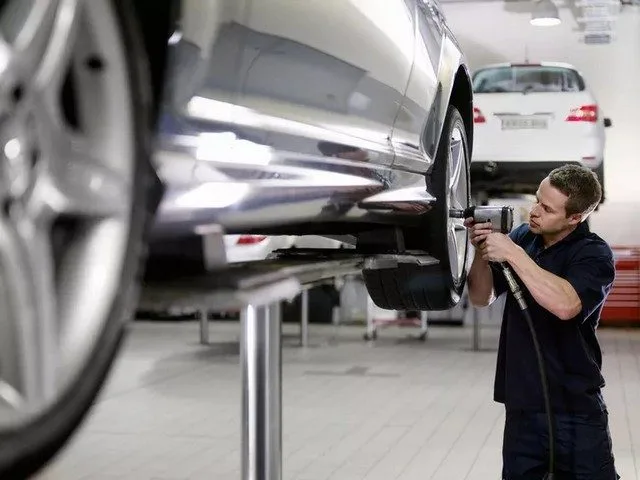
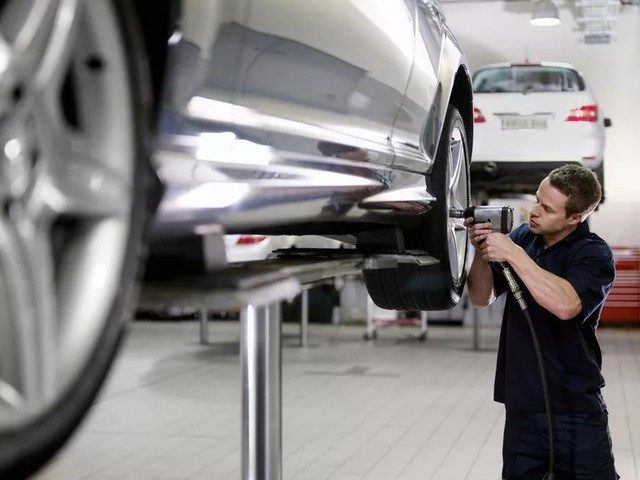
When you bring your vehicle to the dealership for routine maintenance or repair work, you might not be familiar with the process and workflow that each car undergoes during the job. But if it’s a good department, it operates like the well-oiled machine that it ultimately delivers to you.
First Contact
After-sales services rarely accept returns, except in emergencies. You probably called the after-sales service to schedule your appointment in advance. In the case of routine maintenance, either a service light will come on your dashboard to alert you to the need to call, or the after-sales service will contact you directly by phone, email, or regular mail.
When you first arrive at a dealership’s service department, you will be greeted by a service consultant who will present you with a repair order outlining the work to be done, which often includes a cost estimate. After signing the order, you will head to the waiting area until your work is completed. If your service takes more than a few hours, someone from the dealership will drive you home or to work (and then pick you up), or they will give you a loaner car to use for the duration.
Most dealership waiting areas are equipped with comfortable sofas and chairs, magazines, and even televisions tuned to a 24/7 news station. High-end dealerships will also often have full-service stations offering free coffee, tea, water, cookies, and fruit.
Sending Your Repair Order
Your service advisor is responsible for ensuring that your repair order is assigned to a technician, either by handing it over directly or by using a dispatcher.
In most cases, whether it’s an oil change or major repair work, the technician will need to order parts for the job. Sometimes these parts come from the dealership’s parts department, other times the parts are delivered from elsewhere nearby. Sometimes, especially if you schedule the work a few weeks in advance, the parts are already in stock.
Additional Work
While the technician is performing the work, he or she might look for other issues with the car or routine maintenance needs that could be addressed, thus performing an “upsell.” But this work will not be done without your approval. So expect a call from your service advisor to let you know what needs to be done, why, and how much it will cost. If you choose not to do the additional work, the service advisor will note in your record that you were informed of the conditions and chose not to approve the work, in case safety issues could arise.
After-Sales Service
Once the work is completed, your car will likely be washed and then parked in a gathering area in front of the dealership (if you were waiting on-site) or in a gathering area at the back, where it will remain in place until you arrive to pick it up. The service consultant will now complete the billing, add discounts, and also determine whether the costs are covered by the warranty, if you are responsible for payment, or if the shop pays (which could happen as compensation for a failed repair, for example).
All charges for subcontracted work performed off-site or by an outside contractor (body and paint repair, towing fees, etc.) will also be billed at this time. Once billing is completed, the repair order is printed, handed to you, and you will sign it (if the work is under warranty) or pay for the repairs. At this point, the service consultant will once again explain what work was done, why it was done, and what might be recommended for next time.
Good service consultants are among the best PR that an auto dealership can have, and most of them work hard to ensure that you understand your repairs, that they are performed in a timely manner, and that if an issue arises, it is resolved immediately and to your satisfaction.