
An airbag or supplemental restraint system (SRS) is a safety device designed for vehicles. It is intended to keep the driver and front passenger restrained in the event of an accident.
For example, if a driver hits their vehicle into the rear of another vehicle at a fast speed, the airbag module inside the steering wheel deploys almost instantly. This way, it prevents the driver from hitting their head or upper body against the steering wheel, dashboard, or windshield.
The airbag deflates within seconds after inflation so that the driver is not suffocated by the airbag. The airbag system activates whenever a strong decrease in acceleration is detected or when your vehicle collides with another hard object.
Airbag Components
- Airbag Inflator
- Crash Sensors
- Diagnostic Monitoring Unit
- Warning Light
- Clock Spring
- Airbag
- Wiring Harness
Airbag Components
The airbag system includes several parts. Each of these parts has a specific function to inflate the airbag at the right time.
Here are the seven main parts of an airbag system and an explanation of what each one does.
1. Airbag Inflator
The airbag inflator is part of the airbag module, which also includes the airbag. The job of the airbag inflator must be explicit. It is to quickly inflate the airbag in the airbag module so that it comes out and prevents you from flying out of the car.
The inflation system is capable of creating this inflation effect by mixing potassium nitrate and sodium azide to create nitrogen gas. Once this gas enters the airbag, the inflation effect occurs instantly.
2. Crash Sensors
The airbag system relies on crash sensors so that the airbag module knows when to inflate the airbag. These crash sensors detect when the car stops abruptly in its acceleration.
Whenever the car hits a solid object while traveling at 15 miles per hour or more, the crash sensors activate the airbag inflation system.
3. Diagnostic Monitoring Unit
Whenever you start your vehicle, the diagnostic monitoring unit runs a test on the airbag system to ensure it is working correctly. If you have ever had an accident and your airbag has been inflated, you will need to take your vehicle to a dealership or auto repair shop that handles airbags so that the airbag system can be reset.
Otherwise, the diagnostic monitoring unit will warn you if there is a malfunction in your airbag system.
4. Warning Light
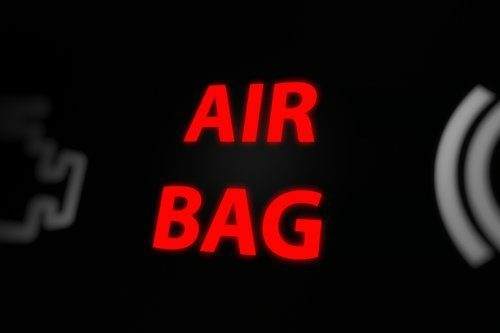
The warning light is essentially the warning light of the airbag system. When your vehicle performs a diagnostic check of the system, the warning light comes on for a few seconds.
5. Clock Spring
The clock spring is what connects the steering wheel to the airbag system. This would apply to the driver’s side airbag in a vehicle.
Some vehicles also have airbags for the front passenger side of the cabin. In this case, the clock spring would exist in the dashboard area above the glove box.
6. Airbag
Of course, the airbag itself is another part of the airbag system. This is the bag that inflates in front of (and/or on the side of) the driver or front passenger in the event of a collision with another vehicle or a solid object.
Airbags are typically made from a nylon fabric. It is coated with a heat shield so that the fabric remains protected in case of burning.
7. Wiring Harness
The wiring harness represents the series of wires that connect all the components of the airbag system. If there is even one wire that is damaged or not working in any way, it will render the entire airbag system inoperative.
But if there is a problem with the airbag system, the warning light stays on.