
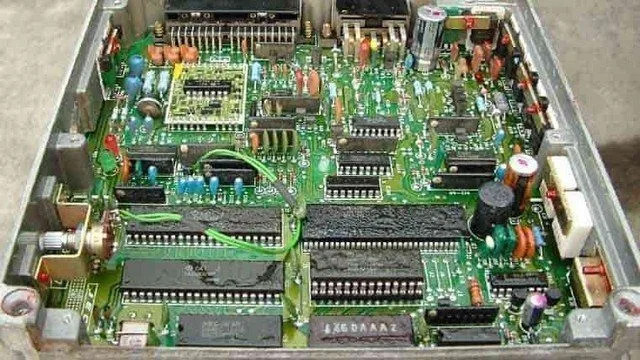

The ECU is the engine control unit of your vehicle. It is also often called PCM (powertrain control module) or ECM (engine control module).
This electronic module is a built-in computer that your vehicle relies on to manage a variety of its systems and functions. Consider it the brain of the vehicle. The engine and transmission are the most dependent on the ECU.
Through a wide range of electronic sensors, chips, and components in the vehicle, the ECU can transmit information back to the engine. The nature of this feedback will determine the function the engine will perform next.
This greatly helps in calculating the appropriate amount of air and fuel needed for the internal combustion process. This way, better energy efficiency can be achieved.
5 Main Causes of Car ECU Failure
The ECU regulates virtually all important systems and functions of your vehicle. If you were to have a faulty ECU, many visible symptoms would appear. It wouldn’t take you long to realize that the ECU was responsible.
However, you might wonder why the ECU malfunctioned in the first place. There are many internal causes that could contribute to it. Here are the top 5 causes of a faulty ECU. Investigate them as soon as you notice problems with the ECU.
1) Dead Battery
Car batteries have electronic cells that must function for the ECU to work. If any of the cells in your car battery are dead, your ECU will fail shortly after. Once all the cells are dead, your entire vehicle will no longer be able to operate.
You won’t even be able to start your vehicle and turn the engine over. So, look for the warning signs of a faulty ECU, then have your battery checked immediately.
2) Corrosion
The ECU is surrounded by seals that are supposed to prevent moisture from getting inside. However, after a number of years, these seals tend to wear out. If the seals become too worn, it will be easier for moisture to pass through them and enter the ECU.
Moisture is a bad thing to have in an ECU because corrosion will form on its components. If the corrosion is not cleaned quickly, it will damage these components. Then, you will have a faulty ECU.
3) Low Voltage
The average ECU should have at least 9 volts, but preferably 12 volts. There is wiring running in the ECU harness where you can check the amount of voltage.
You just need to connect a voltmeter gauge to it. This device will be able to detect the voltage passing through the ECU. If the voltage is 6 or below, this is likely the cause of your ECU problems.
4) Bad Jump Start
Whenever a jump start is performed on your battery, you must ensure that the jumper cables are properly connected. If you perform a jump start with the cables incorrectly connected, it could short-circuit your ECU by causing it to spike too quickly.
This will require you to have the ECU repaired or possibly replaced. This will cost thousands of dollars in expenses.
5) Bad Starter
Many vehicles have starters with their own sensors. One such sensor is the priority sensor that manages the number of volts the ECU will receive.
If this sensor were to malfunction, the ECU would not receive the correct amount of voltage. This could then cause it to malfunction and create other problems in your vehicle.
Another issue that could occur is if you replace your starter with a new starter that is not compatible with your vehicle’s ECU. Make sure any new starter you purchase has the correct sensors that can communicate properly with the ECU.